 Dost Pakistan Journeys Tours and safaris in the North & South Pakistsn
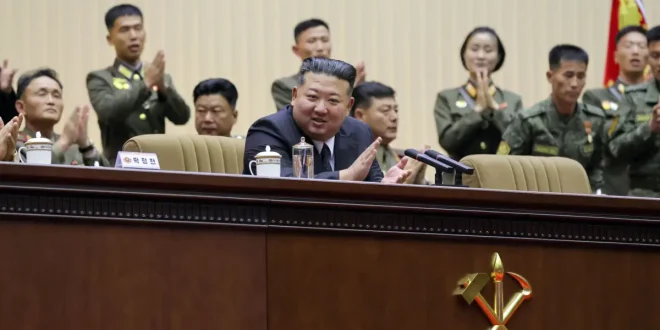
Kim Jong Un’s Dandong Visit: A Strategic Bridge for North Korea Amidst Shifting Geopolitics
North Korean leader Kim Jong Un’s recent unannounced visit to the Chinese border city of Dandong, a trip lasting just a day, has sent ripples across the international diplomatic landscape. While the precise agenda remained shrouded in the characteristic secrecy of Pyongyang-Beijing interactions, the timing and context of the visit underscore a deepening strategic alignment between the two nations, particularly following the long-delayed inauguration of the New Yalu River Bridge.
The Visit Unveiled
On Saturday, Kim Jong Un concluded his swift excursion, reportedly crossing into China via the newly operational New Yalu River Bridge. This significant piece of infrastructure, completed 12 years prior, now serves as a tangible link solidifying economic pathways between North Korea and its most crucial international ally, China. Although no advance disclosure was made by either government, South Korean intelligence suggested a meeting with Chinese Premier Li Qiang, though official Chinese state media, Xinhua, mentioned only a reception by Beijing’s top political adviser, Wang Huning, and China’s top diplomat, Wang Yi.
The visit reportedly included ceremonial activities, such as a memorial to fallen soldiers, aligning with the historical anniversary of China’s entry into the Korean War. Kim also toured an automobile factory, hinting at potential areas of economic cooperation. Xinhua’s readout emphasized “consolidating public goodwill” and “deepening political mutual trust,” signaling a reinforcement of the traditional “blood alliance” between the two communist states. Local Chinese residents, like Dandong driver Zhao, voiced optimism that strengthened bilateral ties would translate into economic benefits for border communities.
Background: A Tapestry of Isolation and Support
North Korea, globally isolated under stringent United Nations sanctions due to its persistent nuclear weapons program, relies heavily on China for diplomatic, economic, and political lifelines. This reliance makes any high-level engagement between the two nations a crucial barometer of regional stability and Pyongyang’s strategic maneuvering.
The recent opening of the New Yalu River Bridge is not an isolated event. It follows closely on the heels of North Korea and Russia establishing their first road bridge, collectively signaling a concerted effort by Pyongyang to bolster its cross-border connectivity and diversify its avenues for trade and interaction, particularly with its two largest communist neighbors. These infrastructure developments are critical for a nation striving to mitigate the effects of international sanctions.
Regional tensions continue to simmer. Kim’s visit came shortly after he urged his military to aim for “the strongest in the world,” a declaration made amidst a backdrop of escalating rhetoric with South Korea following an explosion in the Demilitarized Zone (DMZ), which Seoul attributed to North Korean landmines – a claim Pyongyang vehemently denies. This military posturing underscores North Korea’s determination to maintain its security posture, even as South Korea’s President Lee Jae Myung proposes unconditional talks and suggests a phased approach to denuclearization, advocating for a “freeze” rather than immediate elimination of North Korea’s nuclear program in exchange for sanctions relief.
Significantly, China’s own stance appears to be evolving. Following Chinese President Xi Jinping’s visit to Pyongyang earlier this year, neither side explicitly mentioned “denuclearization” in their official statements, a departure from past diplomatic communiqués. This omission has been interpreted by some analysts as China’s implicit, albeit unstated, acceptance of North Korea as a de facto nuclear-armed state, marking a profound shift in regional strategy.
Potential Impact on Pakistan
While Pakistan does not share a direct border or immediate geopolitical interests with the Korean Peninsula, developments in Northeast Asia, particularly those involving major global powers like China, invariably have indirect implications. Pakistan maintains a principled stance on nuclear non-proliferation and generally adheres to UN sanctions regimes, including those against North Korea.
- Geopolitical Alignment: As a strategic ally of China, Pakistan closely monitors Beijing’s foreign policy maneuvers. A strengthened China-DPRK axis could influence the broader power dynamics in Asia, which China perceives as vital for its regional and global interests. This indirectly aligns with Pakistan’s own long-term strategic partnership with China, especially within frameworks like the China-Pakistan Economic Corridor (CPEC).
- Non-Proliferation Discourse: Any shift towards “implicit acceptance” of North Korea as a nuclear state by major powers could set precedents or influence international dialogues on non-proliferation. Pakistan, as a responsible nuclear power outside the NPT, observes such dynamics keenly, as they can shape the global nuclear order and perceptions of strategic deterrence.
- Regional Stability and Economic Flows: While direct economic ties are minimal, significant instability or shifts in major trade routes in East Asia could have ripple effects on global supply chains and investment climates, indirectly impacting Pakistan’s trade and economic outlook.
- Lessons in Diplomacy: For countries navigating complex international relations, North Korea’s strategy of leveraging its strategic location and alliances to secure support amidst isolation offers a case study in resilience and diplomatic maneuvering, which regional actors might observe for lessons in managing external pressures.
Analysis: A Calculated Move in a Complex Game
Kim Jong Un’s visit to Dandong, though brief and clandestine, is far from a mere formality. It represents a meticulously calculated step in North Korea’s enduring quest for security, economic viability, and diplomatic leverage.
For North Korea, the objectives are multifaceted:
- Economic Lifeline: The operationalization of the New Yalu River Bridge and the factory visit signal an urgent need to secure economic aid, investment, and trade opportunities from China, its most reliable economic patron. This is crucial for sustaining the regime and improving the domestic economy under the weight of sanctions.
- Diplomatic Support: Kim likely sought to reinforce China’s diplomatic backing, particularly in the face of ongoing tensions with South Korea and the prospect of future engagements with the United States (such as a potential summit with US President Donald Trump in Shenzhen). China’s support is vital for tempering international pressure.
- Strategic Reassurance: The timing, near the Korean War anniversary, serves to reaffirm the historical “blood alliance” and garner China’s strategic reassurance, particularly as North Korea continues to assert its military might and nuclear status.
- Testing New Links: The visit also served as an unofficial inauguration of the critical infrastructure that connects North Korea more robustly to China, facilitating greater future interaction.
For China, the stakes are equally high:
- Border Stability: Beijing’s paramount interest remains stability on its northeastern border, preventing North Korea’s collapse, which could trigger a refugee crisis and potentially extend US influence directly to its doorstep.
- Regional Counterbalance: Strengthening ties with Pyongyang allows China to maintain its strategic leverage in the Korean Peninsula, serving as a counterbalance to US and South Korean influence in the region.
- Economic Development: Facilitating cross-border trade benefits Chinese border cities like Dandong, aligning with China’s broader regional development goals.
- Soft Power Projection: By hosting Kim, China reaffirms its role as a key regional power broker and demonstrates its capacity to influence dynamics on the Korean Peninsula, even in the face of international sanctions.
The “implicit acceptance” of North Korea as a nuclear-armed state by China, further echoed by South Korea’s recent proposals, marks a significant philosophical shift from previous international demands for complete, verifiable, and irreversible denuclearization. This pragmatic approach acknowledges the reality of North Korea’s nuclear arsenal and signals a potential pivot towards managing, rather than eliminating, the nuclear threat on the Korean Peninsula. Such a shift could profoundly alter the trajectory of future negotiations and regional security architecture.
In essence, Kim’s Dandong visit, facilitated by the new bridge, is more than a courtesy call; it is a strategic reaffirmation of a critical alliance. It underscores North Korea’s determination to navigate its isolation through robust engagement with its key patrons, China and Russia, while simultaneously asserting its military prowess. As regional dynamics continue to evolve, the strengthening of Sino-DPRK ties will remain a pivotal factor shaping peace and stability on the Korean Peninsula and beyond.
“`
