Dost Pakistan Journeys Tours and safaris in the North & South Pakistsn
Related Articles


“`html
Pakistan Navy’s Lifeline in the Arabian Sea: A Testament to Maritime Readiness and Regional Goodwill
The vast expanse of the Arabian Sea, while a critical artery for global trade and a source of livelihood for countless communities, can also be unforgiving. It is in this dynamic and often perilous environment that maritime forces like the Pakistan Navy play a crucial role, not just in security, but as a beacon of hope. A recent incident involving the rescue of 19 crew members near Gwadar stands as a powerful testament to Pakistan’s commitment to humanitarian values and its evolving maritime capabilities.
The News: A Swift Response in Turbulent Waters
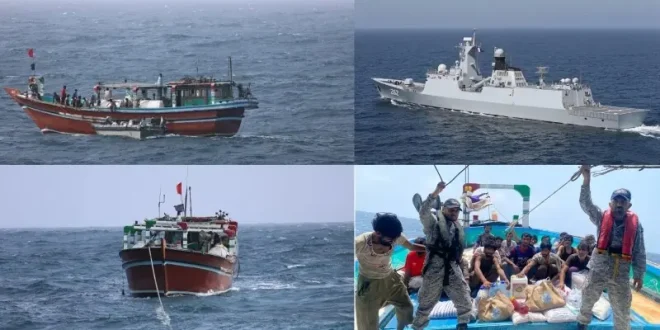
In a recent demonstration of its steadfast commitment to maritime safety and humanitarian assistance, the Pakistan Navy successfully rescued 19 crew members from a fishing vessel, ‘Al Jalali,’ stranded in the challenging waters of the North Arabian Sea. The incident, unfolding approximately 120 nautical miles south of the strategic port of Gwadar, involved a vessel crippled by engine failure, compounded by severe weather conditions brought on by the ongoing monsoon season. The crew comprised 11 Pakistani and 8 Iranian nationals, whose lives were in immediate peril.
A swift and coordinated response, initiated by the Joint Maritime Information Coordination Centre (JMICC) upon receiving the distress call, was executed with remarkable efficiency. Pakistan Naval Ship (PNS) Taimur was immediately tasked for the operation, providing safe evacuation, essential food, drinking water, and medical aid to the distressed crew, before eventually towing the vessel safely towards shore. The successful operation garnered widespread praise, with both Prime Minister Shehbaz Sharif and President Asif Ali Zardari commending the Navy’s professionalism, humanitarian spirit, and dedication to its national and international responsibilities.
Background: Understanding the Maritime Landscape
The North Arabian Sea is a vital maritime artery, connecting major shipping routes and coastal nations. However, it is also a region fraught with environmental hazards, especially during the monsoon season. These seasonal winds bring turbulent seas, high waves, and reduced visibility, significantly increasing risks for vessels, particularly smaller fishing dhows like ‘Al Jalali,’ which often operate with limited sophisticated navigation or communication systems.
Gwadar, Pakistan’s emerging deep-sea port, sits at the nexus of this dynamic maritime landscape. Its strategic location, at the mouth of the Persian Gulf and close to major global shipping lanes, makes robust maritime security and rescue capabilities indispensable. The Pakistan Navy’s mandate extends beyond territorial defense to encompass comprehensive maritime domain awareness, environmental protection, and, crucially, search and rescue (SAR) operations. The Joint Maritime Information Coordination Centre (JMICC) plays a pivotal role in this framework, acting as a central hub for receiving distress calls and orchestrating rapid responses across Pakistan’s maritime zones.
This isn’t an isolated event; just weeks prior, the Pakistan Navy, alongside the Pakistan Maritime Security Agency, undertook a similar rescue operation near Ormara, saving 20 crew members from a sinking dhow. These recurring incidents highlight the persistent dangers faced by seafarers in the region and the constant readiness required from maritime forces to ensure safety at sea.
Impact on Pakistan: Prestige, Economy, and Professionalism
The successful rescue operation carries significant implications for Pakistan, both domestically and on the international stage. Firstly, it considerably elevates Pakistan’s national prestige and soft power. By extending a helping hand to Iranian nationals, Pakistan reinforces its image as a responsible regional actor and a good neighbor, fostering goodwill and laying groundwork for deeper bilateral cooperation, particularly in shared maritime security concerns.
Secondly, from an economic standpoint, the safety of maritime routes is paramount for the ambitious development of Gwadar Port, a cornerstone of the China-Pakistan Economic Corridor (CPEC). Incidents like these, and the Pakistan Navy’s effective response, instill confidence in the safety and security of maritime operations in Pakistan’s waters. This assurance is crucial for attracting international investment and ensuring smooth trade flows, directly contributing to Pakistan’s economic growth and regional connectivity aspirations.
Thirdly, the operation serves as a powerful testament to the professionalism, training, and humanitarian ethos of the Pakistan Armed Forces. Such acts of compassion and efficiency bolster public trust and pride in the nation’s defenders, reinforcing the vital role they play not just in national security, but also in saving lives and upholding humanitarian values at sea. The commendations from the highest offices reflect this national appreciation.
Finally, it directly impacts the livelihoods and safety of the vast fishing communities, both Pakistani and regional, that depend on the Arabian Sea. Knowing that a capable rescue force stands ready provides a crucial layer of security for those engaged in this inherently dangerous profession.
Analysis: Beyond a Single Rescue – A Strategic Maritime Vision
The ‘Al Jalali’ rescue operation transcends the narrative of a single successful mission; it serves as a powerful indicator of Pakistan’s evolving maritime capabilities and strategic vision. This incident underscores the Pakistan Navy’s consistent investment in advanced training, modern assets like PNS Taimur, and robust command and control systems exemplified by the JMICC. Such coordinated efforts are vital in a region where maritime incidents, from engine failures to adverse weather, are frequent and unpredictable.
The inclusion of Iranian nationals among the rescued crew highlights the inherently international nature of maritime challenges and, consequently, the imperative for cross-border collaboration. Pakistan’s proactive humanitarian response not only saves lives but also cultivates diplomatic goodwill, essential for regional stability and cooperative security frameworks in the Arabian Sea. This aligns with Pakistan’s international responsibilities under the United Nations Convention on the Law of the Sea (UNCLOS) for search and rescue operations.
As Gwadar continues its trajectory as a pivotal regional trade hub, the role of the Pakistan Navy in ensuring maritime safety and security will only grow in importance. This operation reinforces Pakistan’s commitment to being a responsible maritime stakeholder. Moving forward, continuous investment in maritime domain awareness technologies, advanced SAR equipment, and fostering interoperability with regional partners will be critical to solidify Pakistan’s position as a dependable and humanitarian maritime power in the Arabian Sea, ensuring that these vital waters remain a conduit for prosperity, not peril.
“`