Dost Pakistan Journeys Tours and safaris in the North & South Pakistsn
Related Articles


“`html
Peshawar University Teacher Honoured with Ashoka Award in London: A Deep Dive into Pakistan’s Numismatic Excellence
The recent announcement of Prof. Gul Rahim Khan from the University of Peshawar receiving the prestigious Oriental Numismatic Society (ONS) Ashoka Prize 2025 in London has sent ripples of pride across Pakistan’s academic landscape. This distinguished international recognition celebrates his monumental contribution to the field through his research paper, “Attribution of Coins to the Queens of the Utpala Dynasty of Medieval Kashmir (JONS 260),” published in the Journal of the Oriental Numismatic Society (JONS).
The News: Global Acclaim for Numismatic Prowess
Prof. Gul Rahim Khan, a senior Professor in the Department of Archaeology at the University of Peshawar, has been awarded the ONS Ashoka Prize 2025, specifically for the best paper published in the society’s esteemed journal. This award underscores not only his individual brilliance but also highlights the calibre of academic research emanating from Pakistan. His winning paper delves into the fascinating and often overlooked topic of attributing coins to the queens of the Utpala Dynasty of medieval Kashmir, offering new perspectives on the socio-political standing and agency of female rulers during that era.
Speaking on this significant international honour, Prof. Gul Rahim Khan articulated the profound historical value of ancient coinage. He emphasized that numismatics extends far beyond merely collecting old money; it provides “metallic documents” that offer authentic evidence, bridging gaps where written historical records fall silent. This perspective is crucial for understanding regions like Kashmir, where conventional narratives may not fully capture the complexities of governance and societal structures.
Background: Unearthing History, Coin by Coin
A Distinguished Career in Archaeology
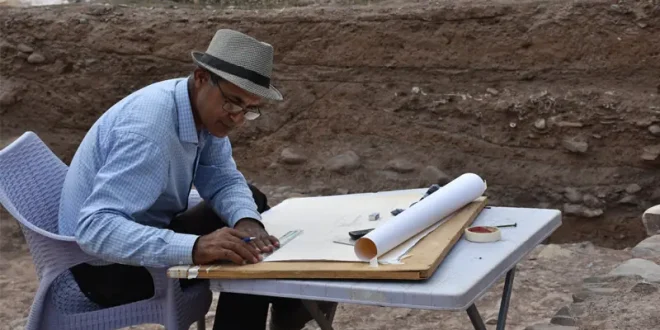
Prof. Gul Rahim Khan’s career spans over three decades, marked by unwavering dedication to higher education, archaeological exploration, and academic leadership. His journey has taken him from the classrooms of the University of Peshawar to international research collaborations, including significant work with the British Museum in London and initiatives supported by the Smithsonian Institution. His expertise lies particularly in ancient coinage, a field where his publications are considered invaluable resources globally.
Beyond his extensive published work, Prof. Khan’s multi-year excavations at the historic Hayatabad site in Peshawar brought to light early urban industrial complexes, significantly enhancing Peshawar’s standing on the global archaeological map. His contributions have been pivotal in decoding ancient monetary systems and understanding trade routes across the ancient Gandhara region and its neighbours.
The Power of Numismatics
Numismatics, the study or collection of coins, paper money, and medals, is a highly specialized branch of archaeology and history. As Prof. Khan eloquently states, coins are not just relics but miniature historical archives. They provide tangible evidence of economic systems, political authorities, cultural symbols, religious beliefs, and even artistic styles of bygone eras. For historians, coins can authenticate dates, identify rulers, reveal trade patterns, and even provide insights into propaganda and public image of ancient states.
Unveiling Medieval Kashmir and the Utpala Dynasty
The Utpala Dynasty ruled Kashmir during a significant period of its medieval history (roughly 9th-10th centuries CE). This era saw various political shifts and cultural developments. Prof. Khan’s research specifically focuses on attributing coins to the queens of this dynasty, a task that challenges conventional historical narratives which often marginalize or overlook the influence of female rulers. By meticulously linking specific coins to these queens, his work sheds light on their socio-political status, their roles in governance, and their powerful agency, thereby enriching our understanding of gender roles and power structures in medieval South Asia.
The Ashoka Prize: A Beacon of Excellence
The Oriental Numismatic Society (ONS) Ashoka Prize is a highly respected international award, specifically recognizing outstanding scholarly contributions in the field of Asian numismatics. Named after the ancient Indian emperor Ashoka, whose reign saw the widespread use of coinage, this prize signifies the highest level of academic achievement and innovation in numismatic research. Receiving this award for the “best paper” published in JONS underscores the profound impact and methodological rigor of Prof. Khan’s work.
Impact on Pakistan: Elevating Academic Standing and Inspiring Future Generations
Prof. Gul Rahim Khan’s achievement carries significant implications for Pakistan’s academic and archaeological communities:
- Global Recognition: The Ashoka Prize places Pakistani academic research on the global stage, demonstrating that institutions like the University of Peshawar are producing scholarship that meets and exceeds international standards. This enhances the country’s reputation in specialized fields like archaeology and history.
- Inspiration for Young Scholars: Prof. Khan’s success serves as a powerful inspiration for young scholars in Pakistan. It validates the pursuit of specialized research and encourages them to engage with their country’s rich heritage using modern, scientific methodologies. As Prof. Khan himself noted, it highlights the critical need to “continue training young scholars to preserve and decipher this heritage.”
- Highlighting Pakistan’s Heritage: Pakistan boasts an incredibly rich archaeological landscape, often referred to as a “treasure trove” of world heritage. This award draws international attention to this fact, potentially attracting further research collaborations and investment in the preservation and exploration of sites within the country.
- Boosting Institutional Prestige: The recognition significantly boosts the prestige of the University of Peshawar and its Department of Archaeology, affirming its role as a leading center for archaeological studies in the region.
Analysis: Rewriting History with Metallic Evidence
Prof. Gul Rahim Khan’s Ashoka Prize is more than just an individual accolade; it’s a testament to the transformative power of rigorous, specialized research. His work on the Utpala Dynasty queens exemplifies how numismatic studies can challenge and expand conventional historical narratives.
Firstly, it underscores the interdisciplinary value of numismatics. By marrying the detailed analysis of ancient coinage with historical, sociological, and gender studies perspectives, Prof. Khan provides a more nuanced understanding of medieval Kashmiri society. His findings compel historians to re-examine the roles of women in governance, moving beyond simplistic interpretations often derived solely from patriarchal written chronicles.
Secondly, his achievement champions the importance of archaeological evidence as primary source material. In many ancient and medieval contexts, official histories were often curated by specific power structures, potentially omitting or downplaying certain figures. Coins, being direct products of their time and often serving as declarations of sovereignty, offer an unvarnished glimpse into political realities, including the assertion of power by female rulers who might otherwise be relegated to footnotes.
Finally, Prof. Khan’s long-standing career, marked by international collaborations and significant excavations, highlights the importance of sustained commitment to scholarly pursuits. His call for training young scholars resonates deeply in a region rich in undocumented history. By equipping new generations with advanced scientific methodologies, Pakistan can continue to unlock the invaluable chapters of its world heritage, ensuring that its rich past is not only preserved but also correctly interpreted and celebrated on the global stage.
In essence, Prof. Gul Rahim Khan’s Ashoka Prize is a powerful reminder that history is continuously being written, not just in dusty tomes, but also in the metallic imprints of coins, awaiting dedicated scholars to decode their timeless stories.
“`