Dost Pakistan Journeys Tours and safaris in the North & South Pakistsn
Related Articles



Beneath the Surface: Pakistan’s IMF Deal and Lingering Economic Realities
Published in October 2026
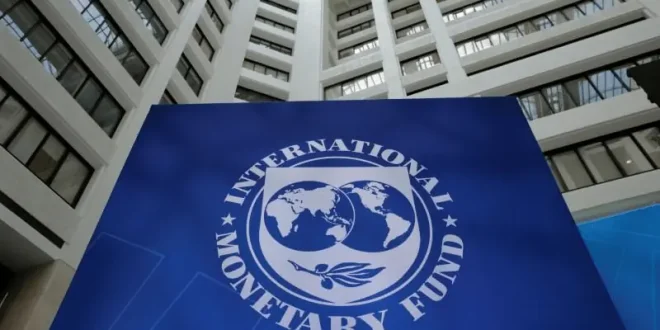
In a financial landscape often punctuated by high-stakes negotiations and last-minute deals, the recent staff-level agreement between the International Monetary Fund (IMF) and Pakistan stood out for its remarkable lack of drama. After two weeks of consultations in Islamabad, the IMF mission concluded its work, agreeing to release a tranche of $1.2 billion following approval by its Executive Board. While this outcome was largely anticipated and brought a degree of market reassurance, a deeper dive reveals that the underlying economic challenges for Pakistan remain as formidable as ever, hinting at a fragile stability rather than a robust recovery.
The News: A Smooth Sailing, For Now
The latest IMF staff-level agreement, covering the fourth balance-of-payments and third climate financing reviews, marked a stark contrast to previous rounds, particularly the contentious negotiations witnessed in March 2026. That earlier period saw virtual talks conclude without an immediate deal, creating significant market anxiety until funds were finally cleared two months later. This time, the process was notably smoother, attracting fewer headlines and seemingly little contention.
The primary reason for this calm was Pakistan’s apparent adherence to crucial fiscal targets, most notably a commitment to a primary surplus of 2% of GDP in the current budget. Having already negotiated and aligned its budget with the lender’s demands, Islamabad effectively smoothed the path for this agreement. The IMF’s assessment, perhaps generously, acknowledged Pakistan’s efforts in “preserving stability” amidst regional conflicts and noted an increase in foreign exchange reserves to approximately $21.5 billion, alongside an easing of inflation from its prior peaks.
Background: Pakistan’s Cycle of IMF Engagement
Pakistan’s recurring reliance on IMF programs is a testament to its perennial struggle with structural economic imbalances. The IMF, acting as a global lender of last resort, provides financial assistance to countries facing balance-of-payments crises – situations where a nation cannot meet its foreign exchange obligations. For Pakistan, this often stems from a persistent current account deficit, fueled by low export earnings relative to imports, coupled with insufficient foreign investment and remittances.
Historically, Pakistani governments have grappled with a narrow tax base, inefficient state-owned enterprises (SOEs), and a crippling circular debt within the energy sector, which continuously drains public finances. Each IMF program comes with a set of stringent conditions, or “conditionalities,” designed to address these underlying issues, often involving fiscal austerity, currency adjustments, and structural reforms. The “Article IV consultation” mentioned in the news is part of the IMF’s routine surveillance, where it conducts annual health checks on member countries’ economies, irrespective of whether they are under a program.
The “drama” of past negotiations often arose when Pakistan found it challenging to meet these conditionalities due to political constraints or capacity issues. The relative ease of the current agreement suggests that critical fiscal decisions, such as budget allocations and revenue generation targets, had been pre-negotiated and largely incorporated, thus reducing the need for hard bargaining during the actual review mission.
Impact on Pakistan: Stability vs. Sustainability
While the immediate release of $1.2 billion provides a welcome boost to Pakistan’s foreign exchange reserves and sends a positive signal to international markets and investors, its impact remains largely a short-term reprieve. The IMF’s positive pronouncements regarding stability and easing inflation mask a more challenging reality “beneath the surface.”
A closer examination reveals significant economic fragilities. Despite inflation easing, it still stood at 10.3% in September, considerably above the State Bank’s medium-term target. This persistent inflation erodes purchasing power and exacerbates the cost of living crisis for ordinary citizens. More critically, the 3.6% economic growth last year, when viewed against an annual population growth of nearly 2%, translates into negligible per capita income gains. This anemic growth rate is insufficient to lift a significant portion of the population out of poverty.
Indeed, the World Bank’s grim forecast of poverty affecting approximately 42.4% of the population by 2025, with an additional 1.9 million people slipping below the poverty line in a single year, underscores the severe human cost of Pakistan’s economic stagnation. The export sector, a crucial engine for sustainable growth, continues to underperform; goods exports fell by 6% to $30.1 billion, with textiles making up a disproportionate $17.9 billion. Meanwhile, imports surged by 8% to $69.8 billion, widening the merchandise trade deficit to an alarming $39.6 billion. While growth in IT services offers a glimmer of hope, it is no substitute for a robust, diversified manufacturing base capable of competing globally.
The IMF’s recommendations, many of which echo those from previous reviews, highlight the persistent structural issues that Pakistan has yet to decisively address. These include the politically sensitive phasing out of the costly and broadly targeted fuel support scheme, ensuring timely tariff adjustments to prevent the recurrence of circular debt in the power sector, developing a credible medium-term tax strategy, promoting private participation in power distribution, improving governance of SOEs, and making concrete progress on privatisation. The repetition of these core demands begs a critical question: how much genuine, fundamental change is truly taking place beyond meeting immediate fiscal targets?
Analysis: The Unanswered Questions of Reform
The seemingly seamless IMF agreement, while a testament to Pakistan’s ability to meet immediate fiscal commitments, paints a picture of a nation achieving short-term stability at the cost of deferring deeper structural transformations. The “beneath the surface” narrative reveals a fundamental disconnect between maintaining financial stability and achieving sustainable, inclusive economic growth. The IMF’s “generous” assessment likely reflects Pakistan’s compliance with technical benchmarks, but these metrics alone do not fully capture the quality of life for its citizens or the long-term health of its economy.
The challenge for Pakistan is not merely to secure bailout packages but to break free from the cycle of dependency by fostering a competitive, export-oriented economy that creates jobs and alleviates poverty. The repeated calls for reforms – from rationalising subsidies to privatising SOEs and enhancing tax collection – point to areas where implementation has been historically weak, often due to significant political pushback and a lack of sustained commitment across successive governments. Unwinding broad subsidies, for instance, is politically arduous, as it directly impacts millions and can trigger public unrest.
Without a concerted and sustained effort to implement these politically difficult but economically vital reforms, Pakistan risks merely treading water. A manufacturing base that sells more abroad, a diversified export portfolio, a robust domestic revenue mobilization strategy, and significant investment in human capital are the true engines of sustainable progress. While the current IMF tranche offers a temporary lifeline, the government’s ability to demonstrate an economy that grows fast enough to genuinely cut poverty and boost exports remains the ultimate, and increasingly urgent, test. The question is not just whether the next tranche will arrive, but whether Pakistan can finally write a new economic script, one that moves beyond crisis management to genuine, enduring prosperity.