Dost Pakistan Journeys Tours and safaris in the North & South Pakistsn
Related Articles



“`html
Europe’s Fridge Cyberattacks: A Chilling Warning for Global Food Security and IoT Vulnerabilities
Recent cyberattacks targeting supermarket refrigeration systems across Europe have sent a stark warning about the evolving nature of cyber threats. These incidents, which caused widespread disruption and food spoilage, underscore the critical vulnerabilities in our increasingly interconnected world and raise urgent questions about food security and the resilience of essential infrastructure.
The News: A Spreading Cyber-Cold Wave
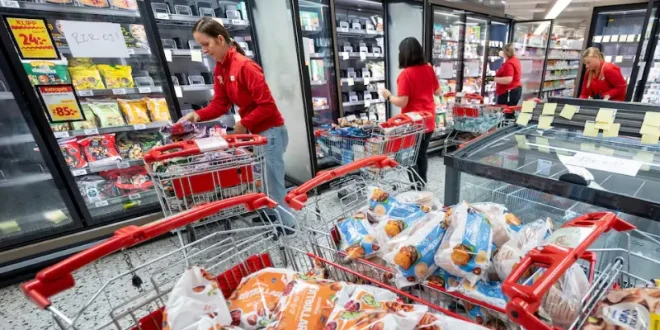
In a disturbing escalation of cyber warfare, supermarkets in at least five European countries – Belgium, Estonia, Finland, Luxembourg, and Sweden – experienced significant disruption when their cold cases and freezers suddenly malfunctioned. Temperatures reportedly soared to a scorching 50°C, forcing retailers to discard vast quantities of perishable food items. This widespread incident closely mirrors a similar attack just three weeks prior, which crippled hundreds of stores in France.
Major retailers, including Carrefour, Ikea, Delhaize, Colruyt, Intermarche, Coop, and Ica, confirmed experiencing technical problems, with many directly attributing them to cyberattacks. While no group has claimed responsibility for either wave of attacks, a common thread has emerged: many affected stores utilized older, “legacy” refrigeration control systems, often supplied by Danish manufacturer Danfoss, which are believed to lack modern security updates.
The immediate impact was felt across the supply chain, with disrupted operations, significant financial losses due to spoiled inventory, and concerns among consumers. Experts from national cybersecurity centers highlighted the expected spread of such vulnerabilities, emphasizing that “all kinds of vulnerabilities are being exploited ever more actively and rapidly.” EU officials, echoing these sentiments, stressed that “food security requires more attention at all levels,” recognizing the “exploitation of food” as a new and unsettling reality.
Background: The Silent Threat in Our Connected World
These sophisticated cyberattacks are not merely isolated incidents; they represent a concerning trend in how malicious actors target critical infrastructure. The primary vector for these attacks appears to be the “Internet of Things” (IoT) – the vast network of physical devices embedded with sensors, software, and other technologies that connect and exchange data over the internet. Supermarket refrigeration units, often managed remotely, are prime examples of such IoT devices.
The core issue lies with legacy IoT systems. Many industrial and commercial IoT devices were designed years ago with a focus on functionality and cost-efficiency, often neglecting robust cybersecurity protocols. Unlike regularly updated smartphones or computers, these systems frequently lack ongoing software support, security patches, or even the capacity for modern encryption, making them a soft target for cybercriminals.
The European supermarket attacks demonstrate a classic supply chain cyberattack. Instead of directly breaching each supermarket’s corporate network, attackers likely exploited a vulnerability in a shared third-party component – in this case, the older refrigeration control systems from a common vendor like Danfoss. Compromising one point in the supply chain allows access to numerous downstream targets, amplifying the impact.
Possible motivations behind such attacks are varied and alarming:
- Economic Disruption: Causing significant financial losses for retailers and disrupting essential goods supply.
- Geopolitical Instability: Undermining public confidence in essential services, potentially creating social unrest or demonstrating capability for larger-scale attacks.
- “Proof of Concept”: Showcasing the ability to disrupt physical infrastructure through cyber means, possibly as a precursor to more severe attacks on power grids, water systems, or transportation.
- Extortion or Ransomware: While not explicitly stated, such disruption could be used as leverage for future demands.
These incidents highlight a dangerous evolution in cyber warfare, shifting from data theft and espionage to direct physical sabotage of critical societal functions. The EU commissioner’s concerns about “food security” are particularly salient, as the exploitation of food supply chains can have immediate and devastating consequences for populations.
Impact on Pakistan: A Vulnerability Check for the Nation
While the recent supermarket attacks occurred in Europe, their implications resonate deeply for nations like Pakistan. Pakistan’s rapidly expanding retail sector, coupled with its reliance on imported technology and varying standards of cybersecurity preparedness, makes it susceptible to similar vulnerabilities.
- Similar Infrastructure: Many Pakistani supermarkets, cold storage facilities, food processing plants, and other critical supply chain components likely utilize comparable legacy refrigeration systems and IoT devices. The “plug-and-play” convenience of these systems often comes without adequate consideration for their long-term digital security.
- Supply Chain Interdependencies: Pakistan’s food supply chain, from agricultural production to retail distribution, involves complex interdependencies. A cyberattack on a single critical vendor or system could cascade, affecting food availability, quality, and prices across the country.
- Awareness and Investment: Cybersecurity awareness and investment in Pakistan, while growing, still lag behind many developed nations. Many businesses, particularly SMEs, may not have the resources or expertise to conduct thorough vulnerability assessments or implement robust cybersecurity protocols for their operational technology (OT) systems.
- Economic and Social Consequences: For a country grappling with economic challenges and food inflation, a large-scale disruption to the food supply chain due to cyberattacks could have dire economic consequences, leading to significant financial losses for businesses, price hikes for consumers, and even exacerbated food insecurity.
These European incidents serve as an urgent call for Pakistani businesses and government bodies to conduct comprehensive audits of their critical infrastructure, prioritize updating or isolating legacy systems, and invest in a proactive cybersecurity posture. The cost of prevention is invariably far less than the cost of recovery from a successful attack.
Analysis: The Unseen Battle for Our Daily Lives
The European fridge cyberattacks are a chilling reminder that the digital battlefield is expanding, directly impacting our physical world and essential services. This phenomenon underscores several critical points:
- The “Soft Underbelly” of IoT: The incidents expose the inherent fragility of IoT ecosystems, especially older iterations. Devices designed for convenience and cost, not security, are becoming the easiest entry points for malicious actors into critical infrastructure. This calls for a fundamental shift towards “security by design” in all connected devices.
- Evolution of Cyber Warfare: Cyber threats are no longer confined to data breaches or financial fraud. They have evolved into tools for direct physical disruption, economic sabotage, and even potentially, weaponized infrastructure. The exploitation of basic supermarket refrigeration systems illustrates how readily cyber capabilities can be leveraged to create real-world chaos.
- Global Interconnectedness, Global Vulnerability: A flaw in a specific product line from a single manufacturer can ripple across continents, affecting numerous entities. This highlights the urgent need for international cooperation, intelligence sharing, and unified standards for cybersecurity in critical sectors.
- The Crucial Role of Supply Chain Security: The attacks re-emphasize that an organization’s security is only as strong as its weakest link – which often lies with third-party vendors and their products. Rigorous vetting of suppliers and mandatory security requirements for all components in critical infrastructure are paramount.
- Food Security as a National Priority: The targeting of food supply chains elevates cybersecurity within the broader context of national security. Governments and private entities must recognize and treat digital resilience in food systems with the same urgency as physical defense.
The silence from those responsible for these attacks is perhaps the most ominous aspect. It suggests a calculated, perhaps state-sponsored, effort to test boundaries, sow discord, or simply demonstrate capability without explicit declaration. This ambiguity makes attribution difficult and response planning complex.
In conclusion, the European fridge cyberattacks are a significant wake-up call. They demand a proactive, holistic approach to cybersecurity that extends beyond traditional IT networks to embrace the operational technology that underpins our daily lives. From manufacturers to governments and individual businesses, there is an urgent need to shore up defenses, update legacy systems, and foster a culture of digital resilience. Failure to do so risks not just financial losses, but potentially widespread societal disruption and compromise of essential human needs.
“`