Dost Pakistan Journeys Tours and safaris in the North & South Pakistsn
Related Articles


AJK Standoff: Disinformation, Dissent, and the Battle for Narrative
Azad Jammu and Kashmir (AJK) is grappling with a complex situation characterized by political unrest, government crackdowns, and a growing battle against disinformation. While the AJK police chief refutes claims of blocked essential supplies and attributes such reports to “hybrid warfare” and AI-generated content, ground realities suggest a partial shutdown and government-imposed restrictions. This article delves into the roots of the crisis, the controversy surrounding the July 27 elections and reserved seats, and the broader implications for regional stability, democratic principles, and Pakistan’s international standing.
The News: Navigating Claims Amidst Unrest
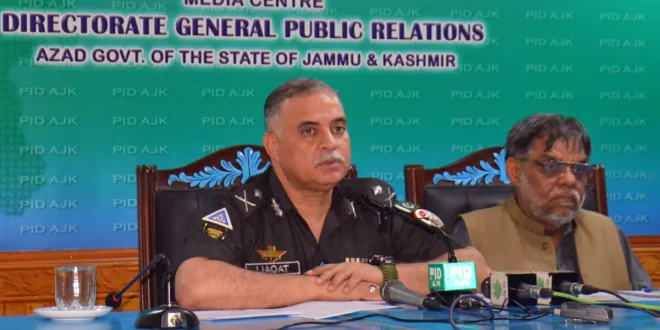
In a recent press conference, the Inspector General of Police (IGP) for Azad Jammu and Kashmir (AJK), Captain (retd) Liaqat Ali Malik, directly addressed swirling rumors about road closures and the obstruction of essential goods transport into the territory. He vehemently denied these allegations, asserting that all major entry points, including Kohala, Azad Pattan, and Bararkot, remain open for all types of traffic, subject only to routine security checks. The IGP attributed the spread of misinformation to a “hybrid warfare” environment, highlighting the increasing threat of AI-generated content and urging citizens, particularly the Kashmiri diaspora abroad, to rely solely on official government sources for authentic information.
Malik also specifically rejected a report by BBC Urdu, claiming it was based on unverified allegations and published without seeking the government’s version. He accused activists of the proscribed Joint Awami Action Committee (JAAC) of erecting barriers and attacking goods-laden trucks, while simultaneously affirming law enforcement’s efforts to keep roads clear. This official narrative, however, stands in contrast to other aspects reported from the ground: witnesses observed a partial shutdown in Muzaffarabad and Poonch divisions, with internet services suspended and petrol stations closed under government orders. The government has also initiated disciplinary action, suspending employees accused of participating in or facilitating JAAC-organised sit-ins, signaling a firm stance against dissent challenging state writ. Amidst this, the JAAC announced its intention to continue peaceful sit-ins, dispelling rumors of a long march.
Background: Roots of the AJK Crisis
The current tensions in AJK are deeply rooted in a long-standing political grievance, intensified by the upcoming July 27 elections. At the heart of the dispute is the JAAC’s primary demand: the abolition of 12 seats in the AJK Legislative Assembly. These seats are controversially reserved for refugees from Indian-occupied Kashmir who settled in mainland Pakistan after the 1947 partition. While intended to ensure representation, these seats have become a flashpoint due to persistent disputes over voter lists, constituency delimitation, and constitutional amendments, fostering a sense of disenfranchisement among local AJK populations who feel their representation is diluted by these “outsider” votes.
The situation escalated significantly in early June. On June 5, the AJK regional government declared the JAAC a proscribed organization under the anti-terrorism act (ATA). This was swiftly followed by a comprehensive crackdown, leading to the arrest of numerous JAAC leaders and the placement of 147 activists on the ATA’s Fourth Schedule—a list for individuals suspected of involvement in terrorist activities. This aggressive governmental response aimed to quell the burgeoning protest movement ahead of the crucial elections, but has instead intensified the political standoff and further complicated the democratic landscape in the region.
Impact on Pakistan: Beyond AJK’s Borders
The situation in Azad Jammu and Kashmir, while seemingly a regional issue, carries significant implications for Pakistan on multiple fronts:
- Internal Stability and Security: Persistent unrest in AJK can destabilize Pakistan’s broader internal security environment. A turbulent border region, especially one with strong emotional and political ties to the larger Kashmir dispute, can divert resources, create security challenges, and potentially encourage external interference.
- International Kashmir Narrative: Pakistan’s principled stance on the Kashmir dispute relies heavily on the democratic and stable governance of AJK as a model. Reports of government crackdowns, suppression of dissent, and allegations of misinformation within AJK can be exploited by adversaries, undermining Pakistan’s narrative on human rights and self-determination in the wider Kashmir context on international platforms.
- Economic Strain: Even partial shutdowns, transport blockades, and internet suspensions in AJK impose economic costs on local communities and disrupt trade flows. These localized economic pressures, if prolonged or widespread, can have ripple effects, impacting regional supply chains and potentially requiring financial interventions from the federal government.
- Democratic Principles and Human Rights: The proscription of a political body like JAAC and the subsequent crackdown, including the suspension of government employees for participating in protests, raise questions about freedom of expression and the right to peaceful assembly. How Pakistan handles dissent in AJK reflects on its commitment to democratic principles and human rights, both domestically and internationally.
- The Refugee Issue: The controversy over the 12 reserved seats is intrinsically linked to the historical context of the Kashmir conflict and Pakistan’s role in accommodating refugees. Any resolution or continued dispute regarding these seats will resonate deeply within the refugee communities across Pakistan and impact the narrative surrounding the overall Kashmir issue.
Analysis: A Complex Web of Challenges
The AJK crisis unfolds as a multi-layered challenge, interweaving issues of information control, political dissent, electoral fairness, and regional stability. The police chief’s assertion of “hybrid warfare” and the danger of AI-generated content underscores a critical contemporary issue: the weaponization of information. In an age where deepfakes and manipulated narratives can quickly go viral, distinguishing official truth from propaganda becomes increasingly difficult, especially in politically charged environments like AJK. However, while official warnings against disinformation are valid, they must be balanced with transparency and credibility, particularly when official accounts clash with credible eyewitness reports or independent media findings, as seen with the rejection of the BBC Urdu report.
The government’s heavy-handed response—proscribing JAAC, arresting leaders, placing activists on anti-terrorism schedules, and suspending employees—raises serious questions about the balance between maintaining law and order and upholding fundamental democratic rights. While the state has a legitimate interest in preventing chaos and ensuring public safety, suppressing dissent, particularly when it stems from long-standing electoral grievances, risks alienating a significant portion of the populace and deepening the crisis. Such actions can inadvertently fuel the very unrest they aim to quell, transforming political grievances into human rights concerns.
The core issue of the 12 reserved seats highlights a fundamental flaw in AJK’s electoral system, a vestige of historical complexities that now actively impede contemporary political stability. These seats, while historically justified to represent Kashmiri refugees, now create a perceived imbalance, particularly among AJK residents who advocate for greater local autonomy and direct representation. A sustainable solution necessitates open dialogue and a constitutional review to address these grievances fairly, ensuring both refugee representation and the electoral integrity desired by AJK’s indigenous population. The upcoming July 27 elections will undoubtedly be heavily influenced by these dynamics, and their perceived fairness will be crucial for any future stability.
The immediate economic and social costs—internet shutdowns, fuel shortages, and curtailed public life—are borne by ordinary citizens, fostering frustration and potentially eroding trust in governance. The situation calls for a nuanced approach that prioritizes dialogue, de-escalation, and a commitment to democratic processes. Resolving the AJK crisis demands not only robust security measures but also political wisdom, a willingness to engage with dissenting voices, and a transparent effort to address the root causes of discontent, thereby safeguarding both regional stability and the broader democratic values Pakistan champions.