 Dost Pakistan Journeys Tours and safaris in the North & South Pakistsn
Related Articles



A Nation Tested: Venezuela’s Dual Earthquake Crisis and the Path to Recovery
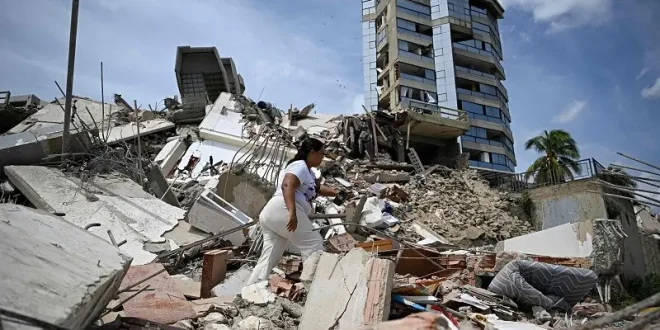
Venezuela has been plunged into an unprecedented humanitarian crisis following two powerful earthquakes that struck near its capital, Caracas, on June 24, 2026. The tremors, registering magnitudes of 7.2 and 7.5, have left thousands feared dead and critical infrastructure in ruins, highlighting the devastating confluence of natural disaster and pre-existing national vulnerabilities.
The Immediate Aftermath: A Struggle for Survival
The harrowing accounts from Caracas and the worst-affected La Guaira state paint a grim picture: buildings reduced to rubble, panicked residents fleeing into streets, and emergency services overwhelmed. With initial confirmed deaths at 184 and over 1,000 injured, the true scale of the catastrophe is still unfolding. The U.S. Geological Survey’s predictive modeling, suggesting a death toll potentially exceeding 10,000, underscores the immense human cost. Furthermore, a website set up by opposition leaders listing over 24,000 unaccounted individuals speaks volumes about the widespread chaos and the desperate search for loved ones.
The collapse of key structures, including sections of the airport in La Guaira and numerous residential buildings, has compounded the immediate challenge of rescue operations. The loss of power and water in many areas, particularly near the epicenter in Morn, further hampers efforts to reach survivors and provide critical aid. As the world watches, the immediate priority remains sifting through the debris, a task made more challenging by powerful aftershocks and the sheer volume of destruction.
Background: A Nation Already on the Brink
To fully grasp the magnitude of this disaster, one must consider Venezuela’s fragile state even before the ground began to shake. The earthquakes did not strike a stable nation but one already grappling with profound socio-economic and political turmoil:
- Geological Vulnerability: Venezuela lies in a highly active seismic zone where the Caribbean and South American tectonic plates meet. Historical records, including devastating quakes in 1812 (killing an estimated 30,000) and 1967 (claiming 240 lives), serve as stark reminders of this inherent risk.
- Economic Crisis: For years, Venezuela has been mired in a severe economic downturn, characterized by hyperinflation—exceeding 500 percent annually as noted in the news—and widespread shortages of essential goods. This has decimated public services and infrastructure.
- Crumbling Infrastructure: The news explicitly highlights how infrastructure in Caracas was “already crumbling due to lack of investment.” This pre-existing weakness meant buildings and vital services were inherently less resilient, making them more susceptible to collapse and failure during a major seismic event.
- Political Instability: The country has been deeply polarized, with ongoing anti-government protests and international pressure, including the US attempt to apprehend President Nicolas Maduro. This internal division, even during a crisis (as evidenced by the government’s call for unity versus the opposition’s independent tracking of missing persons), complicates unified response efforts.
- Humanitarian Needs Pre-Quake: The UN aid chief’s statement that 8 million people already required humanitarian assistance before the quake paints a sobering picture. This means the country’s existing capacity to cope with a crisis was already stretched thin, making the current catastrophe exponentially harder to manage.
- Information Challenges: The plea from the UN’s Venezuela human rights mission to lift social media restrictions, deeming it a “matter of life and death,” underscores the critical role of unrestricted communication in disaster zones, especially where cellular services are unreliable.
These compounded vulnerabilities mean the earthquakes have not merely caused destruction but have amplified an already dire humanitarian situation, pushing millions deeper into hardship.
Impact on Pakistan: Lessons in Resilience and Solidarity
While Venezuela is geographically distant from Pakistan, the tragic events offer important insights and underscore shared humanitarian principles. The direct impact on Pakistan in terms of trade or geopolitics is minimal. However, the crisis resonates on several levels:
- Humanitarian Solidarity: Pakistan, itself a nation frequently impacted by natural disasters like floods and earthquakes, understands the profound human suffering and the immense challenges of disaster response. It is common for Pakistan to extend humanitarian support and condolences in such situations, reflecting a global solidarity that transcends borders.
- Lessons in Disaster Preparedness: The Venezuelan crisis serves as a critical case study for countries like Pakistan, which also lie in seismically active zones. It starkly highlights the importance of:
- Building Codes and Infrastructure Resilience: The collapse of “crumbling infrastructure” in Venezuela is a powerful warning. For Pakistan, which has seen similar issues in past quakes, it reinforces the need for rigorous enforcement of building codes, investment in resilient infrastructure, and urban planning that accounts for seismic risks.
- Strengthening Emergency Services: The overwhelming nature of the Venezuelan disaster underscores the need for robust, well-equipped, and adequately funded emergency response mechanisms.
- Addressing Underlying Vulnerabilities: The pre-existing humanitarian crisis, economic woes, and political instability in Venezuela greatly exacerbated the earthquake’s impact. This reminds Pakistan of the necessity to address socio-economic disparities and ensure stable governance to build national resilience against future shocks.
- Role of International Cooperation: The rapid international response to Venezuela, despite existing political tensions, demonstrates the critical role of global cooperation in disaster relief. Pakistan has often been a recipient and contributor to such efforts, reinforcing its commitment to international humanitarian principles.
Thus, while the impact may not be direct, the Venezuelan tragedy offers a poignant reminder of shared human vulnerability and the universal need for preparedness, resilience, and compassionate response.
Analysis: A Complex Recovery Amidst Deep Divides
The road to recovery for Venezuela will be long and fraught with unique challenges, largely defined by the intersection of natural catastrophe and deep-seated national issues:
- Compounding Crises: The earthquakes have transformed an already severe humanitarian situation into an unimaginable catastrophe. The 8 million people who previously needed aid will now likely see that number skyrocket. This compounds the challenge of providing food, shelter, and medical care, especially with critical infrastructure damaged and logistical routes disrupted.
- Geopolitical Test Case: The swift and broad international response, with leaders from the US, Russia, Europe, Latin America, China, and Iran all offering aid, is notable. This moment of crisis could potentially serve as a rare opportunity for temporary geopolitical cooperation, yet the underlying political tensions (e.g., US sanctions, internal protests) could also complicate the delivery and distribution of aid, raising concerns about impartiality and access. Interim President Delcy Rodriguez’s call for unity within Venezuela is significant, signaling an awareness of how internal divisions could hinder recovery.
- The Infrastructure Imperative: The explicit mention of “crumbling infrastructure” is a critical analytical point. It highlights how years of underinvestment and economic strain directly translate into heightened vulnerability when disaster strikes. Rebuilding will require not just resources but a fundamental re-evaluation of urban planning and construction standards, a daunting task for a struggling economy.
- Information Warfare in a Disaster Zone: The UN’s call to lift social media restrictions is crucial. In a disaster, real-time information is a lifeline for coordinating rescue, locating missing persons, and disseminating vital safety instructions. Restricting information flow, intentionally or due to infrastructure failure, can cost lives and breed distrust, further complicating recovery efforts.
- Long-Term Societal Impact: Beyond the immediate loss of life and property, the earthquakes will have profound long-term psychological and societal impacts. Mass displacement, trauma, disruption of livelihoods, and the destruction of communities will require sustained support and resources far beyond initial emergency aid. The prospect of rebuilding in a country already facing immense economic hardship poses an existential question for many Venezuelans.
Conclusion
The dual earthquakes have laid bare Venezuela’s deep-seated vulnerabilities, transforming a nation already in crisis into one facing an unparalleled humanitarian disaster. The immediate focus is on rescue and relief, a task made immensely difficult by the scale of destruction and pre-existing challenges. However, the tragedy also presents a critical juncture for Venezuela. The unprecedented international solidarity offers a glimmer of hope, but the ultimate path to recovery will depend heavily on internal unity, transparent governance, and a sustained global commitment to help rebuild not just structures, but lives and livelihoods. The lessons from Caracas resonate globally, serving as a stark reminder of humanity’s shared fragility in the face of natural forces and the imperative to build resilient societies.

