Dost Pakistan Journeys Tours and safaris in the North & South Pakistsn
Related Articles

“`html
Pakistan’s Geopolitical Chessboard: Navigating Accusations and Aspirations
The News: PM Shehbaz Sharif’s Bold Address
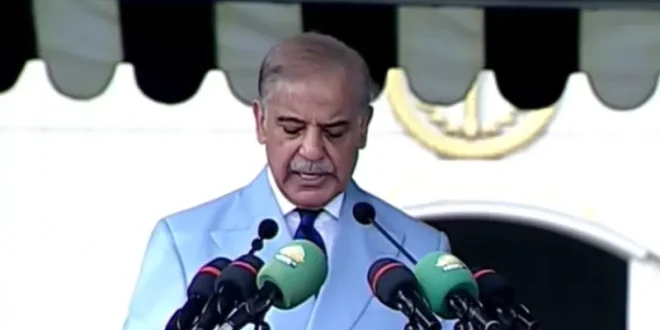
In a recent address at the Pakistan Naval Academy in Karachi, Prime Minister Shehbaz Sharif delivered a strong message, accusing India of employing “covert tactics and the use of proxies” to destabilize Pakistan. He linked these alleged actions to a “humiliating defeat” India supposedly suffered in May last year, without specifying the exact conflict. This accusation forms part of a broader narrative where Pakistan faces multi-faceted security challenges, including what he termed “foreign-sponsored terrorism” emanating from its western borders.
Beyond these direct security concerns, PM Sharif positioned Pakistan as a significant player in regional and global diplomacy. He highlighted the nation’s steadfast commitment to advocating for the self-determination of Kashmiris, Gazans, and Palestinians. Furthermore, he claimed Pakistan’s crucial role as a peacemaker, citing its mediation efforts leading to an “Islamabad Memorandum of Understanding” between the United States and Iran, a document he stated he also signed as a mediator. The recent visit by Iranian President Masoud Pezeshkian was also presented as an acknowledgment of Pakistan’s peace-promoting role.
The Prime Minister underscored the escalating importance of maritime security for the global economy and supply chains, asserting that the right of free passage and navigation are now essential. He reaffirmed his government’s dedication to bolstering the Pakistan Navy into a potent force capable of ensuring national defense and acting as a stabilizing presence in the wider maritime region. Addressing the graduating cadets, PM Sharif emphasized adapting to cutting-edge technologies like artificial intelligence and unmanned systems, while upholding core values of commitment, courage, and integrity.
Background: A Region Defined by Tensions and Strategic Plays
Prime Minister Shehbaz Sharif’s statements emerge from a complex tapestry of historical rivalries, ongoing conflicts, and shifting geopolitical alignments in South Asia and beyond.
- India-Pakistan Antagonism: The relationship between India and Pakistan has been marred by decades of animosity, marked by three major wars and numerous border skirmishes. The disputed territory of Jammu and Kashmir remains a central flashpoint, leading to mutual accusations of cross-border terrorism and proxy warfare. Pakistan’s claim of India’s “humiliating defeat” in May last year, while not universally recognized as a major military engagement, fits into a long-standing pattern of rhetorical jousting and counter-narratives used by both nations to rally domestic support and influence international opinion. Such claims often reflect a deeper ideological struggle rather than specific military outcomes.
- Western Border Challenges: The mention of “foreign-sponsored terrorism” from western borders primarily refers to Pakistan’s ongoing struggle against various militant groups, most notably the Tehrik-i-Taliban Pakistan (TTP). Pakistan frequently accuses Afghanistan-based elements, and at times India, of supporting these groups to destabilize its western provinces, particularly Balochistan and Khyber Pakhtunkhwa. This porous border region, often a sanctuary for militants, presents a persistent security headache for Islamabad.
- The Kashmir Question: Pakistan’s unwavering support for the Kashmiri people’s right to self-determination is a foundational tenet of its foreign policy, rooted in the partition of British India. This stance resonates deeply with its domestic audience and is often reiterated on international platforms.
- Broader Muslim World Advocacy: The vocal advocacy for Gazans and Palestinians links Pakistan’s foreign policy to the wider Islamic world, aligning it with a cause that elicits strong emotional responses globally. This move serves to cement Pakistan’s identity as a defender of Muslim rights on the world stage.
- Pakistan’s Diplomatic Aspirations: Prime Minister Sharif’s emphasis on Pakistan as a “peacemaker” and mediator, particularly concerning the alleged US-Iran MoU, showcases the nation’s desire to project itself as a responsible and influential diplomatic actor. While the specific details of a US-Iran MoU mediated by Pakistan under the mentioned timeframe are not widely corroborated by independent international reports, the statement reflects Pakistan’s strategic aim to play a constructive role in regional de-escalation, especially given its historical ties with both the United States and Iran. The recent Iranian presidential visit further underlines Pakistan’s efforts to strengthen bilateral ties with key regional players, enhancing its perceived diplomatic leverage.
- Maritime Strategic Importance: Pakistan’s location along the Arabian Sea, bordering the Strait of Hormuz, makes its maritime domain strategically vital for global trade and energy routes. The growing regional competition, increasing naval activities, and recent disruptions in maritime supply chains (like those in the Red Sea) underscore the critical need for a robust navy, not just for coastal defense but also for safeguarding international shipping lanes and Pakistan’s own burgeoning trade ambitions, including those related to the China-Pakistan Economic Corridor (CPEC).
Impact on Pakistan: Navigating a Tightrope of Security and Diplomacy
The issues raised by PM Shehbaz Sharif have profound implications for Pakistan’s internal stability, economic prospects, and international standing:
- Internal Stability and National Cohesion: The accusations against India and concerns about foreign-sponsored terrorism serve to galvanize domestic support against perceived external threats. This narrative can foster national unity, but it also highlights the persistent internal security challenges that divert resources and attention from critical socio-economic development. Persistent instability deters foreign investment and hampers economic growth, already strained by high inflation and a challenging fiscal environment.
- Economic Burden of Defense: Maintaining vigilance on both eastern and western borders, coupled with the commitment to strengthening the Navy, entails significant defense expenditure. While necessary for national security, these costs add to Pakistan’s fiscal pressures, potentially impacting other vital sectors like health and education. The focus on maritime security, however, is also linked to economic aspirations, as a stable maritime environment is crucial for trade and the success of CPEC.
- International Relations and Diplomacy: Pakistan’s strong stance on Kashmir and Palestine positions it as a voice for certain global causes, which can strengthen its ties with specific countries and blocs. However, its accusations against India can further complicate efforts at de-escalation and dialogue in South Asia. The portrayal of Pakistan as a “peacemaker” aims to enhance its global image, attracting diplomatic goodwill and potential partnerships. Success in actual mediation efforts could significantly boost its influence.
- Military Modernization: The emphasis on embracing cutting-edge technologies, artificial intelligence, and unmanned systems for the Navy reflects a strategic necessity. In an evolving threat landscape, military modernization is crucial for maintaining deterrence and operational effectiveness, especially in the maritime domain. This also signals a commitment to adapting to modern warfare realities.
Analysis: A Strategic Message for Multiple Audiences
Prime Minister Shehbaz Sharif’s address at the Naval Academy was a carefully calibrated speech, designed to resonate with multiple audiences simultaneously.
For the domestic audience, particularly the military establishment and the general public, the speech aimed to reinforce the government’s resolve in confronting security threats. By squarely blaming India for “covert tactics” and proxies, the Prime Minister taps into a deeply entrenched narrative of external aggression, fostering national unity and justifying defense spending. Highlighting the armed forces’ continued fight against terrorism from the western borders further underscores their sacrifices and the ongoing nature of internal security challenges. The rhetoric also serves to bolster the government’s credibility as a guardian of national interests and sovereignty.
Addressing the international community, the speech sought to project Pakistan as a responsible state grappling with complex geopolitical challenges. By presenting Pakistan as a “peacemaker” and mediator in critical regional disputes (such as the claimed US-Iran MoU), PM Sharif aimed to enhance its diplomatic standing and legitimacy on the global stage. This narrative also subtly seeks international attention and perhaps intervention on issues like Kashmir and Palestine, portraying Pakistan as an advocate for justice and self-determination. The emphasis on maritime security is a strategic play to align Pakistan’s interests with global concerns about freedom of navigation and trade, potentially attracting partnerships for naval development and security cooperation.
The choice of a Naval Academy passing out parade as the venue for such pronouncements is also significant. It serves to boost the morale of the armed forces, assuring them of governmental support and acknowledging their crucial role in national defense. The focus on technological advancement for the Navy underscores a forward-looking vision for Pakistan’s defense capabilities in an increasingly complex maritime environment.
However, the strong accusations against India, while serving domestic political needs, also risk further entrenching the adversarial relationship, potentially hindering future prospects for dialogue and de-escalation. The difficulty in independently verifying claims of covert operations means such statements often contribute to a cycle of accusation and counter-accusation, perpetuating regional instability.
In essence, PM Shehbaz Sharif’s speech was a multi-faceted communication strategy. It skillfully blended national security imperatives with diplomatic aspirations, aiming to rally support at home while positioning Pakistan as a vital, yet challenged, player in the intricate geopolitical chessboard of South Asia and beyond. The effectiveness of this strategy will depend on its resonance with both domestic expectations and the broader international reception of Pakistan’s stated roles and claims.
“`