Dost Pakistan Journeys Tours and safaris in the North & South Pakistsn
Related Articles

“`html
Recurring Fires Expose Safety Gaps at H-9 Weekly Bazaar in Islamabad: A Call for Systemic Reform
By AI Analyst
The News: A Blaze Too Familiar
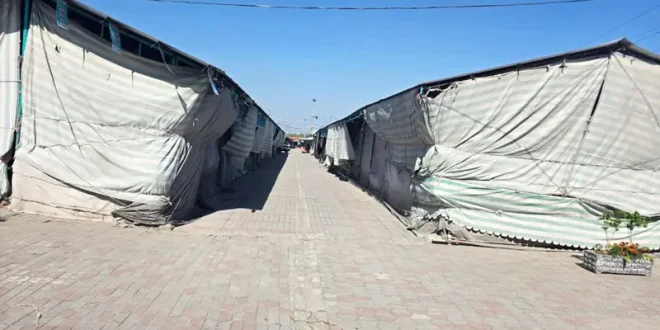
Islamabad’s popular H-9 Weekly Bazaar recently bore witness to yet another devastating fire, the fifth major incident in just nine years. This latest blaze consumed over 374 stalls out of 2,749, reducing garments and other goods worth millions of rupees to ashes and leaving countless stallholders in profound distress. While an inquiry committee is tasked with determining the exact cause, the pattern of these recurring infernos points to deeper, systemic issues rather than isolated accidents.
Key concerns highlighted include the persistent violation of the “dawn-to-dusk” policy, which mandates the removal of goods at the end of each market day. Instead, stallholders reportedly store their merchandise on-site, often under highly flammable tarpaulins, effectively transforming temporary stalls into permanent storage units. Compounding the crisis, a fire tender, stipulated to be present round-the-clock, was reportedly absent or significantly delayed during the crucial initial moments of the fire, allowing the blaze to escalate rapidly.
Background: The Unfolding Saga of a Vital Market
The H-9 Weekly Bazaar is more than just a market; it’s a bustling hub of commerce, a source of livelihood for thousands of small traders, and a go-to shopping destination for Islamabad’s residents seeking affordable goods. These weekly bazaars are an integral part of Pakistan’s informal economy, providing vital income streams and accessible commerce.
The “dawn-to-dusk” policy is fundamental to the operational model of such temporary markets. It aims to minimize risk by ensuring that stalls are dismantled and goods removed daily, preventing the accumulation of flammable materials and reducing the potential for overnight incidents. However, for years, the H-9 Bazaar has reportedly defied this principle, with goods consistently stored on-site. This practice not only contravenes safety regulations but also elevates the market’s commercial value, transforming low-cost temporary stalls into lucrative, semi-permanent enterprises.
The municipal authority, MCI (Metropolitan Corporation Islamabad), has previously attempted to enforce the “dawn-to-dusk” rule. Following a prior fire in 2014, the Directorate of Municipal Administration (DMA) issued a notification to this effect. However, stallholders challenged this directive in the Islamabad High Court (IHC), which subsequently restrained the DMA from implementation. This legal injunction has created a significant hurdle for MCI, leaving them in a bind where safety regulations cannot be strictly enforced, contributing to the persistent risk environment. The MCI has since filed an intra-court appeal, indicating an ongoing legal deadlock that directly impacts public safety.
Impact on Pakistan: Beyond the Ashes
The recurring fires at the H-9 Bazaar ripple far beyond the immediate vicinity, casting a wide shadow over Pakistan’s socio-economic fabric and governance structures.
- Economic Devastation and Livelihoods: For the small traders, often sole proprietors or family businesses, each fire represents a catastrophic loss. Millions of rupees in inventory are destroyed, often uninsured or underinsured, leading to immense financial hardship, debt, and the potential collapse of livelihoods. This has a direct impact on poverty alleviation and economic stability for vulnerable segments of society.
- Governance and Regulatory Ineffectiveness: The inability to enforce clear safety policies, compounded by a legal impasse, exposes significant gaps in urban governance. It highlights a breakdown in coordination between civic agencies, judicial bodies, and market stakeholders. This regulatory vacuum creates a dangerous precedent, suggesting that rules can be flouted without effective consequence, eroding public trust in institutions.
- Public Safety and Confidence: These incidents raise serious questions about public safety in urban commercial spaces across Pakistan. If a prominent market in the federal capital struggles with basic safety protocols, it suggests a broader challenge for other, less-regulated markets nationwide. This can impact consumer confidence and the overall perception of safety in public gatherings.
- Strain on Public Services: Each major fire incident places an undue burden on emergency services, diverting resources and personnel that could be deployed elsewhere. The repeated need for inquiry committees also consumes administrative time and public funds, often without leading to lasting solutions.
- Urban Planning Challenges: The conflict between the ‘temporary’ nature of weekly bazaars and the ‘permanent’ commercial ambitions of stallholders underscores a fundamental challenge in urban planning. How can cities accommodate vibrant informal economies while ensuring safety, order, and sustainable development? The H-9 saga reflects a broader national struggle to manage rapid urbanization and the proliferation of informal commercial activities.
Analysis: Deciphering the Cycle of Disaster
The recurring fires at H-9 Weekly Bazaar are not random misfortunes but symptoms of a complex interplay of systemic failures, legal challenges, and socio-economic pressures. The immediate cause of the latest fire may be under investigation, but the underlying vulnerabilities are starkly clear.
The Policy-Implementation Chasm: The “dawn-to-dusk” policy is a sound safety measure for temporary markets. However, its consistent non-enforcement is the most critical failing. This gap stems from a combination of factors: insufficient monitoring, lack of resources for daily oversight, and, critically, the legal injunction preventing MCI from fully implementing its mandate. When policies cannot be enforced, they become mere guidelines, devoid of practical impact.
Stallholders’ Dilemma vs. Public Safety: Stallholders argue that daily removal of goods is impractical and that they should be allowed “shutter shops.” While their economic necessity to store goods is understandable, their proposed solution fundamentally alters the character of a weekly bazaar. Transforming temporary stalls into permanent structures without proper fire safety designs, adequate spacing, and robust infrastructure would exacerbate rather than solve the problem. Moreover, it raises issues of equity and access for other vendors, and urban planning considerations for a space designated for temporary commerce.
Flammable Materials and Poor Design: The extensive use of highly flammable tarpaulins as covers and the dense packing of goods, particularly clothing, turn the bazaar into a tinderbox. The absence of fire breaks, clear aisles for emergency access, and proper electrical wiring standards (especially with past reliance on solar panels and UPS systems) create an environment where a small spark can rapidly escalate into a catastrophic inferno.
Emergency Response Deficiencies: The reported absence or late arrival of the fire tender, despite SOPs requiring its round-the-clock presence, is an egregious failure. This points to a breakdown in emergency preparedness, oversight, and accountability within the responsible agencies. Timely response is paramount in containing fires in such dense, combustible environments.
The Legal Impasse: A Gordian Knot: The Islamabad High Court’s restraining order, while protecting stallholders’ immediate interests, inadvertently ties MCI’s hands in implementing crucial safety measures. This legal deadlock is a major impediment to reform. Resolving this requires a judicious approach that balances fundamental rights to livelihood with overriding public safety concerns.
Towards Sustainable Solutions:
Addressing the H-9 Bazaar crisis requires a multi-pronged, collaborative approach:
- Expedite Legal Resolution: The MCI must vigorously pursue its intra-court appeal to resolve the legal ambiguity. Perhaps a mediated solution that incorporates specific safety upgrades in exchange for some storage flexibility, but under strict, enforceable conditions, could be explored.
- Modernize Infrastructure and Safety Protocols: Invest in fire-resistant materials for stall construction. Design the bazaar with clear fire breaks, wider emergency access lanes, and designated, secure, fire-proof storage units away from the immediate stalls. Implement stringent electrical safety audits and prohibit unauthorized power sources.
- Strengthen Emergency Preparedness: Ensure strict adherence to SOPs for fire tender presence. Equip the fire department with modern equipment suitable for bazaar environments and conduct regular, unannounced drills.
- Stakeholder Engagement and Capacity Building: Facilitate continuous dialogue between MCI, stallholders’ representatives, urban planners, and safety experts. Educate vendors on fire safety best practices and the risks associated with non-compliance.
- Re-evaluate Urban Market Strategy: A broader review of Islamabad’s informal markets is needed. If demand for permanent shops exists, dedicated, purpose-built commercial spaces should be developed, rather than allowing temporary markets to morph into unsafe, semi-permanent zones.
The recurring fires at the H-9 Weekly Bazaar are a stark reminder that safety is not an option but a prerequisite for any thriving urban space. Without systemic reforms, robust enforcement, and a collaborative spirit, Islamabad risks perpetual cycles of loss and devastation in its vital informal economy.
“`