Dost Pakistan Journeys Tours and safaris in the North & South Pakistsn
Related Articles


“`html
Gul Plaza Fire: Six Months On, Justice Remains Elusive in Karachi Tragedy
The News: A Lingering Shadow Over Karachi’s Quest for Justice
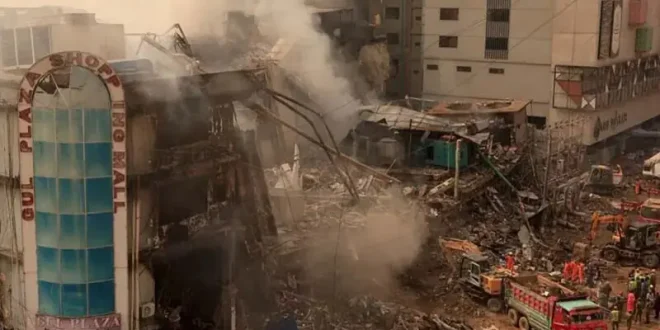
Six months have passed since the devastating Gul Plaza inferno claimed 72 lives in Karachi on January 17, 2026. Yet, the anguish of the victims’ families is compounded by the glaring failure of authorities to submit a final charge sheet in the case. This protracted delay casts a long shadow over Pakistan’s justice system, raising serious questions about investigative competence, bureaucratic hurdles, and the broader issue of accountability.
Recent reports indicate that despite attempts a month ago, the investigating officer has repeatedly failed to rectify identified defects in the initial report, preventing its submission to the court. The prosecution has explicitly demanded the inclusion of crucial documents such as site inspection reports, details of former union officials, and records pertaining to an anti-corruption case linked to the plaza’s construction. The investigation reportedly points fingers at four union officials, the owner of an artificial flower shop, and his teenage son, who remain at large, for their alleged negligence and role in the tragedy.
Background: A Confluence of Negligence and Systemic Failures
The Gul Plaza fire wasn’t just a tragic accident; it was a disaster waiting to happen, a culmination of chronic negligence and deep-seated systemic flaws. Gul Plaza, a prominent commercial hub in Karachi, was a bustling center for shoppers, its multi-storey structure packed with businesses.
The immediate catalyst, according to witness statements, was a seemingly innocuous act: an 11-year-old boy allegedly playing with matchsticks in an artificial flower shop. This detail, while tragic, opens up broader questions about child labor, parental supervision, and the desperate circumstances that often force minors into potentially dangerous working environments in Pakistan.
However, the real background to this tragedy lies far deeper. The investigation has unearthed critical safety lapses: exit gates were reportedly closed, fire safety equipment was conspicuously absent, and union officials allegedly failed to contact emergency services promptly. These aren’t isolated oversights but symptoms of a pervasive problem plaguing urban infrastructure in Pakistan.
Perhaps most damning is the historical context of the plaza’s construction. In 2008, former officials of the Karachi Building Control Authority (KBCA) were charged with colluding to allow the conversion of an area specifically reserved for car parking into shops. This illegal alteration directly contributed to overcrowding and potentially compromised escape routes and structural integrity. Alarmingly, this anti-corruption case was later withdrawn by the state under then-Chief Minister Qaim Ali Shah, leading to the exoneration of the accused. This withdrawal, a testament to the power of political patronage and the fragility of accountability, effectively paved the way for future disasters by legitimizing dangerous building practices. The Gul Plaza fire thus emerges not just as an event, but as a direct consequence of historical corruption and a sustained disregard for public safety and urban planning regulations.
Impact on Pakistan: Eroding Trust and the Urban Safety Crisis
The prolonged delay in the Gul Plaza charge sheet reverberates far beyond the immediate families, sending concerning signals across Pakistan. It significantly erodes public trust in the country’s justice system. When a tragedy of this magnitude, resulting in 72 deaths, sees such slow progress, citizens are left questioning the state’s capacity and will to deliver timely justice, especially against powerful individuals or institutions.
This incident also starkly highlights Pakistan’s ongoing urban safety crisis. Major metropolitan areas like Karachi, Lahore, and Faisalabad are dotted with commercial and residential buildings that often flout basic safety codes, lack proper fire exits, and operate without adequate emergency protocols. The Gul Plaza fire serves as a grim reminder of the widespread dangers posed by unchecked construction, unauthorized conversions, and lax enforcement of building regulations. It underscores the urgent need for a comprehensive overhaul of building control mechanisms and a culture of accountability.
Furthermore, the economic impact is considerable. Beyond the immediate destruction and loss of livelihoods for hundreds of shopkeepers and workers, such disasters deter investment and stifle economic activity. Businesses thrive in environments where safety and rule of law are guaranteed. The perception of systemic failures in urban planning and judicial processes can have long-term negative consequences for Pakistan’s economic development and its international standing.
Ultimately, the Gul Plaza fire is a litmus test for the rule of law in Pakistan. The nation’s ability to ensure accountability, even for past transgressions related to the building’s construction, will define its commitment to its citizens’ safety and its pursuit of justice for the tragic loss of life.
Analysis: Beyond the Immediate, Unpacking Systemic Deficiencies
The six-month delay in filing the Gul Plaza charge sheet is more than just procedural inefficiency; it’s symptomatic of deeper, systemic issues that plague Pakistan’s legal and administrative frameworks. The prosecution’s rejection of the charge sheet due to “defects” isn’t a mere technicality. It indicates a fundamental lack of thoroughness in the investigation, or perhaps a reluctance to delve into the more complex, uncomfortable truths.
The demand for “site inspection reports” and “details of former union officials” suggests that the initial investigation focused narrowly on immediate causes rather than the complete chain of responsibility. Even more critically, the request for records of the 2008 anti-corruption case – which revealed illegal construction on the very plot where Gul Plaza stood and was subsequently withdrawn – points to a profound analytical gap in the police’s approach. This historical act of political expediency and alleged corruption directly contributed to the unsafe conditions that ultimately led to the tragedy. Failing to adequately connect these dots in the charge sheet would be a disservice to justice, potentially allowing powerful figures from the past to escape scrutiny.
The implication of union officials and the flower shop owner/son is important for immediate culpability. However, true justice demands looking beyond these individuals to the institutional failures that allowed them to operate in such a dangerous environment. Who sanctioned the lack of fire safety equipment? Who failed to ensure exit gates remained open? Who, both then and now, has allowed a culture of non-compliance with building codes to flourish in Karachi?
The recurring pattern of such disasters in Pakistani urban centers underscores an urgent need for reforms that transcend reactive measures. The Gul Plaza fire demands a multi-pronged approach: a swift, transparent, and comprehensive investigation that holds all responsible parties – current and historical, private and public – accountable. This must be coupled with a rigorous enforcement of modern building safety codes, an independent and empowered building control authority, and a sustained effort to dismantle the nexus of corruption that often enables such tragedies. Only then can Pakistan hope to prevent future Gul Plazas and restore public confidence in its commitment to justice and safety.
“`