Dost Pakistan Journeys Tours and safaris in the North & South Pakistsn
Related Articles


“`html
Karachi’s Looming Fire Crisis: Audit Exposes Widespread Safety Failures
The Dire Reality: Karachi’s Fire Safety Exposed
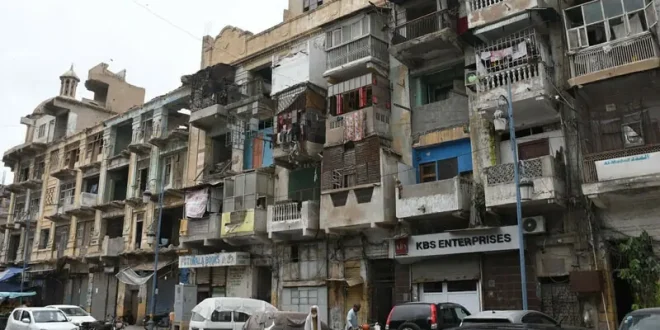
A recent, comprehensive fire safety audit across Karachi has brought to light a deeply alarming truth: a significant portion of the city’s commercial and residential structures are dangerously unprepared for fire emergencies. Triggered by the tragic Gul Plaza fire in January that claimed multiple lives, this provincial government-mandated survey assessed 783 buildings, revealing widespread non-compliance with fundamental safety regulations. The findings paint a grim picture of urban risk, impacting millions residing and working in Pakistan’s largest metropolis.
The audit, scrutinizing adherence to approved layouts, availability of emergency exits, and the presence of portable fire extinguishers, found only 370 buildings (roughly 47%) in “substantial compliance.” A staggering 416 buildings lacked emergency exits, while 310 were found without even the most basic fire extinguishers. Further, 408 structures deviated from approved layouts, and 455 were not constructed according to their original plans, creating hazardous conditions that could obstruct evacuation routes and hinder rescue operations during a blaze. Overall, 239 buildings were shockingly classified as ‘high risk’.
While districts like Keamari and parts of Korangi showed relatively better compliance rates, densely populated areas such as District Central and District South emerged as critical hotspots. District Central alone recorded 103 high-risk structures out of 176 inspected, with only seven having emergency exits. These disparities underscore the uneven enforcement and development patterns that exacerbate safety vulnerabilities across the city.
Background: A Recipe for Disaster in Rapidly Expanding Cities
The current state of fire safety in Karachi is not an isolated phenomenon but rather the culmination of decades of systemic failures in urban planning, regulatory oversight, and infrastructure development. Like many rapidly urbanizing cities in developing nations, Karachi has experienced immense, often uncontrolled, expansion. The city’s population boom has fueled a construction frenzy, with high-rise commercial centers and residential complexes mushrooming across its landscape.
However, this growth has frequently outpaced the capacity of regulatory bodies like the Sindh Building Control Authority (SBCA) and local municipal corporations. Outdated building codes, often a legacy of colonial eras, are frequently inadequate for modern high-rise constructions. Even where codes exist, their enforcement is notoriously weak, plagued by issues of corruption, lack of trained personnel, and insufficient resources. Developers, often driven by profit maximization, may cut corners, constructing buildings without proper permits, deviating from approved plans, or opting for cheaper, non-compliant materials.
The Gul Plaza fire serves as a stark reminder of the devastating consequences when these systemic failures converge. Such incidents are not new to Pakistani cities, where reports of commercial and residential fires causing significant loss of life and property frequently make headlines. The lack of public awareness regarding fire safety, coupled with a general culture of impunity for violators, further compounds the problem, creating a hazardous environment where basic precautions are often ignored until tragedy strikes.
Impact on Pakistan: More Than Just Bricks and Mortar
The widespread fire safety deficiencies in Karachi carry profound implications for Pakistan, extending far beyond the immediate structural concerns:
- Human Cost and Public Health: The most devastating impact is the potential for mass casualties and injuries. Fires cause not only immediate fatalities but also long-term health issues from smoke inhalation and burns. The psychological trauma for survivors and affected communities is immense.
- Economic Disruption and Loss: Karachi is Pakistan’s economic lifeline, housing its largest port and numerous industries. Fires lead to significant property damage, destruction of goods, loss of business assets, and disruption of livelihoods. This translates into economic losses for individuals, businesses, and the national economy, potentially impacting investor confidence and international trade.
- Strain on Emergency Services: The recurrent major fires, exacerbated by the lack of basic building-level safety measures, place an overwhelming burden on already stretched fire departments and emergency services. This drains resources that could be used for other critical urban services and highlights the urgent need for enhanced capacity building and better equipment for first responders.
- Erosion of Public Trust: The audit’s findings deeply undermine public trust in government institutions responsible for ensuring citizen safety and upholding the rule of law. A consistent failure to enforce building codes and penalize negligence fuels public frustration and a sense of insecurity.
- Precedent for National Policy: Karachi’s challenges often mirror those in other major Pakistani cities. This audit serves as a critical wake-up call, potentially prompting similar inspections and policy reforms in Lahore, Islamabad, Faisalabad, and other urban centers grappling with similar issues of rapid, unregulated growth.
Analysis: Beyond the Audit – Towards Sustainable Solutions
The Karachi fire safety audit is a crucial step towards acknowledging a deep-seated crisis, but it is merely the tip of the iceberg. The data unequivocally points to systemic governance failures, where profit motives have consistently overshadowed public safety. The “partial compliance” and “non-compliance” categories, alongside the alarming number of buildings deviating from approved plans, reveal a regulatory system that is either toothless, compromised, or both.
The core issue lies in the chasm between policy formulation and its practical implementation. While audits highlight the problems, real change requires sustained political will, transparent governance, and a fundamental shift in how urban development is managed in Pakistan. This demands a multi-pronged approach:
- Modernizing and Enforcing Building Codes: Outdated building codes must be revised to meet international safety standards for contemporary high-rise structures. Critically, these codes need rigorous, transparent, and consistent enforcement, with severe penalties for non-compliance that act as genuine deterrents.
- Strengthening Regulatory Bodies: Agencies like the SBCA need to be depoliticized, adequately funded, and staffed with competent, honest professionals. Their capacity for inspections, monitoring, and issuing permits must be significantly enhanced, potentially leveraging technology for better oversight and accountability.
- Promoting Accountability and Transparency: A robust system of accountability for both developers and regulatory officials is paramount. Whistleblower protections and transparent public records of building approvals and compliance statuses can help curb corruption and improve adherence.
- Investing in Emergency Infrastructure: Alongside building-level improvements, there’s an urgent need to upgrade and equip fire departments with modern apparatus, better training, and improved coordination mechanisms. Public awareness campaigns can also empower citizens with basic fire safety knowledge and evacuation procedures.
- Integrated Urban Planning: Moving forward, Karachi requires a holistic urban planning strategy that integrates safety considerations from the very initial stages of development. This includes proper zoning, planned growth, and ensuring adequate access for emergency services to all areas.
The Karachi fire safety audit is not just a report; it’s a critical indictment of decades of neglect. For Karachi to truly thrive as a safe, modern metropolis, this moment must be seized as an opportunity for genuine reform. The lives of its citizens depend not on periodic audits, but on a resolute commitment to creating an urban environment where safety is paramount, and compliance is the norm, not the exception.
“`