Dost Pakistan Journeys Tours and safaris in the North & South Pakistsn
Related Articles

AJK Traders Return to Business: A Strategic Pivot Amidst Political Turmoil
Muzaffarabad’s business community disengages from the Joint Awami Action Committee, signaling a shift in the ongoing Azad Jammu and Kashmir unrest. This move highlights the delicate balance between economic stability and political demands.
The News: Muzaffarabad Reopens, Traders Distance from Proscribed JAAC
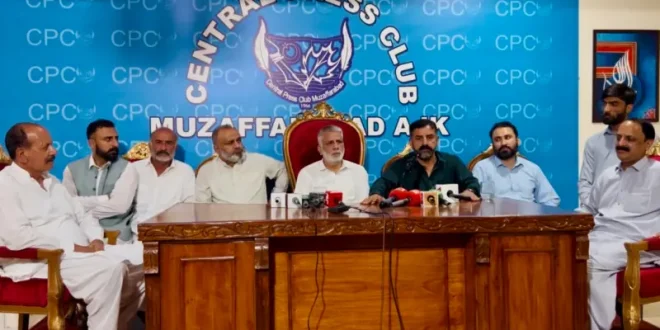
In a significant development for Azad Jammu and Kashmir (AJK), traders and transporters in Muzaffarabad have announced the resumption of business activities and public transport services starting Sunday. This decision marks a crucial turning point in the region’s recent period of intense agitation, as key commercial stakeholders publicly distanced themselves from the Joint Awami Action Committee (JAAC), which was recently declared a proscribed organization by the AJK government.
At a joint press conference, representatives from major trade bodies and the transport union articulated their rationale: while they initially supported the JAAC’s movement for addressing core public grievances such as subsidized electricity and flour, they contend that the agitation evolved beyond its original scope after June 9. The inclusion of political and constitutional demands, particularly the abolition of 12 reserved seats in the Legislative Assembly for Kashmiri refugees, was cited as a deviation that traders and transporters could not endorse. The administration’s assurance of security and uninterrupted fuel supplies also played a vital role in their decision.
Echoing this sentiment, residents in Poonch division also staged demonstrations, demanding the removal of road blockades and threatening to clear them themselves if JAAC activists did not comply, underscoring the growing public fatigue with the economic disruptions.
Background: The Genesis of Discontent in AJK
The recent unrest in AJK has its roots in long-standing economic grievances. For years, residents have expressed dissatisfaction over escalating utility prices, particularly electricity tariffs, and the rising cost of essential commodities like flour. The JAAC emerged as a broad-based movement, uniting various segments of society, including the business community, around these tangible public issues. Its early successes included securing some concessions from the government regarding electricity tariffs and flour subsidies, which garnered widespread support.
However, the movement’s trajectory shifted when it began incorporating more politically charged demands, most notably the abolition of 12 seats reserved in the AJK Legislative Assembly. These seats are designated for refugees from Indian-occupied Jammu and Kashmir who settled in mainland Pakistan after 1947. This demand, while resonating with some segments of the populace, introduced a constitutional dimension that many, including the departing traders, deemed outside the purview of street protests. The AJK Supreme Court has previously indicated that such matters are constitutional and require legislative processes, not concessions wrested through agitation.
The escalating demands led to a standoff with the AJK government. As the agitation intensified, leading to prolonged shutdowns and road blockades that crippled daily life and commerce, the government responded by declaring JAAC a proscribed organization under the anti-terrorism act on June 5. This was followed by a comprehensive crackdown, including arrests of JAAC leaders and the placement of activists on the Fourth Schedule of the ATA, further intensifying the pressure and highlighting the government’s resolve to restore its writ.
Impact on Pakistan: Implications Beyond AJK’s Borders
While confined to AJK, the recent events have broader implications for Pakistan. As a strategically vital region, any sustained unrest in AJK can affect Pakistan’s political stability. The sensitivity surrounding Kashmir dispute means that effective governance and social harmony in AJK are crucial for Pakistan’s international standing and narrative.
Economically, prolonged shutdowns in AJK, even if localized, disrupt the region’s economy which is intertwined with mainland Pakistan. Trade routes, supply chains, and tourism — a key industry for AJK — suffer immensely. The demand for restoration of internet services underscores the modern dependence on connectivity for business operations, a disruption that harms economic activity across borders.
The contentious issue of the 12 reserved seats also touches upon sensitive federal-territorial relations. How Pakistan navigates these constitutional and political challenges in AJK can set precedents for managing dissent and addressing grievances in other parts of the country. The government’s handling of the protests and its efforts to restore normalcy are closely watched, both domestically and internationally, as they reflect on Pakistan’s capacity to maintain peace and order in a region that holds immense symbolic and strategic value.
Analysis: A Strategic Pivot Amidst Mounting Pressure
The decision by Muzaffarabad’s traders and transporters to resume operations and disassociate from the JAAC represents a calculated and pragmatic pivot. For the business community, the primary concern is economic viability and livelihood. Prolonged shutdowns and disruptions lead to severe financial losses, making continued support for an increasingly political and proscribed movement unsustainable. Their move reflects a desire to depoliticize their struggle and return to advocating for their concerns through dialogue and established channels, rather than confrontation.
This development significantly weakens the JAAC’s broader support base and leverage. By fragmenting the movement, the AJK government’s strategy of simultaneously cracking down on the proscribed organization and offering assurances to crucial economic stakeholders appears to be yielding results. It creates a wedge, isolating the core JAAC leadership and their more radical demands. The call by transporter leaders for protesters to disassociate from those “hijacking” the movement further reinforces this narrative.
However, while the immediate crisis in Muzaffarabad may de-escalate, the underlying issues remain. The question of the 12 reserved seats is a complex constitutional matter that requires a legislative solution rather than street agitation. For lasting peace and stability in AJK, the government must continue to address legitimate public grievances, ensure transparent governance, and facilitate democratic processes for resolving contentious constitutional debates. The urgent restoration of internet services and consistent fuel supply are essential steps not just for businesses, but for rebuilding public trust and fostering an environment conducive to dialogue. This episode serves as a powerful reminder of the delicate balance required to manage economic discontent before it escalates into broader political and constitutional challenges.