Dost Pakistan Journeys Tours and safaris in the North & South Pakistsn
Related Articles


India’s BrahMos Deal with Indonesia: A Strategic Masterstroke in the Indo-Pacific
India’s announcement of a substantial arms deal with Indonesia, featuring the advanced BrahMos supersonic cruise missiles and Astra air-to-air missiles, marks a pivotal moment in New Delhi’s foreign policy and defence strategy. Coinciding with Indian Prime Minister Narendra Modi’s visit to Jakarta, this approximately $630 million agreement is not merely a commercial transaction; it is a profound statement of India’s growing aspirations as a global defence exporter and a key player in the complex geopolitical chessboard of the Indo-Pacific.
The News: India Deepens Defence Ties with Indonesia
As Prime Minister Narendra Modi commenced his two-day visit to Jakarta, an Indian government official confirmed that India would supply its formidable BrahMos supersonic cruise missiles and Astra beyond-visual-range air-to-air missiles to Indonesia. This significant defence deal, reportedly valued at around $630 million, solidifies India’s position as an emerging arms exporter and strengthens its strategic partnership with Southeast Asia’s largest economy.
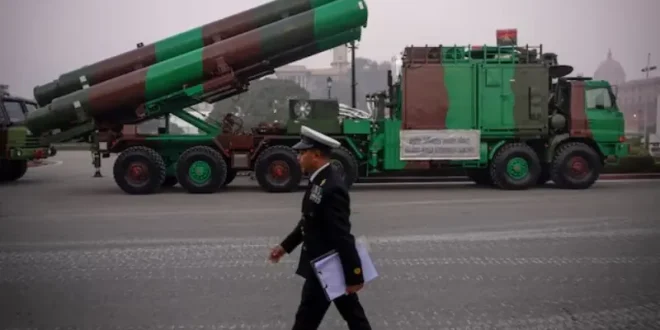
Indonesia will become the third nation, following the Philippines and Vietnam, to acquire the BrahMos missiles, which are jointly developed by India and Russia through BrahMos Aerospace Private Limited. Renowned as one of the world’s fastest cruise missiles, the BrahMos can be launched from diverse platforms – land, sea, or air. The Astra missiles, meanwhile, offer advanced aerial combat capabilities and are particularly strategic for Indonesia, as they can be integrated with the Russian-made Sukhoi fighter jets already in service with the Indonesian Air Force, enhancing their existing fleet’s lethality.
This phased acquisition model for Indonesia signals a long-term commitment, encompassing not just the missile systems but also crucial supporting infrastructure, comprehensive operator training, ongoing maintenance services, and essential technical assistance for sustained deployment. This holistic approach underscores India’s intent to build robust, lasting defence relationships rather than just one-off sales.
Background: India’s Strategic Pivot and the Indo-Pacific Conundrum
The BrahMos deal with Indonesia is not an isolated event but a critical component of India’s broader strategic vision, particularly its “Act East” policy and engagement in the Indo-Pacific. For decades, India has primarily been a major importer of defence hardware, relying heavily on nations like Russia, the US, France, and Israel. However, under the “Make in India” initiative and a concerted push for indigenous defence production, India is now actively transforming into a defence exporter, with BrahMos being its flagship product.
The Indo-Pacific region has emerged as the epicentre of global geopolitical competition, largely driven by the assertive rise of China and the consequent efforts by powers like the United States, Japan, Australia, and India to maintain a “free and open Indo-Pacific.” Indonesia, with its sprawling archipelago and control over vital maritime chokepoints, holds immense strategic importance. Deepening defence and strategic ties with Indonesia is a crucial step for India in balancing regional power dynamics and fostering a network of like-minded partners.
Bilateral trade between India and Indonesia already stands at a robust $28.15 billion, making Indonesia India’s second-largest trading partner in ASEAN. This economic foundation provides a strong base for expanding defence cooperation. For Indonesia, modernizing its military is paramount to safeguarding its vast maritime territory and asserting its sovereignty. Diversifying its arms suppliers beyond traditional Western and Russian sources, especially with a regional power like India, offers strategic autonomy and strengthens its position in an increasingly complex security environment.
Impact on Pakistan: Shifting Regional Power Dynamics
While the BrahMos deal with Indonesia does not pose a direct military threat to Pakistan due to geographical distance and Indonesia’s non-aligned foreign policy, its broader implications resonate significantly within the context of South Asian and Indo-Pacific power dynamics. For Pakistan, this development highlights several strategic considerations:
- India’s Growing Strategic Influence: India’s success in defence exports, particularly with a sophisticated system like BrahMos, signals its increasing prowess not just as a regional but also a global security partner. This expanding influence, especially in the Indo-Pacific, can indirectly affect the strategic calculus of Pakistan, which has historically viewed India through the lens of regional rivalry.
- Diversion of Global Focus: As India increasingly engages with Southeast Asia and plays a larger role in the Indo-Pacific security architecture, it draws international attention and resources towards these new geopolitical fronts. This might subtly shift the focus of certain global powers, potentially impacting their engagement with other regional issues, including those involving Pakistan.
- Competition in Defence Exports: Pakistan has also been actively pursuing defence exports, notably with its JF-17 Thunder fighter jets and other indigenous platforms. India’s success in securing large, high-tech defence contracts in a strategically crucial region like Southeast Asia presents a competitive benchmark and potentially a challenge to Pakistan’s own ambitions in the global arms market.
- Strengthening Anti-China Alliances: Given that India’s Indo-Pacific strategy is largely seen as a counter-balance to China’s growing influence, this deal strengthens a network of nations that are wary of Beijing’s assertiveness. While Pakistan maintains a strong strategic partnership with China, the emergence of a more cohesive, Indian-led security framework in the Indo-Pacific could necessitate a recalibration of strategic responses and alliances.
- Naval Modernization Impetus: India’s focus on enhancing maritime capabilities through deals like this, alongside its own naval expansion, underscores the increasing importance of sea power. This could indirectly compel Pakistan to further evaluate and bolster its own naval modernization programs to maintain deterrence in the Arabian Sea and beyond.
Ultimately, the BrahMos deal underscores a shifting regional landscape where India is strategically leveraging its defence industrial base to forge deeper diplomatic and security ties. For Pakistan, it’s a reminder of the evolving geopolitical currents and the need to continually adapt its own foreign policy and defence strategies to a dynamic environment.
Analysis: A New Era for India’s Defence Diplomacy
The BrahMos and Astra missile deal with Indonesia marks a transformative moment for India’s defence diplomacy and its role in the global arena. It encapsulates several critical strategic objectives:
1. India as a Global Defence Exporter
This deal firmly establishes India’s transition from a major defence importer to a credible exporter of sophisticated military hardware. The BrahMos missile, a product of Indo-Russian collaboration, serves as a powerful symbol of India’s indigenous defence manufacturing capabilities, bolstered by technology transfer and joint development. Securing such a high-value contract with a strategically important nation like Indonesia validates India’s “Make in India” initiative and opens doors for further exports to other interested nations, including the UAE and potentially others in the Gulf and Africa.
2. Bolstering the Indo-Pacific Strategy
At its core, this agreement is a significant component of India’s strategy to enhance its influence and contribute to stability in the Indo-Pacific. By equipping Indonesia with advanced deterrence capabilities, India is helping strengthen a key partner in a region increasingly characterized by geopolitical competition. This move aligns perfectly with the broader objectives of the Quadrilateral Security Dialogue (QUAD) and other regional security initiatives aimed at ensuring a rules-based order and countering potential aggression, particularly from China.
3. Deepening Bilateral and Regional Ties
The deal goes beyond mere arms sales; it deepens the strategic partnership between India and Indonesia. By providing comprehensive support, including training and maintenance, India is fostering a long-term relationship built on trust and mutual security interests. This move also sets a precedent for enhanced defence cooperation within ASEAN, where India seeks to cultivate stronger ties to promote regional security, connectivity, and economic integration.
4. Enhancing Indonesia’s Deterrence Capabilities
For Indonesia, the acquisition of BrahMos missiles significantly upgrades its defensive and deterrent capabilities. The ability to launch supersonic cruise missiles from various platforms provides a robust response option against potential maritime threats, crucial for safeguarding its vast maritime territory and exclusive economic zones. The Astra missiles, integrated with existing Sukhoi jets, enhance Indonesia’s air combat readiness, providing a multi-layered defence system.
5. Geopolitical Realignment and Multipolarity
This deal reflects a broader trend towards a multipolar global security landscape. Nations are increasingly looking to diversify their defence suppliers, moving away from over-reliance on a few traditional sources. India, with its blend of advanced technology and strategic alignment, presents an attractive alternative. This shift contributes to a more balanced and complex geopolitical environment, where regional powers like India are playing an increasingly assertive role in shaping global security narratives.
In conclusion, India’s BrahMos deal with Indonesia is more than a commercial success; it’s a strategic triumph that underscores India’s rising stature as a defence industrial power, its commitment to a free and open Indo-Pacific, and its expanding diplomatic footprint. It signals a new era where defence exports serve not just economic interests but are potent tools for shaping regional security architectures and forging deeper strategic alliances.