Dost Pakistan Journeys Tours and safaris in the North & South Pakistsn
Related Articles



Pakistan’s Dual Challenge: Taming Population Growth and Securing Food Futures
Pakistan stands at a critical juncture, with its government signaling a concerted effort to tackle two of the nation’s most pressing long-term issues: rapid population growth and inadequate food storage infrastructure. Recent announcements from Prime Minister Shehbaz Sharif’s office highlight an ambitious strategy to curb the country’s demographic expansion alongside a significant investment from a Chinese firm, FAMSUN, to bolster national food security. These initiatives, though distinct, are deeply intertwined, forming a crucial foundation for Pakistan’s sustainable development and economic stability.
The News: A Bold Stance on National Priorities
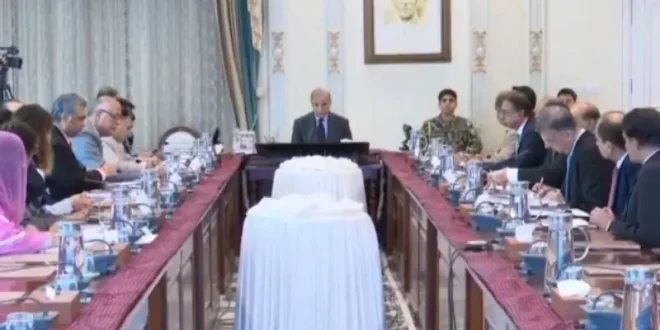
The federal government is poised to roll out a comprehensive strategy aimed at drastically reducing Pakistan’s population growth rate. Currently at 2.55 percent, the target is to halve this to 1.25 percent by 2035. Prime Minister Shehbaz Sharif has unequivocally termed the escalating population as one of Pakistan’s “biggest national challenges,” emphasizing its treatment as a collective national responsibility. This ambitious goal will be pursued through a forthcoming meeting of the National Population Council (NPC), bringing together provincial chief ministers and stakeholders to forge a unified National Population Stabilisation Plan (2026-2035). Key pillars of this plan include prioritizing healthcare, education, youth development, vocational training, enhanced female labor force participation, and strengthening social safety nets, with federal social protection programs also being aligned with these objectives.
Concurrently, the Prime Minister welcomed a strategic investment from the Chinese agribusiness giant, FAMSUN, aimed at modernizing Pakistan’s critical grain storage infrastructure. This partnership seeks to introduce state-of-the-art “green silos,” facilitate technology transfer, and provide essential training for local workers. A Memorandum of Understanding (MoU) has already been signed between FAMSUN and the Green Pakistan Initiative, underscoring the commitment to transform Pakistan’s post-harvest management and ensure greater food security.
Background: The Weight of History and Necessity
Pakistan’s struggle with rapid population growth is not new. With a population exceeding 240 million and an annual growth rate among the highest globally, the country faces immense pressure on its finite resources and public services. This unchecked expansion exacerbates issues like poverty, unemployment, environmental degradation, and strain on crucial sectors such as healthcare and education. Previous governments have attempted population planning, but often encountered challenges related to cultural sensitivities, religious misconceptions, and inadequate resource allocation and implementation. The current government’s explicit recognition of this as a national emergency and its call for federal-provincial coordination signal a potentially more robust and unified approach than seen in the past.
Similarly, the need for modern grain storage is a long-standing agricultural challenge. Pakistan, an agrarian economy, suffers significant post-harvest losses due to primitive storage facilities, pest infestations, and improper handling. These losses undermine food security, contribute to price volatility, and reduce farmers’ incomes. The FAMSUN investment arrives at a crucial time, especially with the increasing impact of climate change on agricultural yields and the ongoing global food supply chain disruptions. This initiative is also a testament to the enduring strategic partnership between China and Pakistan, often exemplified by the China-Pakistan Economic Corridor (CPEC) and broader Belt and Road Initiative, which increasingly includes agricultural cooperation to bolster Pakistan’s economic resilience.
Impact on Pakistan: Charting a Course for the Future
The proposed population stabilization strategy holds the potential for transformative positive impacts across various facets of Pakistani society. A reduced growth rate could alleviate pressure on public infrastructure, allowing for better allocation of resources to improve the quality of healthcare, education, and social services. Empowering women through increased labor force participation and education is a crucial element, promising a demographic dividend and enhanced economic productivity. Greater focus on youth development and vocational training can convert a large young population from a potential burden into a powerful engine for economic growth. Ultimately, successful implementation could lead to higher per capita income, reduced poverty, and a healthier, more educated populace, fostering long-term sustainable development.
However, the path is fraught with challenges. Effective implementation requires sustained political will, overcoming cultural and religious barriers to family planning, and ensuring consistent federal-provincial coordination. Public awareness campaigns must be culturally sensitive and comprehensive to encourage behavioral change. Funding for extensive healthcare and educational outreach will also be critical.
On the food security front, the FAMSUN investment promises substantial benefits. Modernizing grain storage facilities will dramatically reduce post-harvest losses, ensuring more food reaches consumers and stabilizing market prices. This enhances national food security and improves agricultural sector efficiency. The transfer of technology and training of local personnel will build indigenous capacity, fostering self-reliance in agricultural management. This project aligns perfectly with the Green Pakistan Initiative, which aims to boost agricultural productivity and ensure ecological sustainability. Beyond direct benefits, such Chinese investments further deepen the strategic ties between the two countries, potentially attracting more foreign direct investment into other crucial sectors of Pakistan’s economy.
Analysis: An Interconnected Vision for Prosperity
The simultaneous emphasis on population stabilization and agricultural modernization is not coincidental; these are two sides of the same coin when it comes to national prosperity. A rapidly growing population invariably puts immense strain on food resources, making efficient production and storage even more critical. Conversely, an agriculturally secure nation can better support its populace, even as it strives for demographic balance.
The government’s strategy for population control appears to adopt a holistic approach, moving beyond mere contraception to encompass education, health, and economic empowerment, particularly for women. This integrated model is widely recognized as the most effective path to lower fertility rates globally. However, the true test lies in execution and overcoming the deeply entrenched socio-cultural norms that often impede such initiatives in Pakistan. Success will hinge on sustained political commitment, effective public communication, and ensuring access to comprehensive family planning services alongside broader development goals.
Similarly, the FAMSUN collaboration represents a pragmatic step towards bolstering Pakistan’s agricultural backbone. While modern storage is vital, it must be viewed as one component within a larger strategy for agricultural transformation, which also includes improving irrigation, modernizing farming techniques, and supporting farmers. The involvement of the Green Pakistan Initiative suggests a broader vision, connecting infrastructure development with environmental sustainability.
Ultimately, Pakistan’s future hinges on its ability to manage these complex challenges concurrently. Successfully curbing population growth will lighten the burden on resources and infrastructure, while enhancing food security will feed its people and stabilize its economy. These two initiatives, if effectively implemented, could collectively steer Pakistan towards a path of greater economic stability, improved living standards, and genuine sustainable development.
“`