Dost Pakistan Journeys Tours and safaris in the North & South Pakistsn
Related Articles


“`html
Pakistan Accuses AJK Protesters of Foreign Agenda & Militancy: A Deep Dive
Recent events in Azad Jammu and Kashmir (AJK) have escalated sharply, with Pakistani and AJK officials asserting a dramatic shift in the nature of protests led by the Joint Awami Action Committee (JAAC). What began as a movement demanding socio-economic rights is now being unequivocally branded as a foreign-funded militant operation, posing a grave threat to national security. The government’s firm stance signals a zero-tolerance policy against elements perceived to be destabilizing the strategically vital region.
The News: A Hardline Stance Against Alleged Militancy in AJK
In a series of strong statements, top government officials in Pakistan and Azad Jammu and Kashmir have alleged that recent violent demonstrations in AJK, spearheaded by the now-proscribed Joint Awami Action Committee (JAAC), are not peaceful protests but rather the work of militant elements with a foreign agenda, potentially backed by Indian funding.
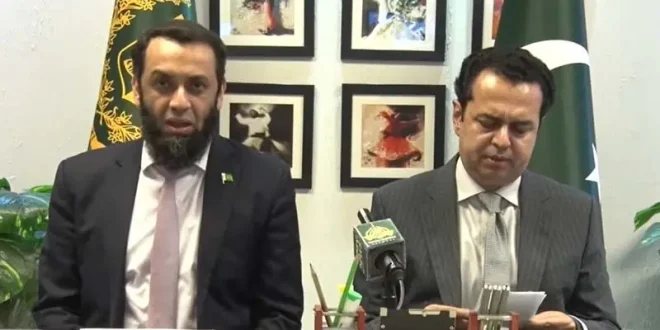
Pakistan’s Information Minister Attaullah Tarar explicitly stated that the JAAC protests were violent, not peaceful, linking them to “militant elements pursuing a foreign agenda and receiving Indian funding.” This declaration came amidst the first phase of AJK elections, which Tarar highlighted as having a “spectacular” public response, indicating a popular rejection of the banned outfit’s activities.
The severity of the situation was underscored by the recovery of sophisticated weaponry, including M-4 rifles, Kalashnikovs, and sniper guns, from the alleged perpetrators. These arms were reportedly used to fire upon security forces, resulting in the martyrdom of one security personnel and injuries to five others, including an official hit by a sniper. State Minister for Interior Talal Chaudhry corroborated these findings, adding that an individual specializing in long-range shooting, identified as a foreign national who recently entered Pakistan, has been arrested in connection with the sniper attack. Chaudhry declared that the movement was “not a protest movement anymore” but “militancy” and vowed that the government would “crush this mutiny.”
AJK officials echoed these concerns, with Information Secretary Muhammad Rashid Hanif claiming the presence of “Fitna Al Khawarij” elements—a term used by the state for terrorists, notably from the banned Tehreek-i-Taliban Pakistan (TTP)—among the protesters. He presented video evidence purportedly showing masked gunmen on rooftops, asserting that “armed individuals, militants and Fitna Al Khawarij members are present, which falls under the definition of terrorism.” AJK police spokesperson and DIG Irfan Kashfi reinforced this, stating that such elements would be “handled in the same way that any terrorists or militants are handled.” AJK Prime Minister Faisal Mumtaz Rathore also expressed grave concern, stating that the violence was a “conniving plan” and appealed to the public to distance themselves from agitators.
Background: From Rights Movement to Proscription
To understand the current crisis, it’s crucial to trace the trajectory of the Joint Awami Action Committee (JAAC). The JAAC initially emerged as a grassroots movement voicing genuine socio-economic grievances in Azad Jammu and Kashmir. Their demands largely revolved around issues like inflated electricity tariffs, flour subsidies, and a call for more equitable resource distribution within AJK. Notably, a significant demand was the abolition of 12 reserved seats in the region’s Legislative Assembly, arguing for direct public representation.
For several months, the JAAC organized peaceful protests, long marches, and sit-ins, garnering considerable public attention and, initially, sympathy. The government of Pakistan and the AJK administration engaged with the committee, and as officials noted, 37 out of 38 of their initial demands were reportedly accepted, indicating an effort to address the public’s concerns. However, the movement escalated, with blockades and disruptions persisting.
The turning point arrived when the AJK government, citing continued unrest and alleged threats to public order, declared the JAAC a proscribed organization on June 5th. It was placed under the First Schedule of the region’s anti-terrorism act (ATA). This proscription was swiftly followed by a crackdown, leading to the arrest of several JAAC leaders and the placement of 147 activists on the Fourth Schedule of the ATA, effectively listing them as individuals suspected of involvement in terrorism.
The timing of the most recent violence, coinciding with the AJK elections, is particularly significant. Officials claim the JAAC attempted to disrupt the election process, seeking to undermine the democratic legitimacy of the region. This sequence of events—from initial grievances to proscription, crackdown, and now allegations of foreign-backed militancy—marks a profound transformation in the state’s perception and handling of the AJK unrest.
Impact on Pakistan: National Security, Stability, and the Kashmir Narrative
The allegations of foreign-funded militancy and the involvement of groups like “Fitna Al Khawarij” within the AJK protests carry profound implications for Pakistan across multiple dimensions:
- National Security Threat: If confirmed, the presence of militant elements, potentially TTP-linked, and foreign nationals acting as snipers in AJK represents a grave internal security threat. It suggests an attempt to exploit local grievances for broader destabilization, similar to hybrid warfare tactics observed elsewhere. This necessitates a significant diversion of security resources and heightened vigilance.
- Regional Stability and Kashmir Policy: Azad Jammu and Kashmir is a sensitive region, forming a crucial part of Pakistan’s strategic approach to the broader Kashmir dispute. Any destabilization here could be exploited by external adversaries, particularly India, to undermine Pakistan’s moral and diplomatic standing on the Kashmir issue. Pakistan consistently advocates for the self-determination of Kashmiris; violent internal unrest, especially if attributed to foreign influence, complicates this narrative.
- Economic Strain: Continuous unrest in AJK can disrupt daily life, trade, and economic activity in the region. Furthermore, diverting security and law enforcement resources to manage internal conflicts places an additional burden on Pakistan’s already strained economy, potentially deterring investment and hindering development initiatives.
- Governance and Rule of Law: The government’s firm response, vowing to “crush this mutiny” and treat perpetrators as terrorists, is aimed at upholding the writ of the state. Failure to decisively address such challenges could embolden other elements and erode public trust in the state’s ability to maintain law and order.
- Information Warfare: The mention of “misleading videos” circulated on social media indicates an active information warfare component. Pakistan will likely need to counter narratives that portray the government’s actions negatively, while firmly establishing its own account of foreign interference and militancy.
Analysis: A Critical Juncture for AJK and Pakistan
The government’s definitive declaration that the AJK protests have morphed into a foreign-backed militant operation marks a critical juncture, shifting the discourse from socio-economic grievances to national security and counter-terrorism. This re-framing has several significant analytical implications:
Firstly, the **narrative shift** from “protesters” to “militants” fundamentally alters the state’s response strategy. Once labeled as violent agents of a foreign agenda, the space for negotiation shrinks, and a security-first approach becomes paramount. The recovery of military-grade weapons and the arrest of a foreign sniper provide tangible evidence to bolster this narrative, allowing the government to justify robust law enforcement and military actions.
Secondly, the explicit accusations of **”foreign agenda” and “Indian funding”** elevate the issue from a domestic law and order problem to a matter of national defense against external aggression. This narrative resonates deeply within Pakistan’s security establishment and among the populace, often drawing on historical animosities and past allegations of proxy warfare. While such accusations are serious and demand irrefutable proof, they strategically align with Pakistan’s broader geopolitical stance on Kashmir and its security concerns with India.
Thirdly, the alleged involvement of **”Fitna Al Khawarij” (TTP-linked elements)** introduces a particularly alarming dimension. TTP and its affiliates represent a persistent and brutal threat to Pakistan’s internal security. Their purported presence in AJK, a region historically less prone to such Islamist militancy, would suggest a concerted effort to expand their operational footprint and destabilize new areas, possibly in collusion with other state or non-state actors.
However, this firm approach carries inherent **risks of alienation**. While essential to combat genuine militancy, a broad brushstroke that labels all participants in the JAAC protests as foreign agents or terrorists could inadvertently alienate ordinary citizens who initially joined due to legitimate grievances. Distinguishing between genuine socio-economic protesters and alleged infiltrators or violent elements is crucial for long-term stability and winning the hearts and minds of the local population. The government’s appeal for ordinary citizens to distance themselves from these “perpetrators” reflects an awareness of this delicate balance.
Finally, the emphasis on high voter turnout in the AJK elections serves a dual purpose: it aims to **underscore democratic legitimacy** in the region, countering any impression of widespread popular discontent that the JAAC protests might have created. By portraying the elections as a public rejection of the JAAC, the government strengthens its own narrative of stability and adherence to democratic processes, even amidst the alleged disruption.
In conclusion, Pakistan stands at a critical juncture in Azad Jammu and Kashmir. The government’s strong stance reflects a determination to assert the writ of the state and counter what it perceives as a grave national security threat. The coming weeks will reveal how effectively Pakistan can isolate and neutralize these alleged militant elements while simultaneously addressing the underlying socio-economic issues that initially fueled the protests, ensuring the stability and prosperity of AJK.
“`