Dost Pakistan Journeys Tours and safaris in the North & South Pakistsn
Related Articles


“`html
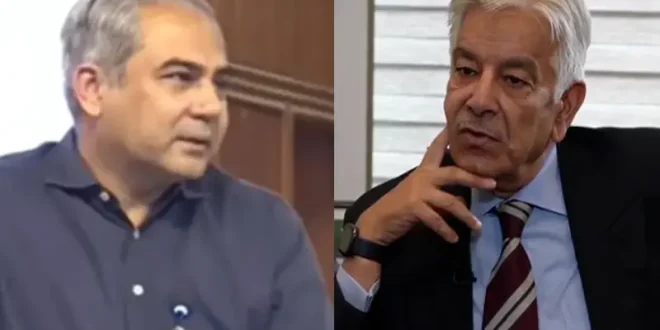
Asif Reacts to Naqvi’s Call for Governance Reset, Urges Him to Begin with His Own Ministry
In a significant political development, Pakistan’s Defence Minister Khawaja Asif has offered a pointed response to Interior Minister Mohsin Naqvi’s recent advocacy for a nationwide governance overhaul. While largely agreeing with Naqvi’s assessment of a “collapsed” system, Asif challenged him to initiate the much-needed change within his own ministry, specifically by fully implementing the National Action Plan (NAP).
The News
Interior Minister Mohsin Naqvi, speaking at the Pakistan Economic Summit, stirred a national debate by stating that the country’s governance system had “collapsed.” He proposed radical reforms, including the creation of new administrative units or provinces, as a means to enhance service delivery, foster accountability, and improve access to justice. Naqvi also underscored the youth’s demand for merit, justice, and job opportunities over symbolic gestures like stipends and laptops.
Adding weight to Naqvi’s proposition, the military’s spokesperson, Lt Gen Ahmed Sharif Chaudhry, echoed the sentiment, advocating for an administrative reset. He linked improved governance directly to national security and stability, recalling that effective governance was a core tenet of the National Action Plan adopted after the tragic 2014 Army Public School attack.
Responding to these remarks, Defence Minister Khawaja Asif took to X (formerly Twitter), expressing general agreement with Naqvi’s diagnosis of a struggling system. However, Asif swiftly shifted from commendation to critique, questioning Naqvi’s chosen forum for such a monumental announcement. Asif emphasized that Parliament or the Cabinet were the appropriate constitutional platforms for discussing and implementing such fundamental changes, subtly accusing Naqvi of rarely attending these crucial sessions despite being a member.
Asif further challenged Naqvi by highlighting the incomplete implementation of the National Action Plan. While acknowledging the military’s sacrifices in fulfilling its part of the NAP, Asif pointed out that the remaining 12 points, largely under the purview of the Interior Ministry, had not been effectively implemented. He urged Naqvi to “begin the change in the system with the implementation of NAP; begin the change in the system with your ministry.”
Naqvi’s call for new administrative units has ignited a heated debate, particularly with the Pakistan Peoples Party (PPP), which governs Sindh, outright rejecting the proposal. Conversely, allied parties like MQM-P have historically championed the creation of a separate Karachi province, further complicating the political landscape surrounding this issue.
Background
The National Action Plan (NAP)
The National Action Plan (NAP) was a comprehensive 20-point counter-terrorism strategy formulated in January 2015, following the devastating terrorist attack on the Army Public School in Peshawar. Endorsed unanimously by all political parties, NAP aimed to eradicate terrorism and extremism from Pakistan. While some points focused on military operations against militants, a significant portion required civilian implementation, including:
- Strengthening and reactivating the National Counter Terrorism Authority (NACTA).
- Banning proscribed organizations and preventing their re-emergence.
- Choking terror financing and cracking down on militant funding.
- Reforming the criminal justice system.
- Ending religious extremism and sectarianism.
- Registration and regulation of seminaries (madaris).
- Measures against glorification of terrorism and hate speech.
- Administrative and development reforms in FATA (now merged with Khyber Pakhtunkhwa).
The Interior Ministry holds primary responsibility for the execution of many of these civilian-centric points, making its role critical to NAP’s success.
Pakistan’s Governance Challenges and the Demand for New Provinces
Pakistan has long grappled with systemic governance issues, including bureaucratic inefficiencies, corruption, uneven resource distribution, and a centralized administrative structure that often struggles to deliver services effectively to a rapidly growing and diverse population. Calls for new administrative units or provinces have historically emerged from various regions, such as South Punjab, Hazara, and Karachi, driven by perceptions of economic neglect, underrepresentation, and cultural distinctiveness. Proponents argue that smaller provinces would improve local governance, enhance accountability, and bring decision-making closer to the populace. However, these proposals often face strong opposition from larger provinces, particularly Sindh, which fears territorial dismemberment and a dilution of political power.
Civil-Military Relations and Political Discourse
The military’s repeated interventions in Pakistan’s political and governance discourse are a recurring theme in the country’s history. While often framed as necessary for national security and stability, such pronouncements can blur the lines between civilian and military domains, leading to questions about the democratic process and the supremacy of elected institutions. The military’s endorsement of Naqvi’s governance reset, while emphasizing national security, invariably adds a significant dimension to the debate.
Impact on Pakistan
This public exchange between two senior ministers, coupled with the military’s strong backing for governance reforms, carries several implications for Pakistan:
- Heightened Political Tensions: The debate risks deepening existing political divides, particularly regarding the contentious issue of new provinces, and creating friction within the ruling coalition. Asif’s direct challenge to Naqvi highlights internal disagreements on the approach to reforms.
- Institutional Legitimacy: Asif’s emphasis on utilizing constitutional forums like Parliament and the Cabinet underscores the importance of upholding democratic processes. Bypassing these institutions for major policy announcements can erode their legitimacy and strengthen the perception that crucial decisions are made elsewhere.
- Focus on NAP Implementation: The discussion has brought renewed attention to the incomplete implementation of the National Action Plan. This could put direct pressure on the Interior Ministry to demonstrate tangible progress on its civilian responsibilities, which are vital for internal security.
- Public Trust and Cynicism: While public acknowledgment of governance failures might resonate with citizens, persistent political infighting over the *method* of reform, rather than united action, could breed public cynicism about the political leadership’s ability to deliver meaningful change.
- Economic Repercussions: Political instability and uncertainty surrounding major administrative reforms can deter foreign and local investment, impacting Pakistan’s already fragile economy. Clarity and consensus on governance are crucial for fostering a stable business environment.
- Civil-Military Balance: The military’s involvement, even in support of a civilian minister, re-emphasizes its enduring influence in national policy matters, potentially affecting the delicate balance of power between civil and military institutions.
Analysis
Khawaja Asif’s reaction to Mohsin Naqvi’s call for a governance reset is more than just a political sparring match; it’s a strategic maneuver that highlights fundamental differences in approach to national reform and underscores ongoing challenges within Pakistan’s political landscape.
At its core, the disagreement isn’t about the *necessity* of reform – Asif largely agrees that the system is broken. The contention lies in the *process*, *priorities*, and *accountability* of those advocating for change. Asif’s challenge to Naqvi can be dissected along several lines:
- Constitutional Propriety vs. Public Discourse: Asif’s primary critique is Naqvi’s choice of forum. By making a grand statement at an economic summit rather than in Parliament or the Cabinet, Naif is implicitly accused of circumventing established democratic channels. This isn’t merely about protocol; it’s about the legitimacy and inclusivity of decision-making. Major structural reforms like creating new provinces demand extensive parliamentary debate, consensus-building, and legal processes.
- Actionable Reform vs. Abstract Vision: Asif brilliantly shifts the focus from Naqvi’s broad, potentially divisive vision of new provinces to a concrete, national security imperative: the National Action Plan. By urging Naqvi to start “with his own ministry” and “the implementation of NAP,” Asif proposes a tangible, immediate, and high-stakes area where the Interior Minister can demonstrate real leadership and impact. This move is pragmatic, forcing Naqvi to account for existing responsibilities rather than merely proposing future ones.
- The “Powerhouse” Irony and Hypocrisy: Asif’s initial, almost sarcastic, praise of Naqvi as a “powerhouse” quickly turns into an accusation of inaction. He questions why, despite holding a powerful post for three years, Naqvi had not initiated these changes earlier or effectively fulfilled the civilian aspects of NAP. This highlights the perceived hypocrisy of lamenting systemic failure while seemingly underutilizing one’s own institutional power to effect change within existing frameworks.
- Subtle Counter-Narrative to Military Endorsement: The military’s endorsement of governance reset added significant weight to Naqvi’s message. However, Asif deftly uses the military’s own reference to NAP to turn the tables. By reminding that the military has fulfilled its part of NAP (sacrificing lives) while the civilian points remain unimplemented, Asif subtly challenges the narrative that civilian leadership is solely responsible for broader governance failures, suggesting that specific civilian ministries, like Interior, bear direct responsibility for existing, unimplemented mandates.
- Political Strategy and Intra-Coalition Dynamics: This exchange also reveals the complex political chess game within the ruling coalition and the broader Pakistani political landscape. Asif, a veteran politician, is not just responding to Naqvi but also strategically positioning his party (PML-N) and himself. It could be an attempt to manage expectations, assert the primacy of parliamentary democracy, or even subtly push back against perceived overreach by unelected figures or institutions in governance matters.
Ultimately, while the debate over governance reform in Pakistan is crucial and long overdue, Khawaja Asif’s response forces a necessary reckoning. It pushes the conversation from abstract ideals and grand proposals towards concrete, actionable steps within constitutional bounds, demanding accountability from those in powerful positions to lead by example and fulfill existing mandates before advocating for wholesale systemic overhauls.
“`