Dost Pakistan Journeys Tours and safaris in the North & South Pakistsn
Related Articles


Presidential Delays Threaten Pakistan’s Judiciary: A Looming Constitutional Challenge
The smooth functioning of Pakistan’s superior judiciary is currently facing an unprecedented challenge, marked by a growing bottleneck in the judicial appointment process. Recommendations from the Judicial Commission of Pakistan (JCP) for the extension and confirmation of judges are reportedly languishing at the Presidency, leading to judicial terms expiring without formal notification. This impasse is not merely an administrative oversight; it signals a potential constitutional tussle with far-reaching implications for the rule of law and judicial independence in Pakistan.
The Current Impasse: Judges in Limbo
The most immediate and concerning impact of this delay is the expiration of judicial tenures. Justice Khalid Hussain Shahani of the Sindh High Court (SHC) saw his extended term lapse on July 29, despite the JCP having recommended a further six-month extension. This situation has left him in an uncertain position, with the SHC even including his name in its latest roster, perhaps in anticipation of an imminent notification that has yet to materialise. Sources within the Presidency, however, assert that an additional judge cannot legally continue to hold office without a formal presidential approval and subsequent notification from the Law Ministry.
This is not an isolated incident. A similar fate awaits four additional judges of the Peshawar High Court (PHC) – Justice Farah Jamshed, Justice Inamullah Khan, Justice Sabitullah Khan, and Justice Aurangzeb – whose tenures are set to expire on August 4. Their extensions, too, await presidential assent, creating an atmosphere of instability within the judiciary. These cases are part of a broader pattern, following recent delays in notifying additional judge appointments across the Islamabad, Lahore, Sindh, and Balochistan High Courts, despite JCP recommendations.
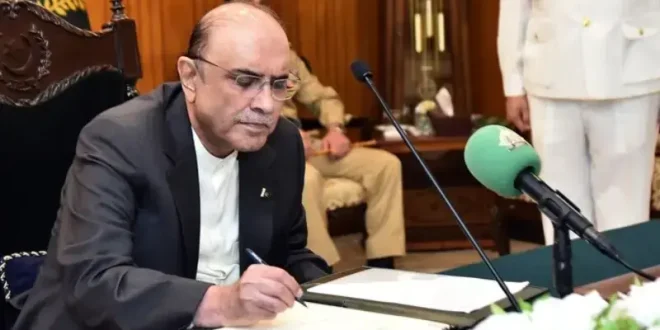
The delay in presidential assent for judicial appointments is creating uncertainty and administrative challenges, raising concerns within Pakistan’s legal community.
Background: Understanding Pakistan’s Judicial Appointment Mechanism
To fully grasp the gravity of the current situation, it’s crucial to understand the constitutional framework governing judicial appointments in Pakistan. The process, significantly reformed by the 18th and 19th Constitutional Amendments, aimed to streamline appointments and enhance judicial independence by reducing executive discretion. The current mechanism involves several key players:
- Judicial Commission of Pakistan (JCP): Headed by the Chief Justice of Pakistan, the JCP initiates and recommends appointments and extensions for superior court judges. It comprises senior judges, the Law Minister, the Attorney General, and representatives from bar councils.
- Parliamentary Committee: Following JCP recommendations, the proposals are sent to a bipartisan Parliamentary Committee, which has the power to confirm or reject the JCP’s recommendations. However, its role is often seen as a final review.
- Prime Minister and Law Ministry: Once cleared by the Parliamentary Committee, the recommendations are forwarded through the Law Ministry to the Prime Minister, who then advises the President.
- President: The President, as the head of state, formally approves and notifies the appointments. Post-18th and 19th Amendments, the President’s role is largely considered ceremonial, bound by the Prime Minister’s advice.
The ‘Ceremonial’ Presidential Role and Historical Precedent
The Supreme Court of Pakistan has previously clarified the President’s role. A significant precedent cited in the news is the case of former Islamabad High Court judge Justice Shaukat Aziz Siddiqui in 2012. Despite the JCP’s recommendation, then-President Asif Ali Zardari initially refused to confirm Siddiqui as an additional judge. The matter eventually reached the Supreme Court, which ruled that the President was indeed bound to act on the Prime Minister’s advice in such matters, effectively reinforcing the ceremonial nature of the presidential assent in judicial appointments.
Additional judges are typically appointed for a fixed term (often one year) to manage caseloads and serve a probationary period. Their extensions or confirmations as permanent judges depend on their performance and the JCP’s assessment, followed by the constitutional approval process. Delays at any stage can undermine the stability and continuity of the judicial system.
Impact on Pakistan: Erosion of Trust and Efficiency
The ongoing delays have several critical implications for Pakistan:
- Judicial Backlog and Efficiency: Expiring tenures without immediate replacements or extensions mean a reduction in the number of active judges. This directly exacerbates the already crippling backlog of cases in superior courts, delaying justice for ordinary citizens and undermining public confidence in the judicial system.
- Undermining Judicial Independence: Protracted delays or outright refusal to act on JCP recommendations, especially when the President’s role is deemed largely ceremonial, can be perceived as executive interference in judicial matters. This threatens the foundational principle of judicial independence, creating an environment where judges might feel vulnerable to political pressures.
- Constitutional Crisis Potential: If the deadlock persists, it could escalate into a constitutional crisis, pitting the executive against the judiciary. The Supreme Court’s clear stance on the President’s limited discretion in such matters means continued inaction could be viewed as a defiance of established constitutional principles and judicial pronouncements.
- Uncertainty and Morale: The uncertainty faced by judges whose terms are expiring, along with the broader impact on the appointment process, can severely affect the morale of the judiciary. This can deter talented legal professionals from aspiring to judicial roles and create instability within the existing ranks.
- Administrative Chaos: Courts rely on a full complement of judges to manage benches, hear cases, and issue rosters. Sudden vacancies or uncertainties create administrative chaos, requiring last-minute adjustments and potentially disrupting planned hearings.
As Pakistan Bar Council Vice Chairman Pir Masood Chishti rightly noted, an additional judge cannot perform judicial functions once their tenure expires without a formal notification. This legal reality further underscores the administrative and constitutional dilemma posed by the current presidential inaction.
Analysis: Executive Discretion vs. Constitutional Mandate
The present situation highlights a critical tension: the perceived discretion of the Presidency versus the clear constitutional mandate and judicial interpretations that limit this discretion. While the Presidency maintains the need for formal approval, the legal fraternity, including Supreme Court Bar Association President Haroon Rashid, argues that the President cannot indefinitely withhold assent to constitutionally recommended appointments.
Several factors could be contributing to this delay:
- Bureaucratic Inertia: While less likely given the sensitivity, simple bureaucratic slowdowns can sometimes stall critical processes.
- Executive-Judiciary Dynamics: More plausibly, the delay might signal underlying tensions or a power play between the executive and the judiciary. The executive might be attempting to assert its influence or scrutinize recommendations more closely, even if constitutionally limited.
- Political Maneuvering: In Pakistan’s often tumultuous political landscape, judicial appointments can sometimes become entangled in broader political considerations, leading to delays as stakeholders attempt to exert influence.
- Lack of Clarity or Differing Interpretations: Despite Supreme Court rulings, there might be lingering differing interpretations within the executive branch regarding the extent of the President’s discretionary powers, leading to a cautious or delayed approach.
Regardless of the underlying cause, the current stalemate is detrimental to the institutional stability of Pakistan. The judiciary, as a pillar of the state, requires timely and predictable appointments to maintain its integrity, efficiency, and public trust. Continued delays risk not only legal challenges but also a fundamental erosion of confidence in the constitutional mechanisms designed to ensure justice.
Moving forward, a swift resolution is imperative. This could involve direct communication between the Presidency and the Chief Justice, a clear reassertion by the Supreme Court of the constitutional procedure, or even proactive steps by the Parliamentary Committee to press for timely action. The principle of judicial independence and the timely administration of justice are too vital to be held hostage by administrative delays or constitutional ambiguities that have already been largely settled by precedent.