Dost Pakistan Journeys Tours and safaris in the North & South Pakistsn
Related Articles


“`html
Emerging Powerhouse: Analyzing the Turkiye-Pakistan-Saudi Arabia Defence Pact and Egypt’s Potential Entry
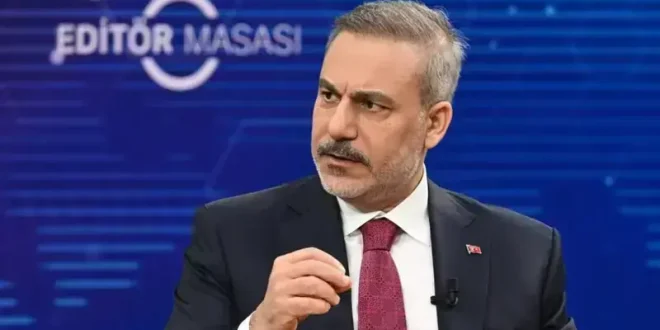
A significant geopolitical development is unfolding in the broader Middle East and South Asia with the recent signing of the Makkah Joint Defence Agreement between Turkiye, Pakistan, and Saudi Arabia. This pact, designed to foster collective deterrence and mutual defence, has drawn considerable attention, especially following Turkish Foreign Minister Hakan Fidan’s recent remarks suggesting Egypt’s potential inclusion. This article delves into the nuances of this burgeoning alliance, its strategic context, and its implications for regional security and for Pakistan.
The Makkah Joint Defence Agreement: A New Era of Collective Security
Turkish Foreign Minister Hakan Fidan recently articulated his belief that Egypt is a “natural partner” and could soon join the Makkah Joint Defence Agreement, a landmark pact signed by Turkiye, Pakistan, and Saudi Arabia. Speaking to Turkiye’s state-run Anadolu news agency, Fidan highlighted that while “technical issues” currently preclude Egypt’s immediate entry, these are expected to be resolved, paving the way for its inclusion. This agreement, inked in the Saudi city, is fundamentally a collective security arrangement, mirroring NATO’s Article 5. It stipulates that an attack on any one member will be considered an attack on all, obliging signatories to provide necessary support, ranging from intelligence and logistics to military assistance. Fidan also confirmed that other nations have expressed interest in joining, though the core trio envisions remaining the primary architects, guiding the alliance’s principles and structure.
Crucially, Fidan emphasized that this initiative is not directed against any specific country, such as Iran, but rather serves as a general commitment to bolster the security of its members. He clarified that the pact’s operational framework would involve a political and military committee, akin to NATO structures, comprising foreign and defence ministers and chiefs of general staff. A permanent secretariat is slated for establishment in Saudi Arabia, tasked with implementing decisions related to interoperability, joint training, intelligence sharing, and, significantly, defence industry cooperation. This ambitious undertaking, according to Fidan, represents “the most important step” towards achieving lasting stability in a historically volatile region.
Background: Shifting Sands of Geopolitics
The emergence of the Makkah Joint Defence Agreement is not an isolated event but rather a reflection of profound shifts in global and regional geopolitics. For decades, the security architecture of the Middle East has largely been shaped by external powers, primarily the United States. However, a perceived recalibration of US foreign policy, with a greater focus on Indo-Pacific challenges, has encouraged regional actors to assume more responsibility for their own security. This evolving landscape has spurred nations like Turkiye and Saudi Arabia, both aspiring regional hegemons, to forge new alliances and strengthen existing ones.
Historically, Turkiye, Pakistan, and Saudi Arabia have maintained strong, albeit often bilateral, defence ties. Pakistan, with its well-trained military and nuclear capabilities, has long been a security partner for Saudi Arabia, providing military training and expertise. Similarly, Turkiye and Pakistan have deepened their defence cooperation in recent years, particularly in defence industrial collaboration. The Makkah pact elevates these bilateral relationships into a formal, multilateral framework, signalling a more integrated and coordinated approach to defence. This move can also be seen in the context of broader regional aspirations for strategic autonomy and the desire to develop indigenous defence capabilities, reducing reliance on Western military-industrial complexes. While Fidan asserts the pact is not aimed at Iran, the historical rivalry between Saudi Arabia and Iran, coupled with Turkiye’s growing influence and Pakistan’s strategic location, inevitably positions the alliance as a significant counterweight in regional power dynamics.
Impact on Pakistan: A Strategic Rebalancing Act
For Pakistan, joining the Makkah Joint Defence Agreement carries immense strategic significance, potentially reshaping its foreign policy and security calculus. Firstly, it elevates Pakistan’s standing as a crucial partner in a new, powerful regional bloc. Its geographical position, bridging South Asia with the Middle East, combined with its established military prowess, makes it an invaluable asset to the alliance. This enhanced role could lead to greater political leverage and influence on various international platforms.
Economically, the pact offers substantial opportunities. Cooperation in the defence industry, a cornerstone of the agreement, could translate into technology transfer, joint ventures, and access to new markets for Pakistan’s burgeoning defence sector. Investments from Saudi Arabia, a key economic power, could also flow into Pakistan’s defence manufacturing, fostering job creation and technological advancement. Militarily, the mutual defence clause significantly enhances Pakistan’s deterrence capabilities. Facing complex security challenges on its eastern and western borders, the assurance of collective support from two influential nations adds a formidable layer to its national security strategy. Joint exercises, intelligence sharing, and interoperability training will undoubtedly boost the operational readiness and capabilities of the Pakistan Armed Forces.
However, this alliance also presents potential complexities. Pakistan would need to carefully navigate its relationships with other regional powers, especially Iran, to avoid being drawn into conflicts that do not directly serve its national interest. The financial contributions and commitments required for establishing and maintaining the alliance’s operational structures could also pose an economic burden. Furthermore, integrating military doctrines and ensuring seamless interoperability among three diverse armed forces will require significant diplomatic and technical effort. Nevertheless, for a nation often seeking to diversify its alliances beyond traditional partners, this pact represents a strategic rebalancing act, offering both profound opportunities and intricate challenges.
Analysis: Ambitions, Challenges, and the Road Ahead
The Makkah Joint Defence Agreement is undeniably an ambitious undertaking, aiming to create a robust collective security framework akin to NATO in a region fraught with complexities. Fidan’s direct comparison to NATO’s Article 5 underscores the gravity of the commitment: an attack on one is an attack on all. However, moving from a declaratory statement to a fully operational, integrated defence alliance demands overcoming significant hurdles.
NATO’s success is built upon decades of shared values, extensive joint exercises, standardized equipment, and deeply integrated command structures. The Makkah pact, while having strong political will, will need to develop these foundations from scratch. The “technical issues” preventing Egypt’s immediate entry, for instance, are likely a blend of political reconciliation between Cairo and Ankara, and the practicalities of integrating a fourth major military into the nascent framework. Egypt’s inclusion would significantly broaden the alliance’s geographical scope and military might, cementing its status as a formidable regional force spanning North Africa, the Levant, the Arabian Peninsula, and South Asia.
The emphasis on defence industry cooperation, intelligence sharing, and joint training is pragmatic. True collective defence requires not just mutual commitment but also the ability to operate effectively together in a crisis. This involves standardizing communication systems, harmonizing operational doctrines, and sharing technological advancements—a monumental task given the diverse military structures of the founding members. A permanent secretariat in Saudi Arabia is a crucial first step towards institutionalizing cooperation, but its effectiveness will depend on consistent political backing and substantial resource allocation from all members.
While Fidan insists the alliance is not offensive or directed against any specific country, the geopolitical reality dictates that its formation will inevitably be viewed through the lens of regional power dynamics, particularly concerning Iran. The long-term success of the Makkah pact will hinge on its ability to transcend individual national interests and forge a genuinely collective identity, offering credible deterrence while also promoting regional stability. How it navigates external pressures from major global powers—who might view this emerging bloc with a mix of interest and apprehension—will also be critical. Ultimately, this agreement has the potential to reshape the security landscape of a vital global region, offering its members enhanced security and strategic autonomy, provided they can translate their shared vision into concrete, sustainable operational realities.
“`