Dost Pakistan Journeys Tours and safaris in the North & South Pakistsn
Related Articles


Karachi’s Water Woes Deepen: Power Outage Hits Dhabeji Pumping Station Amid Acute Crisis
Pakistan’s bustling economic hub, Karachi, is once again grappling with a severe water crisis, acutely exacerbated by a recent power outage at the vital Dhabeji Pumping Station. This incident, unfolding amidst religious festivities, highlights the city’s precarious infrastructure and the systemic challenges in providing basic necessities to its burgeoning population.
What Happened? An Unexpected Blackout Stalls Essential Services
On a Saturday marked by Eid celebrations, residents of Karachi faced renewed uncertainty as an emergency power shutdown at the Dhabeji Pumping Station brought a significant portion of the city’s water supply to a halt. The Karachi Water and Sewerage Corporation (KWSC) reported that a major fault in Transformer No. 1 at the Dhabeji Grid Station, managed by K-Electric, necessitated an immediate shutdown. This critical power failure rendered 10 of the 21 pumping units inoperable, severely disrupting water transmission to numerous areas across the metropolis. Alarming residents further, utility officials were unable to provide a definitive timeline for the full restoration of power or water supply, leaving millions in limbo regarding how long they would endure dry taps.
A City Thirsty: The Deeper Context of Recurring Crises
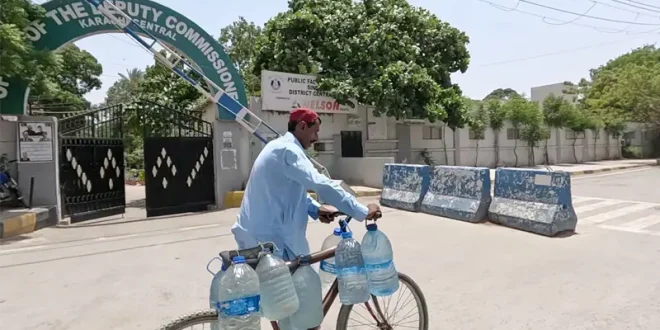
This latest disruption isn’t an isolated event but rather the climax of an acute water crisis that has plagued Karachi for over two months, with some areas experiencing shortages since late February. The city has become distressingly familiar with such predicaments, particularly during peak demand periods like religious festivals, when water scarcity often intensifies. Residents routinely complain that Eid, Ramazan, and Muharram often coincide with significant drops in water pressure or outright supply cuts. The root causes of these persistent issues are multifaceted, encompassing a deteriorating infrastructure prone to major pipeline leaks and bursts, technical faults within the transmission lines, and recurrent power outages at crucial pumping stations. This volatile combination leaves thousands of families dependent on expensive water tankers and private suppliers, adding a heavy financial burden to households already struggling with rampant inflation.
Why This Crisis Resonates Beyond the Taps
The immediate and profound impact of this crisis on Karachi’s population is undeniable. Millions face a daily struggle for basic hydration and sanitation, compromising public health and quality of life. The additional cost of purchasing water tankers exacerbates the economic strain on families, diverting essential funds away from other necessities. Beyond individual households, the cumulative frustration and anger over chronic service failures pose a significant social challenge, eroding public trust in utility providers and municipal governance. This vulnerability of Karachi’s critical infrastructure – where a single power fault can cascade into a widespread water shortage – underscores a dire need for enhanced resilience, redundancy, and proactive maintenance in a city of over 16 million people.
Broader Implications for Pakistan
As Pakistan’s largest city and its primary economic engine, Karachi’s stability is intrinsically linked to the nation’s prosperity. Persistent failures in fundamental services like water and electricity deter both local and foreign investment, hindering industrial output and overall economic growth. Businesses rely on a consistent water supply and stable power grids, and their disruption creates inefficiencies and financial losses that ripple through the national economy. Moreover, Karachi’s predicament serves as a stark reminder of the broader urban challenges facing Pakistan: rapid population growth outstripping infrastructure development, climate change impacts on water resources, and the urgent need for robust, integrated urban planning. The inability to ensure basic services in a mega-city reflects on the country’s governance capacity and its preparedness for future demographic and environmental pressures.
Analysis: Unpacking Systemic Vulnerabilities and the Path Forward
The recent Dhabeji incident starkly illustrates a critical systemic vulnerability: the deep, often fragile, interdependence of Karachi’s vital utilities. A failure in the power sector immediately cripples the water supply, exposing a lack of resilient infrastructure and alternative mechanisms. The absence of a clear timeline for restoration from K-Electric further highlights issues in inter-agency communication and crisis management, fostering public distrust. This chronic cycle of shortages, particularly during predictable high-demand periods, points to deeper issues of chronic underinvestment in maintenance, capacity upgrades, and long-term strategic planning for Karachi’s water and power infrastructure.
Moving forward, an integrated, holistic approach is paramount. This includes investing in modernizing aging infrastructure, exploring alternative energy sources or backup power solutions for critical pumping stations, and enhancing water conservation efforts. Crucially, there must be greater transparency and accountability from both KWSC and K-Electric, along with improved inter-agency coordination to mitigate and respond to crises effectively. Karachi’s residents deserve reliable access to water, and addressing these systemic issues is not just a matter of public convenience, but a fundamental prerequisite for the city’s and, by extension, Pakistan’s, sustainable development and stability.