Dost Pakistan Journeys Tours and safaris in the North & South Pakistsn
Related Articles
<!DOCTYPE html>
<html lang="en">
<head>
<meta charset="UTF-8">
<meta name="viewport" content="width=device-width, initial-scale=1.0">
<meta name="description" content="An in-depth analysis of PML-N's strategic moves in AJK's reserved seat elections, highlighting the party's consolidation of power, democratic implications, and the role of top leadership in Azad Jammu & Kashmir politics.">
<meta name="keywords" content="AJK elections, Nawaz Sharif, Maryam Nawaz, PML-N AJK, reserved seats, Azad Jammu & Kashmir politics, Pakistan politics, democratic process, women representation AJK, government formation AJK, AJK Legislative Assembly">
<title>PML-N's Strategic Play: Consolidating Power in AJK Through Reserved Seats</title>
</head>
<body>
<h1>PML-N's Strategic Play: Consolidating Power in AJK Through Reserved Seats</h1>
<h2>The News: High-Stakes Interviews and AJK's Electoral Endgame</h2>
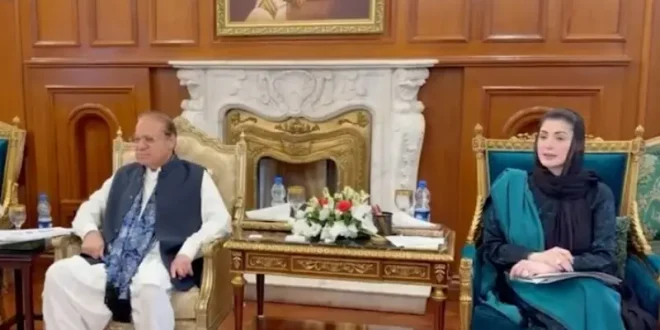
<p>The political landscape of Azad Jammu and Kashmir (AJK) is buzzing as the Pakistan Muslim League-Nawaz (PML-N) leadership intensifies efforts to cement its dominance following the recent general elections. In a significant display of central party control, former Prime Minister Nawaz Sharif and Punjab Chief Minister Maryam Nawaz Sharif personally conducted interviews with candidates vying for party tickets for the five crucial women's reserved seats in the AJK Legislative Assembly. Held in Murree, these sessions underscore the strategic importance PML-N places on AJK's governance, with senior party figures like Shah Ghulam Qadir and Rana Sanaullah also present.</p>
<p>With a formidable 25 directly elected seats and one allied member already secured, PML-N is poised to secure a commanding majority. The party anticipates winning at least four of the five women's reserved seats and all three other reserved categories (Ulema-i-Din/Mashaikh, State Subjects abroad, and technocrats/professionals), effectively ensuring a strong government. This strategic allocation of reserved seats, crucial for parliamentary strength, comes ahead of the AJK Election Commission's announced polling schedule for these eight seats on August 24th.</p>
<p>The electoral process, however, is not without its challenges. Seven directly elected seats—five in Poonch and two in Sudhnoti—could not proceed due to law and order issues, meaning only 38 of the 45 directly elected members will form the electoral college for these reserved seats. Despite this, the completion of general election results in Bagh district, with PPP's Sardar Ziaul Qamar and PML-N's Sardar Mir Akbar declared successful, brings the AJK Legislative Assembly closer to its full formation.</p>
<h2>Background: The Intricacies of AJK's Political Framework</h2>
<p>Azad Jammu and Kashmir, a self-governing territory under Pakistani oversight, possesses its own parliamentary system, comprising a 53-member Legislative Assembly. This unique structure balances direct elections (45 seats) with reserved seats (8 seats), designed to ensure representation for specific segments of society, notably women, religious scholars, expatriate Kashmiris, and technocrats. This system, while aiming for inclusivity, also provides a critical avenue for political parties to consolidate power beyond direct electoral victories.</p>
<p>The political landscape of AJK is deeply intertwined with Pakistani national politics. Major parties like PML-N, Pakistan Peoples Party (PPP), and Pakistan Tehreek-e-Insaf (PTI) actively contest elections, reflecting the broader political currents of Pakistan. Winning in AJK is not merely a regional victory; it's often seen as a significant mandate that bolsters a party's national standing and influence, particularly given the sensitive geopolitical context of Kashmir.</p>
<p>Reserved seats, originally conceived to ensure diverse representation, often become pivotal in government formation. Parties strategically nominate candidates to these seats not just for their representative qualities but also for their unwavering loyalty and ability to contribute to the ruling majority. This mechanism can be a double-edged sword: promoting inclusion while also serving as a tool for political maneuvering and solidifying a party's legislative control.</p>
<h2>Impact on Pakistan: Echoes from Muzaffarabad to Islamabad</h2>
<p>The political stability and democratic health of AJK directly reflect on Pakistan's international narrative concerning Kashmir. A well-functioning, democratically elected government in Muzaffarabad lends credence to Pakistan's principled stance on the region and its commitment to the self-determination of the Kashmiri people. Conversely, political instability or perceived democratic deficiencies in AJK could provide ammunition to detractors.</p>
<p>For Pakistan's major political parties, success in AJK is a barometer of their popularity and organizational strength beyond provincial borders. A strong PML-N government in AJK, for instance, reinforces the party's image as a dominant national force, capable of commanding support across diverse regions. This can influence national political dynamics, especially as Pakistan itself navigates its own electoral cycles and power struggles.</p>
<p>Moreover, the leadership's direct involvement—Nawaz Sharif and Maryam Nawaz interviewing candidates—signals that AJK is not a peripheral concern but a central piece in PML-N's broader political strategy. It demonstrates a commitment to ensuring aligned governance and fostering a sense of continuity with federal political objectives, which is crucial for managing inter-regional relations and coordinating development efforts.</p>
<h2>Analysis: PML-N's Calculated Strategy and Democratic Imperatives</h2>
<p>The PML-N's meticulous approach to selecting reserved seat candidates, overseen by its top leadership, is a clear demonstration of strategic foresight aimed at consolidating power. By personally engaging in the interview process, Nawaz and Maryam Sharif are not just handpicking individuals; they are reaffirming central party authority, rewarding loyalty (as seen with the widow of Raja Abid Khan), and identifying potential future leaders who align with the party's vision. This level of direct involvement ensures that the incoming AJK government is not only strong in numbers but also deeply loyal to the party's core directives.</p>
<p>The expected capture of a significant majority of reserved seats, coupled with their existing directly elected tally, positions PML-N for a powerful mandate in AJK. This strong legislative footing is vital for implementing policy, ensuring stability, and facing potential challenges from opposition parties. It transforms reserved seats from mere representative quotas into critical instruments for parliamentary majority, showcasing the pragmatic side of coalition-building in legislative assemblies.</p>
<p>However, this strategic consolidation also invites scrutiny regarding the democratic process. While the emphasis on women's active and significant role is a positive development for representation, the inability to hold elections in seven constituencies due to law and order issues casts a shadow. This partial electoral process means that the electoral college for reserved seats is not fully representative, potentially impacting the perceived legitimacy of the new assembly. A complete and peaceful electoral process is fundamental for robust democratic health, and these unresolved seats highlight areas for improvement.</p>
<p>Looking ahead, a stable PML-N government in AJK, backed by strong central party leadership, could lead to more coordinated development efforts and a clearer policy direction. However, the true measure of its success will lie in its ability to address the immediate socio-economic challenges faced by the people of AJK, foster inclusive governance, and ensure that the democratic gains are not overshadowed by political expediency. The upcoming government has a crucial role to play in not only fulfilling its electoral promises but also in reinforcing AJK's democratic foundations amidst complex regional dynamics.</p>
</body>
</html>