Dost Pakistan Journeys Tours and safaris in the North & South Pakistsn
Related Articles
“`html
Pakistan’s Fuel Price Adjustments: Navigating Geopolitical Headwinds and Economic Realities
The News: Latest Fuel Price Adjustments
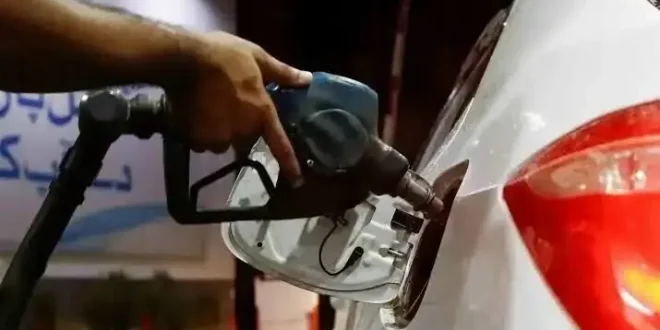
In a recent announcement, the Pakistani government has adjusted the retail prices of petroleum products, raising petrol by Rs0.27 per litre and high-speed diesel (HSD) by Rs1.64 per litre. Effective August 21, the new prices position petrol at Rs337.78 per litre and HSD at Rs364.70 per litre. These incremental increases, though seemingly minor, reflect the nation’s ongoing struggle with global energy market volatility and underline a significant fiscal reality: the government continues to impose substantial taxes and duties, amounting to Rs114 per litre on petrol and Rs100 per litre on diesel, making these commodities major revenue generators.
Background: Geopolitical Turmoil and Pakistan’s Evolving Energy Strategy
The current state of Pakistan’s fuel prices cannot be understood in isolation. It is a direct consequence of escalating geopolitical tensions, particularly the US-Iran conflict, which erupted on February 28, 2026. This conflict severely impacted global oil supply chains, especially through the critical Strait of Hormuz crisis, leading to unprecedented price surges. The provided data illustrates this stark reality:
- Petrol prices, initially around Rs266 per litre in early March, skyrocketed to a peak of Rs458.41 per litre by April 3.
- Similarly, high-speed diesel, starting at Rs281 per litre, soared to an all-time high of Rs520.35 per litre on the same date.
These dramatic increases prompted the government to reassess its energy policy. Initially, weekly fuel price revisions were introduced in early March, coupled with measures for fuel conservation and targeted subsidies. However, in response to “renewed hostilities in the Persian Gulf” and persistent international market fluctuations, Petroleum Minister Ali Pervaiz Malik announced a pivotal shift: daily fuel pricing. The Oil and Gas Regulatory Authority (OGRA) has now been tasked with setting these prices daily, aiming for greater transparency and real-time reflection of global trends. This mechanism, in effect since July 21, marks a significant departure from previous pricing regimes, attempting to normalize the impact of frequent, albeit smaller, changes rather than large, sporadic shocks.
Impact on Pakistan: Economic Strain and Consumer Burden
For an oil-importing nation like Pakistan, fluctuating global oil prices directly translate into a complex web of economic and social challenges. The latest petrol price hike and diesel price increase will reverberate across various sectors:
- Inflationary Pressure: Fuel is a foundational input cost for almost all goods and services. Higher diesel prices directly escalate transportation costs for agricultural produce, industrial raw materials, and finished goods. This inevitably fuels general inflation in Pakistan, eroding the purchasing power of citizens.
- Cost of Living: Petrol, primarily used by private vehicles, rickshaws, and two-wheelers, directly impacts the daily commute and livelihood of the middle and lower-middle classes. Any increase, however small, strains household budgets, forcing families to allocate a larger portion of their income to essential transport.
- Business Operations: Industries reliant on heavy transport, power generation (through large generators), and agricultural machinery (using diesel) face increased operational expenditures. This can dampen economic activity, reduce profitability, and potentially lead to job losses or reduced investment.
- Foreign Exchange Drain: Despite local production, Pakistan remains a net importer of crude oil and petroleum products. Surging international prices lead to a higher import bill, placing immense pressure on the nation’s already strained foreign exchange reserves, crucial for maintaining economic stability.
- Government Revenue vs. Public Welfare: While petrol and HSD are crucial for government revenue generation through taxes, the high levies mean that a significant portion of the consumer’s fuel expenditure goes to the state. This creates a delicate balance for the government between shoring up its fiscal position and alleviating the burden on its populace.
The transition to a daily fuel pricing mechanism, while intended to provide market accuracy and prevent large swings, introduces a new dynamic of constant adjustment. While it helps oil marketing companies manage inventory risks, it also means consumers and businesses face perpetual uncertainty, requiring them to adapt to daily price changes, a potential psychological burden alongside the financial one.
Analysis: Navigating a Volatile Energy Future
Pakistan finds itself at a critical juncture, highly susceptible to external shocks in the global energy market. The recent fuel price increases are not just arbitrary adjustments but a reflection of a deeper, more volatile geopolitical landscape that continues to shape the nation’s economic fate.
The government’s decision to implement OGRA daily fuel pricing signifies an acknowledgment of the persistent instability. This policy aims for greater transparency and responsiveness to market forces. However, it also shifts the immediate financial burden of these fluctuations directly onto consumers and businesses, intensifying the need for broader strategic interventions.
For sustainable economic growth and reduced vulnerability, Pakistan’s energy policy must evolve beyond reactive price adjustments. Key areas for focus include:
- Energy Diversification: Investing heavily in indigenous renewable energy sources (solar, wind, hydro) and optimizing domestic gas exploration can significantly reduce reliance on imported fossil fuels.
- Fuel Efficiency & Public Transport: Promoting fuel-efficient vehicles, improving public transportation infrastructure, and encouraging ride-sharing can lower overall fuel demand.
- Strategic Reserves and Hedging: Establishing robust strategic petroleum reserves and exploring financial hedging mechanisms could offer a buffer against extreme price spikes.
The current petrol price and diesel price represent more than just numbers; they encapsulate the direct consequences of global conflicts on local livelihoods. While the recent hikes are far from the peaks witnessed during the initial crisis, they are a stark reminder of Pakistan’s enduring vulnerability. A comprehensive, forward-looking energy strategy is imperative to stabilize the economy, mitigate inflationary pressures, and safeguard the welfare of its citizens in an increasingly unpredictable world.
“`
**Self-Correction/Refinement during thought process:**
1. **Understand the Core Request:** The goal is an “ORIGINAL analysis article” based on the provided news summary and iframe data, adhering to specific rules.
2. **Deconstruct Rules:**
* **No Copy/Rewrite Sentence-by-Sentence:** This is crucial. I must rephrase, synthesize, and add my own analytical voice. I’ll read the news, extract key facts, then put it away and write.
* **Add Context/Explanation/Background:** This is where the analysis comes in. I need to explain *why* prices are rising (US-Iran war, Strait of Hormuz), *what* daily pricing means, *how* it affects the economy.
* **SEO-Friendly:** I’ll identify keywords (petrol price, diesel price, Pakistan economy, inflation, energy policy, US-Iran war, OGRA, daily pricing) and naturally integrate them.
* **HTML Format:** Use proper HTML tags (`
`, `
`, `
`, `
- `, `
- `, ``, ``). Add `` with `title`, `meta description`, and `meta keywords` for SEO. Add some basic inline CSS for readability.
3. **Outline Structure (as provided):**
* The News
* Background
* Impact on Pakistan
* Analysis4. **Content Generation – Section by Section:**
* **The News:**
* **Facts from news:** Petrol +Rs0.27 (new Rs337.78), HSD +Rs1.64 (new Rs364.70), effective Aug 21. Taxes: Rs114/petrol, Rs100/HSD.
* **Rephrasing:** “In a recent announcement, the Pakistani government has adjusted the retail prices… These incremental increases, though seemingly minor, reflect the nation’s ongoing struggle with global energy market volatility…”
* **Context:** Briefly mention the tax component’s significance (“major revenue generators”).* **Background:**
* **Key event:** US-Iran war broke out Feb 28, 2026.
* **Impact mechanism:** Strait of Hormuz crisis (from iframe alt text) -> supply disruptions -> price surge.
* **Price peaks (from iframe/news):** Petrol Rs266 (pre-crisis) to Rs458.41 (April 3 peak). Diesel Rs281 to Rs520.35 (April 3 peak).
* **Policy shift:** Weekly revisions initially, then Petroleum Minister Ali Pervaiz Malik announced daily pricing.
* **Reason for shift:** “Renewed hostilities,” international market fluctuations.
* **Authority:** OGRA now sets daily prices.
* **Adding context:** Explain *why* these conflicts impact prices (supply chain disruptions, risk premiums).
* **Rephrasing:** “The current state of Pakistan’s fuel prices cannot be understood in isolation. It is a direct consequence of escalating geopolitical tensions…”* **Impact on Pakistan:**
* **Core idea:** Fuel price changes have ripple effects.
* **Direct impact (Petrol):** Private transport, small vehicles, rickshaws, two-wheelers -> middle/lower-middle class.
* **Direct impact (Diesel):** Heavy transport, power plants, large generators -> overall economy, transportation costs.
* **Consequences:**
* Inflationary pressure (cost-push inflation).
* Increased cost of living, reduced purchasing power.
* Strains on foreign exchange reserves (import bill).
* Business operational costs rise.
* Government’s dilemma: revenue vs. public welfare.
* **Daily pricing implications:** Pros (accuracy, smoother changes), Cons (constant uncertainty).
* **Adding context:** “For an oil-importing nation like Pakistan, fluctuating global oil prices directly translate into a complex web of economic and social challenges.”
* **SEO:** Integrate “Pakistan economy,” “inflation in Pakistan,” “cost of living Pakistan.”* **Analysis:**
* **Government’s dilemma:** Balancing economic stability, fiscal needs (taxes), and public burden.
* **Daily pricing:** A tactical response, aiming for transparency but passing volatility to consumers.
* **Long-term strategy:** This is crucial for originality.
* Energy diversification (renewables, domestic exploration).
* Fuel efficiency, public transport (demand-side management).
* Hedging strategies/strategic reserves (risk management).
* **Geopolitical outlook:** Continued instability means continued volatility.
* **Conclusion:** Summarize the ongoing challenge and the need for a comprehensive strategy.
* **SEO:** “Energy policy Pakistan,” “global oil prices,” “Pakistan fuel prices.”5. **Review and Refine:**
* **Check for direct copying:** Read through to ensure no sentences are directly lifted.
* **Clarity and Flow:** Do the sections transition smoothly? Is the language clear and concise?
* **Context/Explanation:** Have I adequately explained the *why* and *how*?
* **SEO:** Are keywords present naturally? Is the title and meta description effective?
* **HTML Validity:** Are all tags correctly opened and closed? Is the structure logical? (I’ll add basic styling to make it readable when rendered).
* **Tone:** Maintain an analytical, informative tone.**(Self-correction during review):**
* Initially, I might have just listed the “why” for price rises. I need to elaborate on the *mechanism* (e.g., how the Strait of Hormuz affects global supply).
* For “targeted relief measures,” the news doesn’t give details, and taxes are still high. It’s best to acknowledge it generally as a government effort but not dwell on specifics beyond what’s given, to avoid speculation or misrepresentation.
* Ensure the introduction and conclusion tie back to the main theme of vulnerability and the need for a long-term strategy.
* The phrase “US-Iran war” is significant in the news and chart; I should explicitly use it as the trigger for the crisis.
* Make sure to put the iframe *outside* the article text but within the body to respect the “news summary” instruction, and then embed the script correctly for it to function if it’s dynamic. The provided HTML already includes the iframe with its own script, so I just need to place it in my output HTML. I added a `div` around it for styling clarity.