Dost Pakistan Journeys Tours and safaris in the North & South Pakistsn
Related Articles

“`html
Pakistan’s Shifting Sands: Analyzing the Imran Khan Hospital Transfer Controversy
The News: A Last-Minute Pivot Sparks Controversy
In a move that has further intensified Pakistan’s volatile political climate, former Prime Minister and PTI founder, Imran Khan, was unexpectedly transferred to the state-run Pakistan Institute of Medical Sciences (PIMS) for a medical check-up, rather than the privately-owned Shifa International Hospital as directed by the Supreme Court.
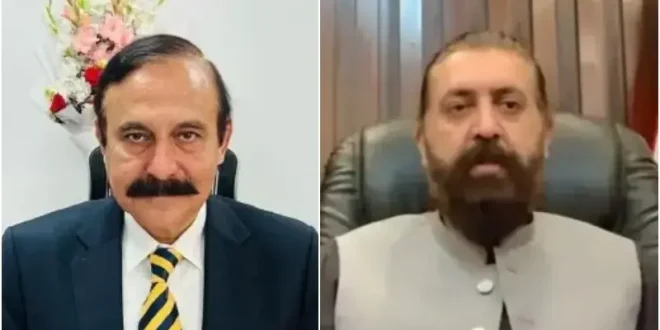
Government officials, notably Parliamentary Affairs Minister Dr. Tariq Fazal Chaudhry, insisted that the decision to divert Khan en route
was purely a security decision
made by law enforcement agencies, and not politically motivated. Despite extensive security arrangements having been made at Shifa, authorities reportedly deemed it unsafe to manage the law and order situation there. However, the Pakistan Tehreek-e-Insaf (PTI) swiftly condemned the action as a blatant act of contempt of court, highlighting the government’s apparent disregard for judicial directives and raising further questions about transparency and due process.
Background: A Nation Gripped by Political Turmoil
To fully grasp the significance of this incident, it’s essential to understand the turbulent backdrop of Pakistani politics. Imran Khan, once a charismatic cricket star turned politician, was ousted from power in April 2022 through a no-confidence vote. Since then, he has been embroiled in numerous legal cases, leading to his incarceration in Adiala Jail. His arrest and subsequent trials have become a central point of contention, igniting widespread protests and deepening the chasm between his supporters and the incumbent government.
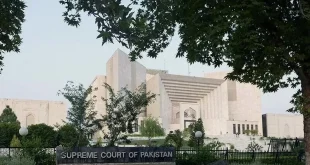
The Supreme Court, often seen as a crucial arbiter in Pakistan’s complex political landscape, had specifically ordered Khan’s transfer to Shifa International Hospital. This directive underscored the judiciary’s role in upholding the rights of prisoners, especially high-profile ones, and ensuring transparent medical examinations. Compliance with such orders is a cornerstone of the rule of law, and any deviation is scrutinized intensely, particularly by a public already skeptical of institutional impartiality.
Moreover, the political environment is characterized by intense polarization. Accusations of political victimization and crackdowns on dissent are rampant. In such an atmosphere, even seemingly administrative decisions regarding a figure as prominent as Imran Khan are immediately imbued with political meaning and perceived as part of a larger power struggle.
Impact on Pakistan: Eroding Trust and Deepening Divides
The last-minute diversion of Imran Khan from Shifa to PIMS carries significant implications for Pakistan across several fronts:
- Erosion of Judicial Authority: Bypassing a direct Supreme Court order, regardless of the stated justification, inevitably undermines the judiciary’s authority. If executive decisions can override judicial directives with ease, it sets a dangerous precedent, weakening the institutional checks and balances vital for a functioning democracy. This could lead to a perception that the government is above the law, further eroding public confidence in the judicial system.
- Heightened Political Polarization: This incident will undoubtedly serve as fresh ammunition for the PTI, who will likely frame it as yet another instance of the government’s authoritarian tactics and contempt for legal processes. This fuels existing grievances, deepens the political divide, and could potentially incite further public protests, contributing to overall instability.
- Questions of Transparency and Accountability: The government’s explanation – that security concerns suddenly emerged *en route* despite elaborate arrangements at Shifa – raises serious questions about transparency. The conflicting accounts, particularly from Imran Khan’s sister, Dr. Uzma Khan, who detailed confusion and being separated from Khan’s personal physician, further cloud the narrative and foster distrust in official statements.
- Due Process and Human Rights Concerns: While medical attention was provided, the manner of the transfer, the sudden change of hospital, and the apparent lack of seamless coordination with Khan’s personal medical team, touch upon concerns regarding the due process and humane treatment of a high-profile prisoner. The right to chosen medical consultation, where feasible, is a standard expectation.
- International Perception: Such events, often broadcast globally, can negatively impact Pakistan’s image on the international stage. They raise concerns among international observers about the country’s commitment to democratic principles, the rule of law, and fair treatment of political opponents.
Analysis: Security Pretext or Political Maneuver?
The government’s insistence that the hospital change was a “security decision” is the crux of this controversy, yet it invites critical scrutiny. Dr. Tariq Fazal Chaudhry stated that security agencies “could not control the law and order situation” at Shifa. However, the news itself reported that approximately 800 personnel were deployed, and extensive security audits were conducted at Shifa International Hospital. This suggests a high level of preparedness for Khan’s arrival there. The claim that a security assessment changed *while he was en route* seems to contradict the prior, thorough arrangements.
If Shifa, with its heavy police presence and cordoned-off areas, was deemed insecure, why was PIMS, a large public hospital, considered a safer alternative? This disparity begs for a more detailed, credible explanation than simply deferring to “security agencies.” In Pakistan’s political lexicon, “security concerns” can often serve as a broad justification for actions that might otherwise be seen as politically motivated or legally questionable.
From the PTI’s perspective, this incident reinforces their narrative of political victimization and institutional overreach. They see it as a deliberate act of defiance against the Supreme Court, aimed at asserting executive dominance and potentially controlling the narrative around Imran Khan’s health. The exclusion of Khan’s personal physician, Dr. Faisal Sultan, who was reportedly left waiting at Shifa, further strengthens the PTI’s claim that the process lacked transparency and adherence to proper protocols.
Ultimately, this event underscores the deepening institutional crisis in Pakistan. It highlights the ongoing tension between judicial directives, executive authority, and the pervasive influence of security narratives. The Supreme Court’s response to this alleged contempt will be crucial in determining the future trajectory of judicial independence and the rule of law in the country. The controversy surrounding Imran Khan’s hospital transfer is not merely about a change of venue; it is a microcosm of Pakistan’s broader struggle for democratic governance, transparency, and the equitable application of justice.
“`