Dost Pakistan Journeys Tours and safaris in the North & South Pakistsn
Related Articles



Pakistan’s Used Car Import Surge: Balancing Consumer Demand with Local Industry Growth
A closer look at the renewed influx of imported used cars and its critical impact on Pakistan’s automotive sector and economic strategy.
The News: A Swift Reversal in Import Trends
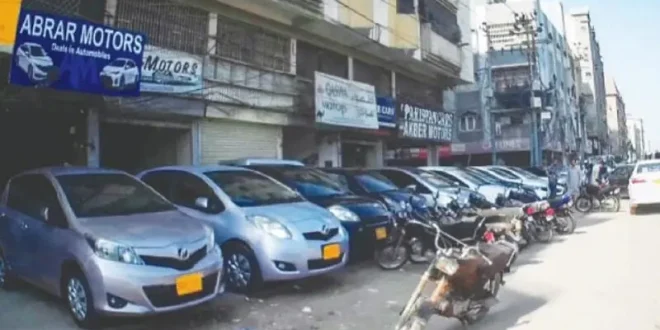
After a period of stringent government interventions aimed at curbing the flow of used cars, Pakistan’s automotive market is once again experiencing a significant surge in imports. September alone saw 2,276 vehicles entering the country, predominantly under the ‘Gift Scheme,’ marking a dramatic increase from a mere 48 units imported just four months prior in May. This revival follows earlier measures, such as the abolishment of the Personal Baggage Scheme and tightening of other import regulations, which had temporarily depressed import figures. Data from the Commerce Ministry reveals a steady climb since June, with the Gift Scheme now serving as the primary conduit for these inbound vehicles. This rapid resurgence has immediately drawn strong reactions, pitting local auto manufacturers and parts vendors against importers in a debate over economic policy, competition, and industrial health.
Background: Pakistan’s Complex Auto Import Landscape
Pakistan’s automotive sector has long been a subject of intense policy scrutiny and public debate. Historically, schemes like the Personal Baggage and Gift Scheme were introduced to facilitate overseas Pakistanis, allowing them to bring vehicles into the country with certain duty concessions. While intended for personal use or gifting to family, these pathways have frequently been exploited, leading to a vibrant grey market for used cars that often circumvents official commercial import channels and impacts government revenue.
Successive governments have grappled with the challenge of regulating these imports, often oscillating between restrictive measures to protect local industry and more liberal policies to enhance consumer choice. Earlier this year, significant steps were taken to curtail misuse, leading to a temporary slowdown in used car imports. However, the underlying demand for more affordable or varied vehicles persists, creating pressure for regulatory adjustments. Concurrently, the domestic auto industry, comprising thirteen assemblers and over 300 auto parts manufacturers, has consistently advocated for a protective environment, arguing that local production fosters job creation, contributes significantly to the Large-Scale Manufacturing (LSM) sector, and saves precious foreign exchange.
The situation is further complicated by recent proposals in the 2026-27 budget, which suggest a 20-25% reduction in duties on Completely Built Units (CBUs) – new imported cars. This proposed policy shift signals a potential move towards greater openness for new vehicle imports, adding another layer to the already complex dynamic between local production and foreign competition.
Impact on Pakistan: Economic Crossroads for Local Industry
The renewed surge in used car imports carries profound implications for Pakistan’s economy and its industrial fabric. For local manufacturers and the extensive network of auto parts vendors, this trend is a cause for grave concern. Abdul Rehman Aizaz, chairman of the Pakistan Association of Automotive Parts and Accessories Manufacturers (Paapam), succinctly articulated the financial repercussions: considering that locally produced cars typically incorporate up to 60% local parts by value, the import of 2,276 used vehicles represents an estimated loss of Rs3.4 billion in domestic parts production. This isn’t just a monetary figure; it translates directly into lost jobs, reduced investment in local manufacturing, and a setback for the broader LSM sector, which had only recently begun to show signs of recovery after a three-year slump.
The local industry perceives a policy dissonance, where on one hand, discussions revolve around reducing import duties for new vehicles, while on the other, an easing of conditions seems to be encouraging used car imports. Concerns are also mounting over the alleged non-enforcement of the one-year restriction on ownership transfer for imported vehicles, suggesting that quick-profit trading rather than genuine consumer demand is driving some of these imports. This scenario, they fear, risks transforming Pakistan into a market primarily for imported vehicles, stifling indigenous industrial activity and long-term economic self-reliance.
In stark contrast, importers champion the benefits of competition and consumer choice. Mian Shaoib Ahmed, chairman of the All Pakistan Car Dealers & Importers Association, emphasizes that used car imports, when conducted legally and through accredited pre-shipment inspections (often from Japan), are vital for a competitive economy. He highlights the strong consumer demand for these vehicles, arguing that established Japanese assemblers in Pakistan are not yet prepared for a truly competitive market, while new Chinese entrants are still finding their footing. Ahmed lauded the government’s recent changes, particularly the September 30 Engineering Development Board (EDB) notification, which has relaxed crucial import criteria. This notification removed the minimum capital requirement for importing companies and now permits any tax-registered individual or firm, even those not registered with the SECP, to import vehicles. Furthermore, pre- and post-shipment inspections will now be conducted by registered agencies under the Pakistan Standards and Quality Control Authority (PSQCA), a move seen by importers as streamlining the process. These regulatory adjustments are expected to sustain, if not further accelerate, the rise in used car imports in the coming months.
Analysis: Navigating the Crossroads of Industrial Policy
The current debate surrounding used car imports in Pakistan underscores a fundamental economic tension: the quest for market competitiveness and consumer affordability versus the strategic imperative of fostering local industrial growth and job creation. Importers advocate for an open market, asserting that it provides consumers with broader choices, more competitive pricing, and acts as a check on potential monopolistic tendencies within the local assembly sector. Their argument for a competitive economy is compelling in a market where consumers have often faced limited options and high prices.
However, the apprehensions voiced by the local auto industry are equally critical for Pakistan’s long-term economic stability. A robust domestic manufacturing base is indispensable for any developing nation, contributing significantly to Gross Domestic Product, promoting technological transfer, and cultivating a skilled labor force. The reported loss of billions in local parts production and the associated job losses are not mere statistics; they represent a tangible erosion of the country’s industrial capacity and its journey towards self-sufficiency. The concerns regarding lax enforcement of ownership transfer restrictions also point to potential regulatory loopholes that may be fueling speculative trade rather than genuinely serving consumer needs or broader economic development.
The government’s recent policy adjustments, particularly the EDB notification, lean towards facilitating easier imports. While this might be a response to consumer demand and an effort to introduce more competition, such measures must be carefully balanced against their potential to undermine domestic investment and the strategic vision for a ‘Make in Pakistan’ initiative. A truly sustainable automotive policy would necessitate a cohesive strategy that encourages both healthy competition and strategic localization. This would involve rigorous enforcement of import regulations, transparent tracking of vehicle ownership, and targeted incentives for local manufacturers to enhance their quality, competitiveness, and diversify their product offerings.
Ultimately, Pakistan finds itself at a crucial policy crossroads. The current surge in used car imports, while potentially addressing immediate market demands and benefiting importers, risks jeopardizing the foundational efforts to build a resilient and self-reliant local automotive ecosystem. Future policy decisions will be instrumental in determining whether Pakistan cultivates a thriving domestic industry capable of competing globally, or if it becomes primarily a consumption hub for imported vehicles, both new and used.