 Dost Pakistan Journeys Tours and safaris in the North & South Pakistsn
Related Articles
“`html
FCC Curbs Lawyer Strikes: A Landmark Ruling for Access to Justice in Pakistan
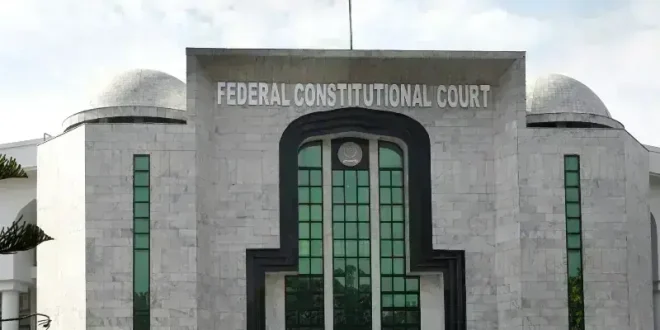
ISLAMABAD, Pakistan – In a pivotal decision poised to reshape Pakistan’s legal landscape, the Federal Constitutional Court (FCC) has delivered a robust judgment, unequivocally stating that bar associations cannot suspend a lawyer’s license solely for representing clients or appearing in court during a strike. This ruling, emerging from an appeal by the Peshawar High Court Bar Association, marks a significant push towards upholding constitutional rights and streamlining the nation’s often-stalled justice system.
What Happened: Upholding Rights Against Coercion
The FCC, in a 20-page judgment authored by Justice Aamer Farooq, dismissed an appeal from the Peshawar High Court Bar Association, thereby affirming an earlier ruling by the Peshawar High Court (PHC). The core of the FCC’s decision is that striking lawyers, while a common form of protest within the legal community, are “illegal” and infringe upon the fundamental right of litigants to access justice. The court also clarified that preventing lawyers from practicing their profession directly violates their economic freedom guaranteed under Article 18 of the Constitution.
This landmark verdict came after two lawyers, Advocate Shabbir Hussain Gigyani and Advocate Azim Afridi, faced disciplinary action from bar bodies. Advocate Gigyani was targeted for representing a police officer implicated in a lawyer’s murder, while Advocate Afridi’s license was suspended for appearing in court during a strike. Both challenged their suspensions, finding relief first at the PHC and now definitively at the FCC, which has sided firmly with individual lawyers’ rights and, crucially, with the public’s right to legal representation.
Background: A Culture of Strikes and Constitutional Challenges
The roots of this controversy lie in a deeply entrenched practice within Pakistan’s legal fraternity: the frequent call for strikes by bar associations and councils. While often initiated to protest perceived injustices or advocate for judicial reforms, these strikes invariably lead to the cessation of court proceedings, leaving litigants in limbo. The incident that triggered this specific case involved the murder of a young lawyer, leading to protests and the implication of a Station House Officer (SHO). When the SHO engaged legal counsel, the Khyber Pakhtunkhwa Bar Council passed a resolution barring any advocate from representing him—a move that directly challenged the principles of due process and the right to a fair trial.
Further exacerbating the situation, Advocate Azim Afridi’s appearance in court during a strike was deemed an act of “indiscipline” by the Peshawar Bar Association, leading to the suspension of his license by the KP Bar Council. These actions prompted a constitutional challenge that ultimately reached the FCC. The court meticulously examined two key questions: the extent of a high court’s jurisdiction to issue writs against regulatory bodies like bar councils (Article 199(1)(c)), and whether suspending a lawyer’s license for working during a strike infringes upon the fundamental right to practice a profession (Article 18). The FCC answered both affirmatively, setting a powerful precedent.
Why It Matters: Safeguarding Fundamental Rights and Judicial Integrity
This FCC ruling is a game-changer for several profound reasons. Firstly, and most importantly, it unequivocally prioritizes the constitutional right to access justice for every citizen. By condemning strike calls as illegal and violative of litigants’ rights, the court has positioned the citizen at the heart of the judicial process, ensuring that their pursuit of justice is not arbitrarily derailed by collective professional actions. Justice Farooq’s observation that strikes add to the “plight of litigants” in an already overburdened system resonates deeply with the everyday realities of Pakistan’s judicial backlog.
Secondly, the decision strongly affirms the fundamental right of lawyers to practice their profession, as guaranteed by Article 18. This protects individual lawyers from the coercive power of bar associations, allowing them to fulfill their professional duty to clients even when bar bodies call for a shutdown. It’s a crucial assertion of professional autonomy against group mandates. Lastly, it strengthens the overall integrity and functionality of the judicial system. By curtailing the practice of strikes, the court aims to reduce the chronic delays that plague Pakistani courts, thereby fostering greater judicial efficiency and public trust in the rule of law.
Impact on Pakistan: A Shift Towards Consistent Justice Delivery
The immediate impact of the FCC’s ruling on Pakistan’s legal ecosystem is expected to be significant. We can anticipate a potential decrease in the frequency and effectiveness of lawyer strikes. Bar associations, traditionally powerful entities within the legal fraternity, will now have their capacity to enforce strike calls considerably curtailed. This shift will likely compel them to explore alternative, lawful avenues for expressing grievances and advocating for their causes, moving away from methods that directly impede justice.
For ordinary citizens, this judgment offers a beacon of hope for more consistent and timely access to justice. Litigants will be less likely to face sudden adjournments and prolonged waits due to lawyer boycotts, ensuring that their fundamental right to legal representation remains intact regardless of internal bar politics. While some friction may arise as bar councils adapt to this new judicial directive, the ruling ultimately pushes Pakistan’s legal system towards greater accountability, professionalism, and adherence to constitutional principles, potentially paving the way for incremental but vital judicial reforms.
Analysis: Redefining Professionalism and the Public Good
The FCC’s ruling represents a crucial step in modernizing and depoliticizing Pakistan’s legal profession. It challenges a long-standing culture where collective action, even for noble causes, often superseded individual rights and the overarching public good. The court’s clear stance on the illegality of strikes and the violation of fundamental rights they entail is not an attack on the legal community’s right to express dissent, but rather a re-calibration of how that dissent can be lawfully exercised without compromising justice for millions.
By invoking Article 18 and emphasizing “economic freedom,” the court also acknowledges the practical realities of lawyers’ livelihoods, affirming their right to earn a living without fear of retribution from bar bodies for simply performing their professional duties. This decision could serve as a catalyst for a more client-centric and professionally responsible legal environment, fostering a judiciary where the primary focus is consistently on delivering timely justice rather than navigating the complexities of lawyer protests. While the journey towards full implementation and acceptance of this judgment may encounter resistance, its long-term implications for strengthening constitutionalism and enhancing access to justice in Pakistan are undeniably profound.
“`
