Dost Pakistan Journeys Tours and safaris in the North & South Pakistsn
Related Articles


“`html
Warner Backs Khawaja: Sandpapergate’s Lingering Shadows and the Quest for Truth
The News: Cracks in the Official Narrative
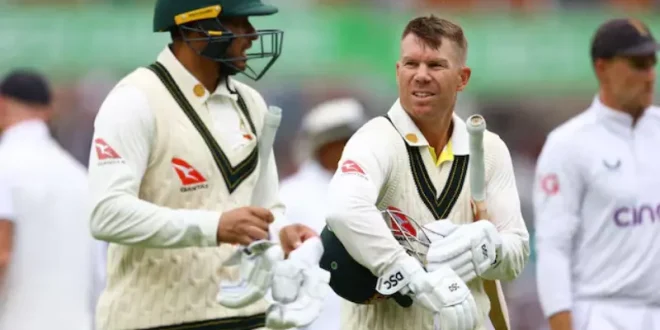
Eight years after the infamous “Sandpapergate” ball-tampering scandal rocked Australian cricket, new revelations are once again challenging the official narrative. Recently, veteran opener Usman Khawaja made a bold claim: the entire Australian team was aware of the plot to illegally alter the ball in 2018. This assertion, made ahead of the release of his autobiography, has been unequivocally supported by former teammate David Warner.
Warner, who along with Steve Smith and Cameron Bancroft, faced severe bans for their roles, declared Khawaja’s claims “100 percent accurate” via an Instagram post. He expressed his “full support” for his “brother” Khawaja, stating, “Now everyone knows the truth. It’s out there.” Warner also took aim at Cricket Australia’s initial investigation, labelling it “rushed and botched” and questioning its thoroughness given Khawaja was not interviewed despite being present.
This re-ignition of the controversy comes despite Cricket Australia’s weekend statement reaffirming its “comfort” with the initial findings, which pinned knowledge of the plot solely on Smith, Warner, and Bancroft. Other players, including key bowlers like Pat Cummins, Mitchell Starc, Josh Hazlewood, and Nathan Lyon, along with former coach Darren Lehmann, have previously denied widespread awareness.
Background: The Shadow of Cape Town 2018
The Sandpapergate scandal, which occurred during the third Test match between Australia and South Africa in Cape Town in March 2018, was a seismic event that sent shockwaves through the cricketing world. Then-opening batsman Cameron Bancroft was caught on camera using sandpaper to rough up one side of the ball, a blatant attempt to unfairly alter its condition and generate reverse swing, thereby gaining an illegal advantage over the opposition.
The immediate fallout was severe. An internal investigation by Cricket Australia resulted in unprecedented sanctions: captain Steve Smith and vice-captain David Warner were banned from all international and domestic cricket for 12 months, and Warner was also stripped of all leadership positions for life. Bancroft received a nine-month ban. The scandal led to a significant public outcry, a national reckoning in Australia over sportsmanship and fair play, and a complete overhaul of the team’s leadership and culture.
However, from the very beginning, questions lingered. Many observers, including former players and commentators, expressed skepticism that only three individuals could have been privy to such a premeditated act in a professional team environment. The cricket community debated whether the initial investigation was thorough enough, and if higher-ups or other players were intentionally shielded. Bowlers, who benefit most directly from an altered ball, were particularly under scrutiny but consistently denied any prior knowledge. Usman Khawaja’s and David Warner’s recent statements explicitly challenge this long-held official position, suggesting a broader, systemic issue rather than an isolated incident involving a few.
Impact on Pakistan: Lessons in Integrity and Governance
While the “Sandpapergate” scandal directly involved the Australian cricket team, its repercussions resonate across the global cricketing landscape, offering critical lessons for all cricketing nations, including Pakistan. The revelations from Khawaja and Warner highlight fundamental questions about integrity, governance, and accountability that transcend geographical boundaries.
Upholding the Spirit of Cricket
For a passionate cricketing nation like Pakistan, where the sport holds immense cultural significance, incidents like Sandpapergate serve as a stark reminder of the importance of fair play and adherence to the spirit of the game. Such scandals erode fan trust globally, and the fresh claims only deepen that wound. Pakistani fans and players alike value sportsmanship, and seeing cracks in the official version of such a major event underscores the need for constant vigilance against any form of cheating, regardless of the team involved.
Governance and Transparent Investigations
The criticism of Cricket Australia’s “rushed and botched” investigation process should prompt the Pakistan Cricket Board (PCB) and other national boards to review and reinforce their own internal investigation protocols. Transparency, thoroughness, and impartiality are paramount when dealing with allegations of misconduct. Any perception of a cover-up or incomplete inquiry can severely damage an organization’s credibility and alienate stakeholders, from players to fans and sponsors. The PCB, which has had its own historical struggles with integrity issues, can learn from the lingering questions surrounding Sandpapergate to ensure that any future investigations are beyond reproach.
Player Welfare and Speaking Truth to Power
Warner’s commendation of Khawaja for “speaking your truth” touches upon a sensitive area: the pressure on players within highly competitive team environments. This situation highlights the potential for a culture where individuals might feel compelled to remain silent to protect their careers or the team’s image. For Pakistan, fostering an environment where players feel empowered to report misconduct without fear of reprisal is crucial for maintaining a healthy and ethical sporting culture. It underscores the responsibility of cricketing boards to protect whistleblowers and ensure genuine accountability, rather than penalizing those who seek to clarify uncomfortable truths.
Analysis: Reopening Wounds, Redefining Legacies
David Warner’s emphatic support for Usman Khawaja’s claims represents more than just a teammate backing a friend; it’s a profound challenge to the narrative that has defined one of cricket’s darkest chapters for the better part of a decade. This isn’t merely “reopening old wounds,” as Warner himself stated, but rather an acknowledgment that “some wounds never properly healed.”
The Timing and Motivation
The timing of these revelations is crucial. Both Khawaja and Warner have recently retired or are nearing the end of their illustrious careers. This grants them a freedom to speak that active players might not possess, free from immediate repercussions on selection or sponsorship. Khawaja’s autobiography provides a platform for a deeply personal account, while Warner’s public backing, after years of relative silence on the specific details, suggests a collective desire among the ‘punished three’ for the full story to emerge. It could be seen as a quest for personal vindication, a final attempt to correct the historical record, and an indirect criticism of Cricket Australia for what they perceive as an incomplete and unjust resolution.
A Re-evaluation of Accountability
Khawaja’s assertion that “It was all of us… All of us,” followed by his description of Smith, Warner, and Bancroft as “victims” who “took the blame for all of us,” fundamentally shifts the focus of accountability. If true, the scandal was not merely a rogue act by a few individuals, but potentially indicative of a systemic issue or a culture of silence within the team. This places renewed pressure on Cricket Australia. Their “comfort” with the original findings now appears increasingly tenuous. Does this necessitate a fresh, independent investigation? Or will the organisation choose to let these claims hang as an uncomfortable footnote to a painful history?
The insistence from bowlers and former coach Darren Lehmann that they were unaware of the plot further complicates the picture. If Warner and Khawaja’s statements are true, then either those denials were false, or there was a highly compartmentalized scheme where key players were deliberately kept in the dark, which itself raises questions about team dynamics and trust.
Legacy and Trust
For the individuals involved, these revelations will undoubtedly reshape their legacies. For Warner, it’s a pushback against being solely painted as the orchestrator of the scandal, sharing the burden more broadly. For Smith, who was stripped of the captaincy and is only recently regaining full acceptance, it further complicates his return to grace. Most importantly, for Australian cricket, it tests the depth of the reforms implemented post-2018. If the foundation of the ‘new’ culture was built on an incomplete truth, then its integrity could be called into question once more.
Ultimately, these statements are a powerful call for truth and accountability, eight years overdue. They challenge the convenient narrative, push against institutional inertia, and remind the cricketing world that some stories, no matter how painful, demand a complete telling for true healing and progress to begin.
“`