Dost Pakistan Journeys Tours and safaris in the North & South Pakistsn
Related Articles



“`html
Pakistan-Sudan Visa-Free Agreement: A Strategic Move Amidst Turmoil
Examining the deeper implications of enhanced bilateral ties between Islamabad and Khartoum.
The News: Forging Closer Ties
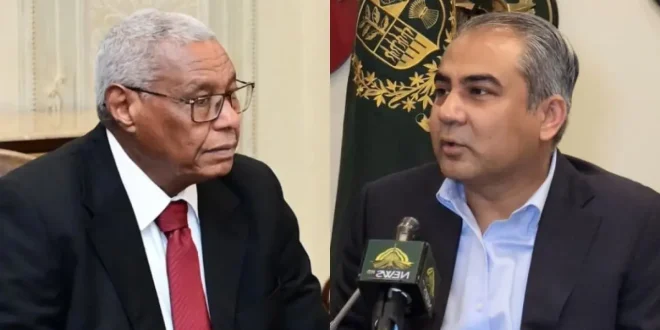
In a significant development for bilateral relations, Pakistan and Sudan have officially sealed an agreement enabling visa-free travel for holders of official and diplomatic passports. The accord was signed in Islamabad by Pakistan’s Interior Minister Mohsin Naqvi and his Sudanese counterpart, Lt Gen Babiker Samra Mustafa Ali, marking a clear intent to facilitate high-level governmental exchanges and strengthen institutional links between the two nations.
Beyond this symbolic gesture, the visit of the Sudanese Interior Minister underscored a broader commitment to deepen cooperation across several critical sectors. Both countries agreed to sign a Memorandum of Understanding (MoU) on combating cybercrime, with Sudan specifically seeking to leverage Pakistan’s advanced expertise in this area. Discussions also covered expanding collaboration in security, internal affairs, police training, and the crucial role of the National Database and Registration Authority (NADRA) in civil registration processes, where Pakistan has already provided substantial assistance to Sudan.
Notably, Pakistan also reiterated its readiness to extend support for peace-building and reconstruction efforts in Sudan, including offering professional training to Sudanese police officers and providing medical facilities to Sudanese citizens. These discussions culminated in high-level meetings between the Sudanese minister and Pakistan’s Prime Minister Shahbaz Sharif and Chief of Army Staff General Asim Munir, signaling the strategic importance of these renewed ties.
Background: A Deeper Look at Pakistan-Sudan Relations
The recent agreements between Pakistan and Sudan are not merely isolated diplomatic events but are rooted in a history of shared faith, common developmental aspirations, and a broader context of evolving geopolitical dynamics. Both nations are prominent members of the Organization of Islamic Cooperation (OIC) and have historically maintained cordial relations, often collaborating on international forums.
However, the timing of this enhanced engagement is particularly noteworthy given Sudan’s current internal situation. Since April 2023, Sudan has been engulfed in a devastating civil conflict between the Sudanese Armed Forces (SAF) and the paramilitary Rapid Support Forces (RSF). This prolonged instability has led to a severe humanitarian crisis, widespread displacement, and significant damage to the country’s infrastructure and governance structures.
Pakistan, as a nation with substantial experience in peace-keeping operations (contributing significantly to UN missions globally) and a robust internal security apparatus, finds itself uniquely positioned to offer valuable assistance. Its National Database and Registration Authority (NADRA), lauded internationally for its biometric identification systems and civil registration prowess, has already played a foundational role in Sudan, issuing millions of citizenship and identity documents. This existing cooperation forms a strong bedrock for further technical and institutional collaboration, particularly as Sudan grapples with the challenges of state functionality amidst conflict.
From Pakistan’s perspective, strengthening ties with Sudan aligns with its broader foreign policy objectives, which include fostering stronger South-South cooperation, expanding its diplomatic footprint in Africa, and projecting its soft power through technical expertise and humanitarian assistance. It reflects a strategic long-term view of engaging with a significant African and Muslim-majority nation, even during its period of crisis.
Impact on Pakistan: Strategic Gains and Soft Power Projection
While the immediate, practical impact of visa-free travel for official passports might seem limited given Sudan’s current instability, this agreement and the broader discussions hold significant strategic implications for Pakistan across several fronts:
- Enhanced Diplomatic Influence: By proactively engaging with Sudan during its challenging period, Pakistan reinforces its image as a reliable and supportive partner within the OIC and among developing nations. This strengthens its diplomatic influence and positions it favorably for future engagement once stability returns to Sudan.
- Export of Expertise and Soft Power: The agreements highlight Pakistan’s capacity to export specialized knowledge and services. NADRA’s continued role in civil registration in Sudan is a prime example of Pakistan’s technological prowess. Similarly, offering expertise in police training, security cooperation, and cybercrime combat underscores Pakistan’s valuable experience in these fields, presenting new avenues for ‘soft power’ projection and technical assistance.
- Future Economic Opportunities: Although direct trade and investment might be constrained by the ongoing conflict, laying the groundwork for stronger official ties now can pave the way for significant economic opportunities in the future. Pakistan can position itself as a key partner in Sudan’s eventual reconstruction efforts, offering services in infrastructure development, agriculture, and other sectors. The facilitation of official travel is a precursor to easier business and trade exchanges in the long run.
- Security and Stability Collaboration: The MoU on cybercrime and cooperation in security and internal affairs is mutually beneficial. Pakistan, having faced its own complex security challenges, can offer valuable insights and training, while also potentially gaining from intelligence sharing that contributes to regional and global security.
- Geopolitical Positioning: Expanding engagement with African nations like Sudan helps Pakistan diversify its foreign policy focus beyond traditional partners and regions. It aligns with a strategic vision of building a more robust and multifaceted global presence, asserting its role as a responsible and helpful international actor.
Analysis: Navigating Instability with Strategic Foresight
The recent diplomatic overtures by Pakistan towards Sudan represent a calculated and forward-looking strategy, despite the prevailing political instability in Khartoum. The visa-free agreement for official and diplomatic passport holders, while primarily symbolic in the short term, serves as a crucial building block for deeper future engagement. It signals trust and a long-term commitment, rather than an opportunistic interaction.
Pakistan’s readiness to assist in “peace-building and reconstruction” is particularly significant. This isn’t merely a humanitarian offer; it’s a strategic investment in a post-conflict Sudan. By providing technical assistance through NADRA, offering police training, and extending medical facilities, Pakistan is actively contributing to the foundations of state capacity and human capital development. These efforts are vital for any nation emerging from conflict and position Pakistan as a key partner in Sudan’s eventual recovery.
The emphasis on combating cybercrime, specifically requested by Sudan, highlights a practical and timely aspect of cooperation. In an era where digital infrastructure is critical and vulnerable, particularly in conflict zones, expertise in cybersecurity is invaluable. This demonstrates a pragmatic alignment of Pakistan’s capabilities with Sudan’s immediate and future needs.
However, the success and full realization of these agreements are intrinsically linked to the resolution of Sudan’s internal conflict. While Pakistan is wisely laying the groundwork, the effective implementation of broader security cooperation and economic ties will depend heavily on the stabilization of the political and security landscape in Sudan. This engagement, therefore, carries an element of strategic risk but also promises significant rewards should Sudan successfully navigate its current challenges.
In essence, Pakistan’s proactive approach towards Sudan is more than just a gesture of solidarity; it is a testament to a pragmatic foreign policy that seeks to leverage its unique strengths and experiences to foster long-term partnerships in strategically important regions. It underscores a commitment to South-South cooperation and the projection of Pakistan’s capabilities as a constructive force on the global stage, even in the most challenging environments.
“`