Dost Pakistan Journeys Tours and safaris in the North & South Pakistsn
Related Articles


“`html
Pakistani Astronaut on Tiangong: A New Era for China-Pakistan Space Cooperation
The Historic Mission Announced
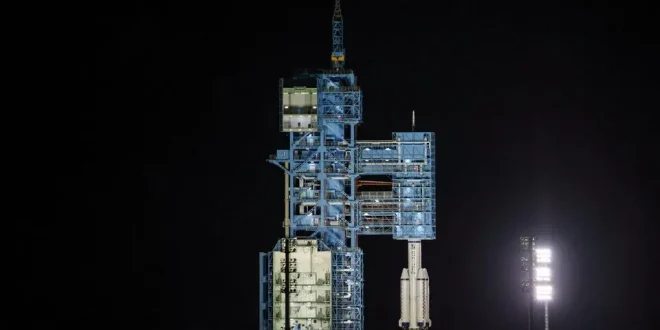
In a significant announcement, China confirmed that a Pakistani astronaut will embark on the Shenzhou-24 mission to the Tiangong space station, marking a historic first for any foreign national visiting China’s independent orbiting outpost. This groundbreaking flight, expected to occur by the end of the year, possibly as early as November 25th according to Pakistan’s Planning Minister Ahsan Iqbal, underscores a deepening alliance between Beijing and Islamabad.
The unnamed Pakistani astronaut will serve as a payload specialist during a brief orbital stint, returning with the Shenzhou-23 spacecraft. While the identity of the crew member remains undisclosed, two candidates, Muhammad Zeeshan Ali and Khurram Daud, were selected and began training in China earlier this year. Pakistani Prime Minister Shehbaz Sharif lauded their selection in April, emphasizing the immense national pride and the “new dimensions” this mission would add to the “brotherly relationship” between the two nations.
Background: Forging an “All-Weather” Space Partnership
This mission is not an isolated event but a culmination of decades of strategic partnership and a natural extension of the “all-weather” friendship between Pakistan and China. China stands as Pakistan’s largest trading partner and a crucial foreign investor, cementing a bond that spans economic, diplomatic, and military spheres. The collaboration in space, however, marks a new pinnacle of trust and shared ambition.
China’s own space program has seen meteoric growth, rapidly catching up with, and in some areas surpassing, its Western counterparts. With ambitious goals like landing astronauts on the Moon by 2030, Beijing has strategically invested in its independent capabilities, including the Tiangong space station. This independence became particularly vital after 2011, when the U.S. Congress barred NASA from collaborating with Chinese space agencies, effectively excluding China from the International Space Station (ISS).
In response, China began forging its own international partnerships for Tiangong, and Pakistan, given its deep ties, emerged as an obvious choice. A landmark cooperation agreement between Pakistan’s Space and Upper Atmosphere Research Commission (SUPARCO) and the China Manned Space Agency (CMSA) has formalized a training program for Pakistani astronauts, directly paving the way for this historic mission. This framework not only facilitates human spaceflight but also sets the stage for broader collaboration in space science and technology.
Impact on Pakistan: National Pride and Strategic Gains
For Pakistan, the significance of sending its first astronaut to a fully operational space station cannot be overstated:
- National Pride and Prestige: This mission is a monumental achievement, igniting national pride and showcasing Pakistan’s commitment to scientific and technological advancement on a global stage. It positions Pakistan as a contributor to human spaceflight, albeit through a powerful ally.
- Capacity Building and Skill Transfer: Participation in the Shenzhou-24 mission provides invaluable hands-on experience in human spaceflight operations, mission planning, and scientific research in microgravity. This direct exposure can significantly bolster Pakistan’s indigenous space capabilities and facilitate knowledge transfer.
- Inspiration for STEM: The sight of a Pakistani astronaut in space will undoubtedly inspire a new generation of scientists, engineers, and innovators within the country, fostering greater interest and investment in STEM (Science, Technology, Engineering, and Mathematics) education.
- Enhanced Diplomatic and Economic Ties: Deepening space cooperation further solidifies Pakistan’s strategic alliance with China. This can lead to broader collaborations in technology and infrastructure, potentially attracting more investment and strengthening Pakistan’s geopolitical standing.
- Scientific Contribution: As a payload specialist, the Pakistani astronaut will contribute to scientific experiments conducted on Tiangong, feeding valuable data and research back into Pakistan’s scientific community.
Analysis: Geopolitics, Technology, and Future Prospects
The upcoming Shenzhou-24 mission transcends a mere scientific endeavor; it carries profound geopolitical, technological, and strategic implications for both Pakistan and China, as well as the broader landscape of international space cooperation.
Deepening the “Iron Brothers” Alliance
This mission unequivocally reinforces the “Iron Brothers” narrative, demonstrating a level of trust and strategic alignment between Pakistan and China that extends into the cutting-edge domain of human spaceflight. By inviting a Pakistani astronaut, China signals its commitment to genuine partnership, not just economic or military ties, but also in high-tech and future-oriented sectors. This deepens the bilateral relationship and acts as a powerful symbol of their unbreakable bond in the face of evolving global dynamics.
China’s Space Diplomacy and Soft Power
For China, inviting a foreign astronaut, particularly from a key strategic partner like Pakistan, is a masterstroke of space diplomacy. It demonstrates Beijing’s growing soft power and its commitment to multilateral space cooperation on its own terms, independent of Western-led initiatives like the ISS. Tiangong is being positioned as an inclusive alternative, offering access to space for nations eager to participate but historically constrained by geopolitical or financial barriers. This move helps China build a coalition of partners, enhancing its global influence and presenting itself as a leader in a new era of space exploration.
Technological Advancement and Future Collaborations
Beyond the symbolic value, this mission paves the way for more comprehensive technological and scientific collaboration. As a payload specialist, the Pakistani astronaut’s role implies contributions to scientific experiments, fostering a direct exchange of knowledge and expertise. In the future, this partnership could evolve into joint satellite development, cooperative lunar missions, or even shared infrastructure in space. It signifies a significant step for Pakistan towards becoming a more active player in space science and technology, leveraging China’s advanced capabilities.
A Blueprint for Other Nations?
Pakistan’s pioneering role as the first foreign nation to send an astronaut to Tiangong could serve as a blueprint for other countries looking to engage with China’s space program. As China continues its ambitious space agenda, we may see more nations from the Global South, or those seeking alternatives to Western-dominated space initiatives, exploring similar partnerships with Beijing. This could diversify the international presence on Tiangong and reshape the geopolitical landscape of space exploration, creating new axes of cooperation and competition.
In conclusion, the Pakistani astronaut’s journey to Tiangong is more than just a space mission; it is a powerful testament to the enduring strength of the China-Pakistan strategic alliance, a demonstration of China’s burgeoning space diplomacy, and a beacon of hope and inspiration for Pakistan’s national aspirations in science and technology. It marks a new chapter in both countries’ space endeavors and promises to open up new frontiers in their “all-weather” friendship.
“`