Dost Pakistan Journeys Tours and safaris in the North & South Pakistsn
Related Articles

“`html
Pakistan’s Political Reset: Bilawal’s Bold Stand and the Search for Consensus
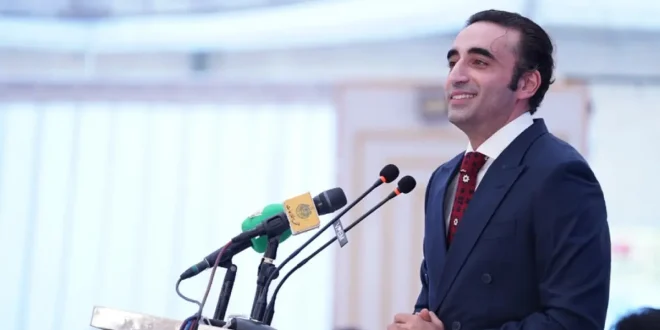
In a political landscape fraught with economic turmoil and institutional mistrust, Bilawal Bhutto-Zardari, leader of the Pakistan Peoples Party (PPP), has ignited a fiery debate. His recent remarks, emphasizing the need for a “political reset” and criticizing the government’s approach to national issues, have sent ripples through Pakistan’s fragile coalition, demanding that his “truth” be heard amidst the clamor.
The News: A Call for Courage and Context
PPP Chairman Bilawal Bhutto-Zardari has steadfastly defended his recent statements regarding Pakistan’s political trajectory, asserting them as fundamental truths that require the current government to demonstrate the “courage to listen.” Speaking in a televised interview, Bilawal reiterated his concerns about the country’s direction, specifically cautioning against the creation of new provinces and advocating for a comprehensive “political reset” to genuinely address the profound economic hardships faced by ordinary Pakistanis.
He underlined that his perspective stems from the global economic fallout of conflicts like the US-Iran war, which has exacerbated energy costs and living expenses worldwide, a reality he believes the nation’s elite fail to grasp. As a key stakeholder within the ruling coalition, Bilawal maintained his right to offer his vision for such a reset, subtly referencing Interior Minister Mohsin Naqvi’s earlier suggestions for a systemic overhaul. He criticized the government for sidelining parliamentary debate, opting instead for discussions with businessmen and through indirect channels, asserting that Pakistan’s society is not so weak as to tolerate only one-sided narratives.
Bilawal also raised alarm about the government’s apparent strategy of engaging in multiple internal and external conflicts simultaneously – with India, Afghanistan, terrorism, and now key political parties like the PTI, JUI, and potentially the PPP itself. He questioned who would then steer Pakistan out of its severe economic crisis. Despite his sharp critique, the Bhutto scion insisted his intention was to strengthen Prime Minister Shehbaz Sharif and that his party’s alliance with the PML-N was driven by national interest, though it came at a political cost for the PPP. He warned that if constructive input from allies is not tolerated, his party would not shy away from the opposition benches.
He expressed bewilderment at the unannounced push for new provinces, emphasizing a complete lack of consultation with major stakeholders like the PPP. While refraining from calling for outright resistance, he reiterated his warning that any forceful division of Sindh could trigger a volatile reaction, drawing parallels with historical unrest. Additionally, Bilawal clarified his stance on the 27th Constitutional Amendment, advocating for broader consensus and opposition input in such crucial legislation, while also suggesting that returning reserved parliamentary seats to the PTI could be a confidence-building measure for a democratic reset, rather than a “red line” or a demand to surrender PPP’s own seats.
Background: Navigating Pakistan’s Tumultuous Waters
Pakistan’s political landscape is perpetually dynamic, marked by shifting alliances, economic volatility, and a deep-seated struggle for institutional balance. The current government is a coalition led by the Pakistan Muslim League-Nawaz (PML-N), with the Pakistan Peoples Party (PPP) as a crucial partner. This alliance was formed following general elections shrouded in controversy, with significant allegations of interference and irregularities, particularly concerning the Pakistan Tehreek-e-Insaf (PTI).
The nation is grappling with an unprecedented economic crisis, characterized by soaring inflation, high energy costs—exacerbated by global geopolitical events like the US-Iran situation—and a looming debt burden. This crisis forms the bedrock of Bilawal’s call for a “political reset,” as he argues that internal political squabbles are diverting attention from the public’s suffering.
The debate around creating new provinces is a historically sensitive issue in Pakistan, particularly in Sindh, where provincial identity runs deep. Past attempts to divide provinces have often been viewed as politically motivated maneuvers to dilute provincial power or manipulate electoral outcomes, leading to significant unrest and accusations of gerrymandering. Bilawal’s strong stance reflects the PPP’s commitment to protecting Sindh’s integrity, a core tenet of its political identity and voter base.
Furthermore, discussions around constitutional amendments and judicial reforms are ongoing. The 18th Amendment, which restored significant provincial autonomy and strengthened parliamentary democracy, stands as a benchmark for national consensus. Bilawal’s critique of the 27th Amendment, not to disown it but to highlight a perceived lack of universal consensus and opposition input, underscores the broader challenges in forging national unity on fundamental legal changes. His emphasis on restoring confidence in institutions, including the judiciary, Parliament, and the Election Commission, is a direct response to the erosion of public trust in Pakistan’s democratic framework.
Finally, the controversy surrounding reserved seats in Parliament, especially those allocated post-elections, speaks to the deep fissures within the political system. The allocation of these seats has been a contentious issue, impacting the parliamentary strength of various parties and raising questions about the fairness of the electoral process. Bilawal’s suggestion to consider returning PTI’s reserved seats as a “confidence-building measure” is a significant olive branch in an otherwise hostile political environment, aiming to legitimize the parliamentary process.
Impact on Pakistan: Cracks in the Coalition, Hopes for Dialogue
Bilawal Bhutto-Zardari’s outspoken remarks carry significant weight, potentially influencing several critical aspects of Pakistan’s political and social fabric:
- Coalition Stability and Governance: While Bilawal frames his critique as constructive input aimed at strengthening the Prime Minister, it undoubtedly highlights underlying tensions within the ruling coalition. Such public disagreements can create an impression of disunity, potentially destabilizing the government at a time when strong, unified leadership is crucial for tackling the economic crisis Pakistan faces. If not addressed, the threat of the PPP moving to the opposition benches could force a significant recalibration of government policy or even trigger a political crisis.
- Focus on Economic Recovery: The constant political infighting, exacerbated by these public spats, diverts critical attention and resources away from the urgent task of economic recovery. Bilawal’s point about the elites being disconnected from public suffering resonates widely, and continued political bickering rather than collaborative problem-solving undermines efforts to bring tangible relief to citizens.
- Federalism and Provincial Harmony: The sensitive issue of new provinces, particularly the implied threat to Sindh’s unity, could inflame regional sentiments and threaten Pakistan’s federal structure. Bilawal’s warning of potential “fire” if Sindh is forcefully divided underscores the volatile history of such issues and the deep attachment to provincial identity, especially for the PPP’s core constituency.
- Credibility of Democratic Institutions: Bilawal’s call for a “democratic reset,” alongside his suggestions for constitutional reform and restoring trust in the judicial system Pakistan and Election Commission, speaks to a broader crisis of legitimacy. For Pakistan to move forward, public confidence in its democratic processes and institutions is paramount. His proposal regarding reserved seats could, if implemented, be a crucial step towards de-escalating political polarization and building cross-party trust.
- Shaping Future Political Discourse: Bilawal’s insistence on a genuine, parliamentary debate challenges the prevalent culture of backroom dealings and indirect communication. By demanding courage to listen to “truth,” he pushes for a more transparent and inclusive political dialogue, which is essential for a mature democracy. His critique of battling multiple internal fronts highlights a strategic flaw that impedes national cohesion and effective governance.
Analysis: Bilawal’s Strategic Gambit for a “Political Reset”
Bilawal Bhutto-Zardari’s recent pronouncements are more than just an expression of dissent; they represent a carefully calculated strategic gambit by the PPP to navigate Pakistan’s complex political landscape and position itself for future influence. His call for a “political reset” is multi-faceted, serving several key objectives:
1. Distancing and Differentiation within the Coalition
Despite being a partner in the PML-N-led government, the PPP is keenly aware of the political costs associated with unpopular economic decisions and perceived governance failures. By publicly airing concerns and offering “well-meaning input,” Bilawal seeks to create a distinct identity for the PPP, signaling to its voter base that it is not a silent partner but an active voice advocating for the people. This allows the PPP to claim credit for any positive outcomes while deflecting blame for the government’s shortcomings, a crucial strategy ahead of future elections. His statement that “there is political loss for me in bearing the burden of this government” perfectly encapsulates this balancing act.
2. Asserting Stakeholder Status and Demanding Inclusivity
Bilawal’s insistence on being a “major stakeholder” whose voice should be heard underscores the PPP’s demand for meaningful participation in critical national decision-making. His criticism of discussions being held with “businessmen” and “touts” instead of in Parliament highlights a perceived exclusion of legitimate political actors. This is a challenge to the power dynamics within the coalition government and potentially to other unelected power centers that often influence Pakistan’s politics.
3. Protecting the Provincial Base and Federal Integrity
The vehement opposition to new provinces, particularly the division of Sindh, is non-negotiable for the PPP. Sindh is the party’s traditional stronghold, and any move to fragment it would be seen as an existential threat to its political survival and ideological identity. Bilawal’s historical context for unrest in Sindh if such a division is imposed is a powerful warning, designed to prevent any unilateral action that could destabilize the federation.
4. Advocating for Institutional Reform and Democratic Credibility
Bilawal’s nuanced stance on the 27th Amendment and his suggestions regarding reserved seats for the PTI are not merely partisan; they speak to a broader vision for restoring faith in Pakistan’s democratic institutions. By advocating for greater consensus in constitutional changes and considering measures to include alienated opposition voices, he positions the PPP as a proponent of genuinely inclusive democracy and institutional robustness. This resonates with calls from civil society and a frustrated public for a more fair and representative political system.
5. Forcing a Broader National Dialogue
Ultimately, Bilawal’s intervention is an attempt to force a much-needed national conversation about Pakistan’s direction. By asking “who will lead Pakistan… out of this economic crisis” if the government is fighting everyone, he challenges the prevailing confrontational politics. The “political reset” he envisions is one where politicians “join hands to pull the public out of this hardship” rather than engaging in endless battles. This requires a fundamental shift from zero-sum politics to a more collaborative approach, a formidable challenge in Pakistan’s deeply polarized environment.
While some might interpret Bilawal’s “truth-telling” as political maneuvering, it undeniably brings crucial issues to the forefront. The government’s reaction—whether it chooses to engage constructively, dismiss his concerns, or confront him—will largely determine the stability of the current coalition and the trajectory of Pakistan politics in the months to come. A genuine “political reset” demands more than just rhetoric; it requires courageous leadership willing to listen, compromise, and prioritize national well-being over partisan gains.
Disclaimer: This analysis article is based on the provided news summary and aims to offer an objective interpretation of the political dynamics involved. It does not represent any official stance or endorsement.
“`