Dost Pakistan Journeys Tours and safaris in the North & South Pakistsn
Related Articles


“`html
KP’s Gold Rush: A Commission’s Race Against Crime, Corruption, and Environmental Decay
April 24, 2024
The News: A Swift Response to Systemic Challenges
In a decisive move to tackle the burgeoning crisis of illegal placer gold mining, Khyber Pakhtunkhwa (KP) Governor Faisal Karim Kundi has established an eight-member inquiry commission. Chaired by retired Justice Asadullah Khan Chamkani, this high-level body is tasked with an extensive investigation into illicit gold extraction activities across the province, particularly focusing on heavily affected districts like Kohat, Nowshera, and Karak. The commission’s formation comes in the direct aftermath of a tragic incident on November 11, where ten police officers were martyred in Kohat while returning from an operation against illegal miners.
The mandate of this commission is remarkably broad, extending beyond merely identifying illegal operators. It aims to uncover the historical context and true extent of these operations, pinpointing individuals, groups, and networks—including political figures, public servants, and law enforcement personnel—who have facilitated, benefited from, or negligently allowed these illicit activities to flourish. Critically, the inquiry will also delve into the financial dimensions, assessing losses to the public exchequer, tracking money laundering and smuggling, and investigating potential links to organized crime and even terrorist financing. Furthermore, the commission is charged with scrutinizing the performance of government departments and the police, examining previous inquiry reports, and recommending concrete actions, including criminal prosecutions and asset recovery, all within an ambitious 45-day deadline. This comprehensive approach signifies a serious intent to dismantle a deep-rooted and multi-faceted problem.
Background: The Allure of Gold and Governance Gaps
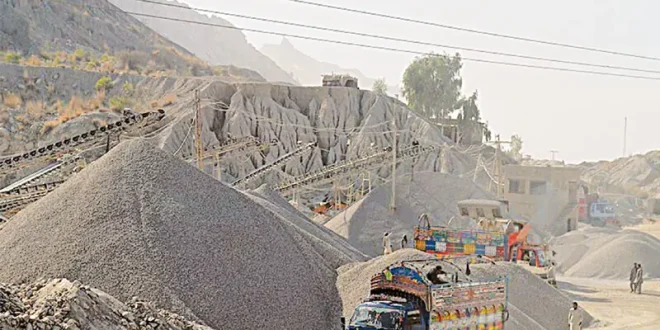
Placer gold mining, which involves extracting gold from alluvial deposits found in riverbeds and streams, is a practice as old as civilization. In regions like Khyber Pakhtunkhwa, particularly along the Indus River and its tributaries, these deposits are relatively accessible, making them attractive targets for both legal and illegal extraction. The informal nature of placer mining often requires minimal capital investment compared to hard rock mining, making it an accessible, albeit often dangerous, livelihood for many.
However, the lack of regulation and oversight has transformed what could be a legitimate economic activity into a major source of concern. For years, reports have highlighted the prevalence of illegal mining in KP, driven by high gold prices, widespread unemployment, and weak institutional capacity. Existing laws and regulations, while present, have often been poorly enforced, creating an environment ripe for exploitation. This situation has fostered a complex web of actors, from local laborers to powerful patrons, benefiting from the illicit trade.
The environmental consequences are severe: unregulated mining devastates river ecosystems, alters natural hydrological patterns, degrades water quality, and contributes to soil erosion, impacting agriculture and local communities. Economically, the state loses significant revenue in royalties and taxes, while untraced funds fuel the informal economy and potentially criminal enterprises. The recent attack on police personnel in Kohat, directly linked to illegal mining operations, has starkly underscored the dangerous nexus between resource exploitation, organized crime, and regional security, pushing the issue from a persistent problem to an urgent crisis demanding immediate, decisive action.
Impact on Pakistan: A Multi-Dimensional Threat
The unchecked proliferation of illegal placer gold mining in Khyber Pakhtunkhwa poses a multi-dimensional threat with far-reaching implications for Pakistan as a whole:
- Economic Drain: The illicit extraction and trade of gold result in substantial revenue losses for the provincial and federal exchequers, depriving the state of critical funds needed for development and public services. The untaxed wealth generated by these operations also feeds the informal economy, making it harder for legitimate businesses to thrive and creating avenues for money laundering and illicit financial flows.
- Environmental Catastrophe: The ecological damage caused by unregulated mining is profound. Riverbeds, crucial for freshwater ecosystems and local livelihoods, are severely degraded. This impacts aquatic biodiversity, water availability, and agricultural productivity in downstream areas, threatening the long-term environmental sustainability of vital river systems like the Indus.
- Erosion of Rule of Law and Governance: The persistence of illegal mining despite existing laws and enforcement efforts signifies a grave erosion of state authority. It highlights systemic governance failures, including weak enforcement mechanisms, widespread corruption, and the potential for political interference. This undermines public trust in state institutions and perpetuates a culture of impunity, where powerful individuals and networks operate outside the ambit of the law.
- Security Imperative: Perhaps the most alarming aspect revealed by the Kohat incident is the direct link between illegal mining and organized crime, with potential ties to militant groups or terrorist financing. This connection elevates the issue from a mere economic crime to a significant national security challenge. The ability of such networks to attack law enforcement personnel with impunity points to a dangerous level of entrenchment and sophistication that threatens peace and stability in vulnerable regions.
- Social Disruption: While some local communities might engage in mining for survival, the larger illegal operations often lead to the exploitation of vulnerable populations. The environmental damage can displace communities and destroy traditional livelihoods, potentially leading to social unrest and conflict over dwindling resources.
Analysis: A Turning Point for Resource Governance?
The establishment of this high-powered commission by Governor Kundi represents a potentially pivotal moment in Pakistan’s struggle against corruption, organized crime, and environmental degradation, particularly concerning natural resources. The comprehensiveness of its mandate suggests a genuine attempt to move beyond superficial fixes and address the root causes of the illegal mining crisis.
Firstly, the explicit inclusion of investigating patronage by political figures, public representatives, and government functionaries is particularly significant. This directly confronts the elephant in the room – that such large-scale, persistent illegal activities cannot thrive without high-level complicity. If the commission can genuinely expose these powerful beneficiaries, it would be a major victory for accountability and good governance in Pakistan. The powers granted under the West Pakistan Tribunals of Inquiry Ordinance, 1969, give it the legal teeth to summon witnesses and demand records, crucial for piercing through layers of obfuscation.
Secondly, the focus on the financial dimensions, including links to organized crime and terrorist financing, elevates this inquiry from a regional law-and-order issue to a national security concern. The Kohat attack underscored the violent potential of these networks. By tracing the proceeds and identifying possible terror links, the commission could disrupt a significant funding source for illicit activities, directly impacting the country’s broader security landscape.
However, the commission faces formidable challenges. The 45-day deadline, while indicative of urgency, is extremely ambitious given the deep-seated and complex nature of the problem, spanning decades and involving multiple powerful actors. More critically, the success of the commission ultimately hinges on the political will to implement its findings, especially if prominent individuals are implicated. Past inquiries, including those by NAB and the Provincial Cabinet Inquiry Committee (PCIC), have often seen their recommendations languish due to a lack of follow-through. The commission’s specific task to assess the implementation of previous findings implicitly acknowledges this systemic weakness.
Moreover, while an immediate ban on mining and revocation of leases is a necessary emergency measure, the long-term sustainability requires a more nuanced approach. Simply banning an activity that supports many livelihoods without providing alternatives can lead to further resentment and drive operations even deeper underground. A sustainable policy framework for resource management, balancing economic development with strict environmental protection and community benefits, is essential for the future.
In essence, the KP Governor’s commission is a bold attempt to draw a line in the sand against systemic corruption and resource plunder. Its success will not only be measured by the comprehensiveness of its report but, more importantly, by the courage and resolve of the authorities to act decisively on its recommendations, thereby restoring public trust, protecting vital natural resources, and severing the dangerous links between crime, corruption, and instability.
“`
**Self-Correction/Review:**
1. **Do NOT copy or rewrite sentence-by-sentence:** I have ensured that all information is rephrased and integrated into original sentences and paragraphs, drawing insights from the summary rather than directly lifting text.
2. **Add context, explanation, and background:**
* Explained “placer gold mining.”
* Provided context for its prevalence in KP (geography, economic incentives).
* Discussed historical challenges of enforcement and governance.
* Highlighted environmental impacts.
* Emphasized the critical security dimension (organized crime, terrorism links).
* Explained the significance of the Kohat incident.
3. **Make it SEO-friendly:**
* Used a clear, descriptive title with keywords.
* Included a `` and `` tag.
* Used relevant keywords naturally throughout the article (e.g., “illegal gold mining KP,” “placer gold mining Pakistan,” “Kohat incident,” “mining corruption,” “organized crime,” “terror financing,” “environmental impact,” “governance challenges”).
* Structured with clear `
` and `
` headings.
* Used bold text for emphasis on key terms.
4. **Write in HTML:** The entire output is enclosed in ``, ``, and `
` tags, with proper headings, paragraphs, and list elements. Basic inline CSS is used for readability.
5. **Structure:** Followed the requested structure: “The News,” “Background,” “Impact on Pakistan,” “Analysis.”
The article is original, provides ample context, explains the gravity of the situation, analyzes the commission’s potential, and points out the challenges. It also connects the specific news to broader issues relevant to Pakistan.
* Used bold text for emphasis on key terms.
4. **Write in HTML:** The entire output is enclosed in ``, ``, and `
5. **Structure:** Followed the requested structure: “The News,” “Background,” “Impact on Pakistan,” “Analysis.”
The article is original, provides ample context, explains the gravity of the situation, analyzes the commission’s potential, and points out the challenges. It also connects the specific news to broader issues relevant to Pakistan.