Dost Pakistan Journeys Tours and safaris in the North & South Pakistsn
Related Articles


“`html
Yemen’s Escalating Conflict: Houthi Retaliation Rocks Riyadh Amid Renewed Saudi Offensive
The Latest Escalation: A Cycle of Retaliation
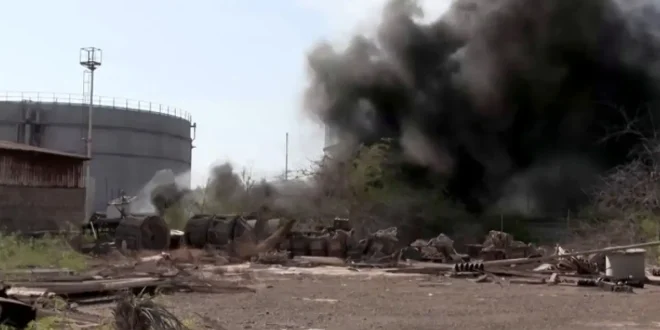
The protracted civil conflict in Yemen witnessed a significant uptick in hostilities recently, as Houthi rebels launched missile attacks targeting Saudi Arabia’s capital, Riyadh. This offensive followed swiftly on the heels of a “special operation” conducted by the Saudi-led coalition against Houthi assets in the strategic Red Sea port city of Hodeida and other Yemeni governorates. Reports from Riyadh indicated residents heard explosions, prompting an aerial threat alert, though Saudi authorities later confirmed the interception and destruction of three Houthi ballistic missiles.
The Houthi movement explicitly framed their cross-border strikes, which reportedly included the King Abdullah Financial District and a power station in Al-Shuqaiq, as retaliation for the coalition’s Friday offensive. That operation, according to coalition spokesmen, targeted “smuggling operations and the transport of weapons and ballistic missiles” at Hodeida port, alongside military objectives in Sanaa and other areas. This exchange marks a concerning return to intense confrontation, breaking a period of relative calm that followed the collapse of a four-year truce in July.
Understanding the Yemen Conflict: A Decade of Turmoil
To grasp the gravity of this escalation, it’s essential to contextualize the Yemen conflict, which has festered for nearly a decade. The war began in earnest in late 2014 when the Houthi movement, an Iran-aligned Zaidi Shia group, seized control of the capital, Sanaa, overthrowing the internationally recognized government. In early 2015, a Saudi-led coalition, comprising several Arab states, intervened militarily to restore the ousted government and counter perceived Iranian influence in the region.
The conflict has since evolved into a complex proxy war, leaving hundreds of thousands dead and creating one of the world’s most severe humanitarian crises. Key flashpoints, like Hodeida, hold immense strategic value. As Yemen’s primary port, Hodeida serves as a critical lifeline for humanitarian aid and commercial goods for millions, but it is also viewed by the coalition as a conduit for Houthi weapons supplies. Control or disruption of this port directly impacts both humanitarian access and military logistics, making it a constant target in the power struggle.
The recent coalition offensive, described as a “special operation,” suggests a strategic push to disrupt Houthi capabilities. Similarly, the Houthi’s swift and far-reaching retaliation, including explicit warnings to airlines about Saudi airspace and shipping companies regarding Jeddah port, underscores their enduring capacity to project power beyond Yemen’s borders, despite years of conflict and blockade.
Pakistan’s Stance: Solidarity and Regional Concerns
The renewed hostilities quickly drew international condemnation, including from Pakistan. Prime Minister Shahbaz Sharif strongly denounced the Houthi attack on the King Abdullah Financial District in Riyadh, characterizing such acts as “reckless aggression” that target civilian infrastructure and threaten regional peace and stability. Pakistan’s immediate and unequivocal support for Saudi Arabia is rooted in a long-standing, deep-seated strategic and religious alliance.
Pakistan maintains robust diplomatic, economic, and military ties with the Kingdom of Saudi Arabia. Millions of Pakistanis work in Saudi Arabia, contributing significantly to Pakistan’s economy through remittances. Furthermore, Pakistan views the security and stability of the Gulf region, particularly Saudi Arabia, as vital for its own national interests, given its energy security needs and the large Pakistani diaspora there. Therefore, Pakistan consistently reaffirms its unwavering solidarity with Saudi Arabia and its inherent right to defend its sovereignty and territorial integrity against any threats.
Analysis: Implications of Renewed Hostilities
The latest exchange of strikes signals a concerning return to a full-scale, aggressive phase of the Yemen civil war, with significant implications for regional security and beyond:
- Heightened Regional Instability: The direct targeting of Riyadh’s financial district and other critical Saudi infrastructure by the Houthis, even if intercepted, demonstrates their continued capability to disrupt normalcy and threaten key economic hubs. This elevates regional tensions, potentially drawing in other actors and destabilizing vital shipping lanes in the Red Sea and Bab al-Mandab Strait, crucial for global trade and energy transit.
- Evolving Warfare Capabilities: The Houthis’ persistent ability to launch ballistic missiles and drones deep into Saudi territory, despite the coalition’s advanced air defense systems, underscores their evolving military capabilities, likely bolstered by external support. This poses a long-term security challenge for Saudi Arabia and necessitates continued investment in defensive measures.
- Escalating Humanitarian Crisis: A renewed cycle of violence invariably means a worsening humanitarian situation for the Yemeni populace. With reports of dozens of casualties from both sides in the recent clashes (though unverified), the suffering of civilians, already grappling with famine and disease, is set to intensify. The UN’s expression of concern highlights the ongoing international alarm over the conflict’s human toll.
- Stalled Peace Prospects: The “special operation” and subsequent Houthi retaliation represent a severe blow to any lingering hopes for a peaceful resolution. The collapse of the July truce had already dimmed prospects, but this latest escalation confirms a trajectory towards deeper military confrontation, making diplomatic efforts exceedingly difficult.
- Strategic Competition: The conflict remains a battleground for regional strategic competition, primarily between Saudi Arabia and Iran. Each escalation is viewed through this broader geopolitical lens, reinforcing existing alignments and complicating efforts by international mediators to broker a lasting peace.
The immediate future of Yemen appears grim, marked by a likely increase in violence, further displacement, and a deeper humanitarian crisis. For Saudi Arabia, the persistent threat of Houthi cross-border attacks remains a critical security concern. The international community faces the arduous task of de-escalation, but with both sides demonstrating a willingness to engage in aggressive military action, a sustainable pathway to peace seems increasingly distant.
“`