Dost Pakistan Journeys Tours and safaris in the North & South Pakistsn
Related Articles

“`html
Pakistan’s Escalating Counter-Terrorism Campaign: Insights into Operations in Balochistan and the ‘Fitna-al-Hindustan’ Narrative
Pakistan is witnessing a heightened phase in its counter-terrorism efforts, particularly in the strategically vital province of Balochistan. Recent operations by security forces highlight a renewed focus on eliminating militant groups, often characterized by the state as foreign-sponsored. This article delves into the specifics of these operations, the broader context of the Balochistan conflict, and the implications of Pakistan’s strategic communication regarding regional security.
The News: A Concentrated Push in Balochistan
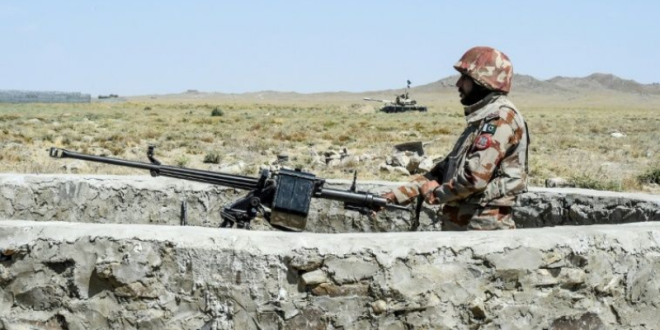
Between November 20 and 23, Pakistani security forces conducted four separate intelligence-based operations (IBOs) across Balochistan, resulting in the elimination of 12 individuals identified as “India-sponsored terrorists.” According to the Inter-Services Public Relations (ISPR), these targeted actions unfolded in Nushki, Sibi, Panjgur, and Kech districts. The most significant engagement occurred on November 20 in Nushki, where eight terrorists, allegedly affiliated with groups designated as Fitna-al-Hindustan, were killed following an intense firefight, with weapons and ammunition recovered from their hideout.
These operations are framed within the ongoing Azm-i-Istehkam counter-terrorism campaign, approved by the Federal Apex Committee on the National Action Plan, signaling a comprehensive approach to eradicate foreign-backed militancy. President Asif Ali Zardari lauded these successes, emphasizing the commitment of security forces to national peace and stability, and reiterating the necessity of eliminating “Fitna-al-Hindustan” and other foreign-backed threats to national security.
The recent crackdown follows a period of escalating violence. Pakistan has experienced a noticeable surge in terrorist activities, particularly in Khyber Pakhtunkhwa (KP) and Balochistan. Just in the preceding weeks, Balochistan alone saw the killing of 15 terrorists in Mastung, while multiple IBOs in Balochistan and KP resulted in the martyrdom of four troops and the death of 24 terrorists on November 14. Furthermore, on November 1, two IBOs in Balochistan’s Kachhi and Kharan districts led to the martyrdom of one soldier and the killing of 17 terrorists. The Pakistan Institute for Conflict and Security Studies (PICSS) noted a reduction in overall attacks from November 6-12, but highlighted a sharp increase in fatalities and injuries, underscoring the persistent and evolving threat.
Background: Understanding the Complex Landscape
The Balochistan Conflict: A Persistent Challenge
Balochistan, Pakistan’s largest yet least populated province, has been a hotbed of insurgency for decades. The conflict is multifaceted, rooted in socio-economic grievances, demands for greater provincial autonomy, and disputes over the control and distribution of its vast natural resources, particularly gas and minerals. Various Baloch ethno-nationalist groups have engaged in armed struggle, targeting security forces, government installations, and non-Baloch settlers. The presence of the China-Pakistan Economic Corridor (CPEC) projects, aimed at unlocking the region’s economic potential, has also become a flashpoint, attracting attacks from groups opposing what they perceive as exploitation without adequate local benefit.
India-Pakistan Tensions and the “Fitna-al-Hindustan” Narrative
The relationship between Pakistan and India remains fraught with mutual suspicion and accusations, especially regarding cross-border terrorism. Pakistan has consistently accused India of sponsoring and supporting various militant groups to destabilize its territory, particularly in Balochistan. The recent designation of Balochistan-based terrorist groups as Fitna-al-Hindustan (meaning “Mischief/Discord of India”) by Pakistan’s military is a strategic communication move. This term aims to explicitly link these militant activities to India, thereby framing India’s alleged role as a deliberate strategy of destabilization. This narrative seeks to galvanize domestic support for counter-terrorism operations and potentially exert international pressure on India.
“Azm-i-Istehkam”: A Renewed Counter-Terrorism Strategy
The Azm-i-Istehkam (Resolve for Stability) campaign signifies Pakistan’s comprehensive and renewed commitment to eradicating terrorism. Approved by the Federal Apex Committee on the National Action Plan, this initiative is designed to consolidate previous counter-terrorism gains and address the evolving nature of threats, including those perceived as foreign-sponsored. It emphasizes intelligence-based operations (IBOs), which are targeted military actions relying on precise intelligence to neutralize specific militant threats, minimizing collateral damage and maximizing operational efficiency.
Impact on Pakistan: Stability, Economy, and Geopolitics
Enhanced Security and Stability
The successful IBOs, particularly in Balochistan, are crucial for short-term security gains, disrupting militant networks and eliminating key operatives. Such operations contribute to regional stability, a prerequisite for economic development and civilian safety. However, the long-term challenge lies in sustaining these gains and addressing the underlying drivers of conflict.
Economic Repercussions
Persistent insecurity in Balochistan poses a significant threat to Pakistan’s economic aspirations. The province is central to the CPEC, a flagship project of China’s Belt and Road Initiative. Attacks by militant groups deter foreign investment, disrupt trade routes, and inflate security costs, thereby straining national resources that could otherwise be allocated to development projects. A stable Balochistan is vital for realizing the full economic potential of CPEC and Pakistan’s broader economic recovery.
Geopolitical Standing and Bilateral Relations
Pakistan’s intensified counter-terrorism efforts and its public attribution of militancy to India have profound geopolitical implications. While it aims to strengthen Pakistan’s narrative on state-sponsored terrorism, it simultaneously exacerbates already strained relations with India. This cycle of accusations makes constructive dialogue and regional cooperation on shared security threats increasingly difficult, perpetuating an environment of mistrust. Internationally, Pakistan seeks to highlight its role as a responsible state combating terrorism while simultaneously drawing attention to perceived external interference.
Domestic Cohesion and Human Cost
The “Fitna-al-Hindustan” narrative is also designed for domestic consumption, aiming to foster national unity against a common external threat. This can rally public support for military actions. However, the human cost of this prolonged conflict is immense, marked by the loss of lives among security forces and civilians, displacement, and the disruption of daily life for communities in conflict-affected areas.
Analysis: Strategic Imperatives and Enduring Challenges
The recent operations in Balochistan, coupled with the explicit naming of “Fitna-al-Hindustan,” underscore several strategic imperatives for Pakistan. Firstly, it signals an unequivocal resolve to counter the rising tide of terrorism that has plagued the country. The military’s media wing and presidential statements serve to reinforce this commitment both domestically and internationally. The repeated emphasis on India’s alleged patronage attempts to shift the narrative, presenting the conflict not merely as an internal insurgency but as a consequence of external destabilization efforts.
While IBOs demonstrate operational effectiveness in neutralizing immediate threats, a sustainable victory against militancy necessitates a multi-pronged approach. Kinetic operations, while crucial, must be complemented by robust political engagement, socio-economic development, and effective governance reforms in Balochistan. Addressing the root causes of alienation and marginalization among certain segments of the population is critical to prevent future generations from being drawn into militancy.
Furthermore, the ongoing accusations against India complicate regional security dynamics. While Pakistan seeks to validate its claims through international forums, India routinely denies such allegations and, in turn, accuses Pakistan of harboring terrorist groups. This mutual distrust impedes any meaningful cooperation on counter-terrorism, which is vital for regional stability. The true test for the “Azm-i-Istehkam” campaign will be its ability to not only dismantle militant networks but also to create an environment where the underlying grievances that fuel insurgency can be resolved through political and developmental pathways.
In conclusion, Pakistan’s intensified operations in Balochistan reflect a determined effort to reclaim stability and assert control over its volatile regions. The narrative of “Fitna-al-Hindustan” is a powerful tool in its strategic communication arsenal. However, the path to enduring peace and stability in Balochistan and across Pakistan will ultimately hinge on a delicate balance between robust security measures, inclusive governance, and a concerted effort to address the deep-seated socio-economic and political challenges that continue to feed the cycle of violence.
“`