Dost Pakistan Journeys Tours and safaris in the North & South Pakistsn
Related Articles
“`html
Escalation in Southern Lebanon: Israeli Strike Kills Soldiers, Threatens Fragile Truce Efforts
A recent Israeli military strike in southern Lebanon, which claimed the lives of three Lebanese soldiers, has sent ripples of concern across an already volatile Middle East. Occurring just days after conditional truce discussions were held in the United States, this incident underscores the profound fragility of diplomatic initiatives when confronted by continued military action on the ground. The attack has reignited accusations of aggression, sovereignty violations, and a potential unraveling of efforts aimed at de-escalating one of the region’s most enduring conflicts.
What Happened
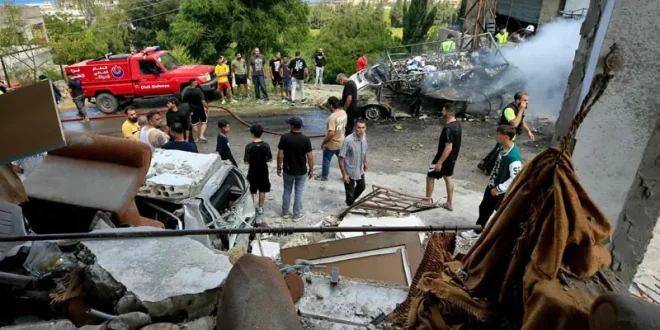
On a Saturday, an Israeli strike targeted a Lebanese military vehicle on a road connecting Khardali and Nabatieh in southern Lebanon, resulting in the deaths of two officers and a soldier. The Lebanese army swiftly condemned the action, asserting that such “deliberate and repeated brutal Israeli aggression” directly obstructs any path towards a peaceful resolution. This incident followed closely on the heels of US-brokered talks where a conditional truce was discussed, requiring Hezbollah to cease fire and withdraw from the Israeli border, with the Lebanese army subsequently deploying into newly designated “pilot zones.” However, Hezbollah had already rejected this proposal, demanding a complete Israeli withdrawal.
In the aftermath of the strike, Israel intensified its actions, renewing evacuation orders for several southern Lebanese villages, urging residents to move north of the Zahrani River, and conducting multiple additional strikes across the region, according to Lebanese state media.
Background: A Region on the Brink
The latest strike is not an isolated event but a stark reminder of the deeply entrenched animosity and complex geopolitical dynamics at play in the Levant. Israel claims its ongoing military operations in Lebanon are aimed at eradicating Hezbollah, a powerful Shiite political party and militant group backed by Iran. Hezbollah, in turn, has justified its sustained rocket attacks against Israeli forces as retaliation for broader US-Israeli military actions. This narrative paints a picture of a proxy conflict with wider regional implications, intrinsically linked to the larger power struggle between Iran and its regional adversaries.
Lebanon finds itself in a precarious position, grappling with its own internal divisions while simultaneously attempting to assert sovereignty against external pressures. The Lebanese government has vowed to eventually disarm Hezbollah but vehemently denounces Israel’s “invasion” and its alleged use of “scorched-earth tactics,” which they claim are designed to displace civilians from southern towns. Hezbollah, however, remains a formidable force within Lebanon, often operating independently of the state and fiercely critical of what it perceives as its government’s “complete surrender” to foreign demands, particularly those emanating from Washington.
The conditional truce talks, though seemingly a step towards de-escalation, highlighted the profound chasm between the parties. Hezbollah’s rejection of the terms, demanding an Israeli withdrawal, underscores its non-negotiable stance on national sovereignty and resistance. Meanwhile, Iranian Foreign Minister Abbas Araghchi dismissed Lebanese President Joseph Aoun’s suggestion that Lebanon was a “bargaining chip” for Tehran, instead urging Beirut to focus on its “real foe,” further illustrating the intricate web of allegiances and accusations.
Why It Matters
The Israeli strike and the subsequent reactions carry significant weight for regional stability and beyond:
- Undermining Diplomatic Efforts: The timing of the strike, immediately following truce discussions, severely undercuts the credibility and effectiveness of international mediation. It signals a preference for military solutions over diplomatic pathways, making future peace efforts exceedingly difficult.
- Heightened Risk of Escalation: Each act of aggression, particularly those targeting state actors like the Lebanese army, raises the specter of a broader conflict. Such incidents can quickly spiral out of control, potentially drawing in more regional and international players.
- Humanitarian Crisis: The continuous fighting, “scorched-earth tactics,” and repeated evacuation orders exacerbate an already dire humanitarian situation, leading to further displacement, suffering, and economic devastation for the civilian population in southern Lebanon.
- Erosion of Lebanese Sovereignty: The incident highlights the Lebanese state’s weakened authority, caught between Israeli military might and the powerful, independent actions of Hezbollah. This continuous violation of its territory further destabilizes the state and its ability to govern.
- Deepening Regional Divisions: The rhetoric from Iran and Hezbollah reinforces the existing fault lines in the Middle East, intensifying the ideological and geopolitical struggle between various factions, with potentially destabilizing effects across the entire region.
Impact on Pakistan
While geographically distant, the escalating conflict in southern Lebanon carries indirect but significant implications for Pakistan:
- Economic Repercussions: A major escalation in the Middle East invariably leads to spikes in global oil prices. As a net oil importer, Pakistan’s already struggling economy would face increased pressure on its import bill, exacerbating inflation and balance of payments issues.
- Geopolitical Alignment and Sentiment: Pakistan, with its strong historical ties to the Muslim world, often aligns its foreign policy with broader Islamic sentiments, particularly concerning conflicts perceived as injustices against Muslim populations. The deepening conflict could evoke strong public and political responses, influencing Pakistan’s diplomatic stance.
- Regional Stability Concerns: Pakistan, as a responsible nuclear power and a country with significant regional influence, has a vested interest in global and regional peace. A wider conflagration in the Middle East would introduce further instability into an already complex geopolitical landscape, with potential ripple effects on international security.
- Potential for Extremism: Prolonged conflicts and perceived injustices in the Muslim world can sometimes be exploited by extremist groups, potentially fueling radical narratives that could find resonance even in distant regions, including parts of South Asia.
- Diaspora Concerns: A significant Pakistani diaspora resides and works in various Middle Eastern countries. Any broad escalation of conflict would raise concerns for their safety and livelihoods, potentially leading to repatriation challenges.
Analysis: A Cycle of Impunity and Futility
The latest Israeli strike against Lebanese army personnel dramatically illustrates the grim reality that current diplomatic overtures are struggling to keep pace with the ongoing military dynamic. It reflects a cycle where military actions on the ground often preempt, or outright derail, any nascent peace efforts. The incident suggests that for at least one party, the calculus favors continued pressure and military assertion over political compromise. The Lebanese government’s condemnations, while legitimate, highlight its limited power to enforce sovereignty or protect its forces against such incursions.
Furthermore, the exchange between President Aoun and Iranian Foreign Minister Araghchi underscores the intricate, multi-layered nature of the conflict. While Tehran officially denies using Lebanon as a “bargaining chip,” its undeniable influence over Hezbollah ensures its strategic interests remain interwoven with the conflict’s progression. Hezbollah’s rejection of the truce terms, insisting on an Israeli withdrawal, positions it as the primary agent of resistance in the eyes of its supporters, further complicating any state-led disarming efforts by Beirut.
The renewed Israeli evacuation orders and continued strikes point towards a persistent strategy of pressure and displacement in southern Lebanon, which aligns with the accusations of “scorched-earth tactics.” This approach aims to create buffer zones or undermine Hezbollah’s operational capabilities, but at a significant human cost and with considerable political fallout. The absence of effective international mechanisms to halt these cycles of violence means the prospects for a lasting, equitable solution remain dim. Without a fundamental shift in the strategic objectives and a genuine commitment to de-escalation from all principal actors, the region appears condemned to a prolonged state of tension and periodic, deadly flare-ups.
“`