Dost Pakistan Journeys Tours and safaris in the North & South Pakistsn
Related Articles


“`html
Middle East Peace on the Brink: Muslim Nations Condemn Israel’s Rejection of Gaza Roadmap
A joint statement by eight influential Muslim countries highlights deepening regional divisions and threatens the already fragile prospects for a lasting peace in the Israeli-Palestinian conflict.
The Latest Development: A Unified Condemnation
A powerful coalition of eight Muslim-majority nations—Pakistan, Egypt, Turkiye, Indonesia, Jordan, Qatar, Saudi Arabia, and the United Arab Emirates—has issued a strong joint condemnation of Israel’s outright rejection of a proposed roadmap aimed at resolving the protracted Gaza conflict. The statement, released by Pakistan’s Foreign Office, specifically criticizes Israel’s repudiation of the implementation plan for former US President Donald Trump’s comprehensive proposal, a framework previously endorsed by UN Security Council Resolution 2803. Crucially, the nations also denounced Israel’s declared rejection of Palestinian statehood, a cornerstone of international efforts for peace.
According to the joint communiqué, Israel’s stance “fundamentally undermined collective efforts” towards a just and lasting peace, effectively holding Jerusalem “responsible for obstructing the efforts to bring peace in Gaza and the rest of the occupied Palestinian territory.” The roadmap, reportedly accepted by Palestinian factions and brokered by multiple mediators including Egypt, Qatar, Turkiye, and the US, outlines a phased approach: decommissioning of weapons, withdrawal of Israeli forces, deployment of an International Stabilisation Force, transfer of administrative authority to a National Committee for Gaza, and subsequent reconstruction. Israel’s Prime Minister Benjamin Netanyahu had earlier rejected key aspects of the plan, notably vowing no military withdrawal until Hamas is “genuinely” disarmed and its weapons destroyed, facing significant pressure from his right-wing political base ahead of crucial elections.
Contextualizing the Conflict: A Fragile History
Understanding the gravity of this condemnation requires delving into the intricate history of the Israeli-Palestinian conflict and the specifics of the so-called “Trump peace plan.”
The “Deal of the Century” and its Controversies
The “comprehensive plan,” often dubbed the “Deal of the Century,” was unveiled by the Trump administration with much fanfare. From its inception, it faced widespread criticism for its perceived pro-Israel bias, having been developed with minimal direct input from Palestinian leadership. It notably recognized Israeli sovereignty over settlements in the West Bank and East Jerusalem and proposed a fragmented Palestinian state with limited sovereignty. While presented as a pathway to peace, many saw it as a blueprint for Israeli annexation, leading to its outright rejection by Palestinian authorities and skepticism from much of the international community. The current roadmap attempts to bridge gaps, yet its rejection by Israel further exposes the deep chasms that persist.
The Enduring Gaza Crisis
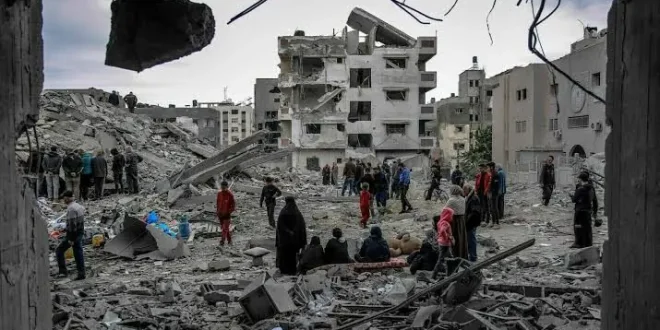
Gaza, a densely populated strip of land, has been under an Israeli and Egyptian blockade since 2007 following Hamas’s takeover. This has led to a severe humanitarian crisis, with chronic shortages of essential services, high unemployment, and immense civilian suffering. Repeated conflicts have devastated its infrastructure and claimed countless lives. Efforts to establish lasting ceasefires and reconstruction plans have consistently faltered, making any agreed-upon roadmap for de-escalation and long-term stability critically important.
The Elusive Two-State Solution
The international consensus for decades has centered on a “two-state solution,” envisioning an independent, sovereign Palestinian state existing peacefully alongside Israel, typically based on the 1967 borders with East Jerusalem as its capital. Israel’s explicit rejection of Palestinian statehood, reiterated in this instance, directly contravenes this globally recognized framework and represents a significant setback for any future peace negotiations. The joint statement from the Muslim nations unequivocally reaffirms this international law-based approach.
Netanyahu’s Political Calculus
Prime Minister Netanyahu’s firm rejection of the plan, particularly the military withdrawal component, is inextricably linked to his domestic political challenges. Facing a tight election race and pressure from his hardline right-wing allies, adopting a softer stance on security or territory could jeopardize his political future. This internal political imperative often overshadows external diplomatic pressures, further complicating any progress towards peace.
Implications for Pakistan and Regional Dynamics
For Pakistan, a nation with a long-standing commitment to the Palestinian cause, its participation in this joint statement is entirely consistent with its foreign policy principles. Pakistan has historically been a vocal advocate for Palestinian self-determination and the establishment of an independent Palestinian state. This joint declaration reinforces Pakistan’s diplomatic standing on the global stage, aligning it with other influential Muslim nations in addressing a core issue of Islamic solidarity.
While the immediate impact on Pakistan is primarily diplomatic and moral, it strengthens its position within the Organization of Islamic Cooperation (OIC) and signals its unwavering support for international law regarding the conflict. The joint statement also highlights a broader regional dynamic: despite occasional political differences, there remains a strong, unified voice among key Muslim states regarding the fundamental rights of Palestinians and the necessity of a viable peace process. This collective stance puts renewed pressure on both Israel and the United States to reconsider their approaches.
Analysis: A Roadblock to Peace and Shifting Responsibilities
Israel’s rejection of the roadmap and Palestinian statehood creates a significant roadblock, effectively placing the onus of obstruction squarely on its shoulders, as the joint statement asserts. Several key analytical points emerge from this development:
-
Erosion of Trust and Viability of Peace Efforts:
For any peace plan to succeed, it requires the acceptance, or at least engagement, of both primary parties. With Israel explicitly rejecting a roadmap that Palestinian factions have reportedly accepted, the viability of the entire “comprehensive plan” comes into question. This further erodes trust and makes future negotiations exponentially more difficult.
-
The Diminished Role of the US as an Impartial Mediator:
The call for “sustained and active US engagement to ensure and enforce Israel’s full compliance” underscores the perception that the US, particularly under its previous administration, has not been an impartial mediator. If a US-backed plan is being rejected by a key US ally, it reflects either a lack of commitment from Israel or a failure of the US to genuinely bridge gaps and ensure buy-in from all sides. The effectiveness of the “Board of Peace,” an entity meant to implement the deal, is also undermined when one party directly contravenes its provisions.
-
Further Entrenchment of the Humanitarian Crisis:
Without a clear roadmap for de-escalation, withdrawal, and reconstruction, the dire humanitarian situation in Gaza is likely to persist, if not worsen. The absence of a political horizon often fuels desperation and radicalization, increasing the risk of renewed cycles of violence.
-
The Future of the Two-State Solution:
Israel’s categorical rejection of Palestinian statehood—a fundamental tenet of international diplomacy—presents a grave challenge to the internationally recognized two-state solution. This stance suggests a move towards a one-state reality, which many fear would either lead to perpetual conflict or result in an apartheid-like system, neither of which offers a stable or just outcome.
-
Regional Stability at Risk:
The joint condemnation by a diverse group of Muslim nations signals that the Israel-Palestine conflict remains a central issue impacting regional stability. While some Arab states have normalized relations with Israel, this statement shows that the core Palestinian issue continues to be a unifying factor for diplomatic pressure, especially when the prospect of Palestinian statehood is directly threatened. Any escalation or continued stalemate carries the risk of broader regional destabilization.
In conclusion, the unified condemnation from these eight Muslim nations represents a critical juncture in the ongoing Israeli-Palestinian conflict. It underscores the international community’s frustration with the stalled peace process and highlights the direct responsibility that Israel’s current policies bear for the obstruction of peace. As the region grapples with complex geopolitical dynamics, the path forward for a just and lasting resolution appears more challenging than ever, demanding renewed, impartial, and robust international diplomatic efforts.
“`