 Dost Pakistan Journeys Tours and safaris in the North & South Pakistsn
Related Articles


“`html
China-Pakistan Military Deepening: An Iron-Clad Alliance Reshaping South Asia’s Geopolitics
An original analysis by a news analyst
What Happened: Cementing an “Iron-Clad” Friendship
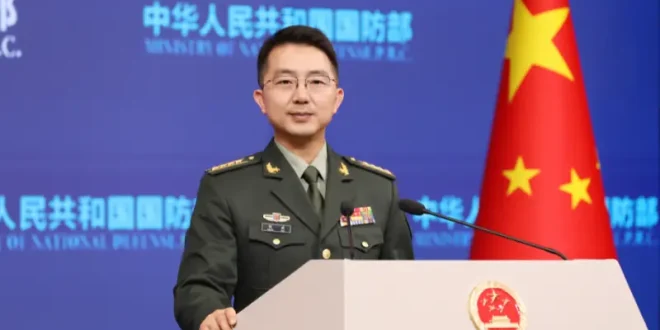
Following Pakistani Prime Minister Shehbaz Sharif’s recent visit to Beijing, China’s Defence Ministry spokesperson, Colonel Jiang Bin, publicly affirmed a significant commitment to strengthening bilateral military cooperation and strategic coordination with Pakistan. Describing the relationship as an “iron-clad friendship” that has withstood 75 years of global shifts, Colonel Jiang Bin highlighted ongoing and planned collaborations across vital domains.
The announcement underscores a deepening of practical cooperation, encompassing strategic communication, joint military exercises (‘Warriors’, ‘Ocean Guards’, ‘Eagles’), extensive personnel exchanges, and crucial defence equipment and technology transfers. This robust reaffirmation of military ties signals a concerted effort by both nations to elevate their defense partnership to contribute to regional and global peace, development, and security, ultimately working towards a “China-Pakistan community with a shared future.”
Background: A Decades-Long Strategic Embrace
The robust “all-weather strategic cooperative partnership” between China and Pakistan is rooted in decades of shared geopolitical interests and mutual support. Dating back to the 1960s, this alliance initially served as a counterweight to India’s regional dominance and Pakistan’s strained relations with the United States following the Cold War.
Economically, the relationship has been supercharged by the China-Pakistan Economic Corridor (CPEC), a flagship project of Beijing’s Belt and Road Initiative (BRI). CPEC, valued at over $60 billion, involves a vast network of infrastructure, energy projects, and Gwadar Port development. While primarily economic, CPEC holds immense strategic significance for China, providing a land route to the Arabian Sea and enhancing its access to global markets and energy supplies, bypassing the Strait of Malacca. For Pakistan, CPEC represents a critical lifeline for economic development and modernization, albeit with increasing debt implications. This economic interdependence forms a powerful bedrock for military collaboration, as securing CPEC routes and investments becomes a shared priority, extending from land-based security to maritime protection in the Indian Ocean.
Geopolitically, the alliance navigates complex regional dynamics, including Pakistan’s ongoing rivalry with India, the evolving situation in Afghanistan, and the broader context of U.S.-China strategic competition in the Indo-Pacific. China views Pakistan as a crucial partner in its regional strategy, providing strategic depth and a reliable ally in a volatile neighborhood.
Why It Matters: Reshaping Regional and Global Dynamics
The deepening of China-Pakistan military cooperation carries significant implications for various stakeholders:
For China:
- Securing BRI and CPEC: The enhanced military ties are vital for protecting China’s significant investments in Pakistan, particularly along the CPEC routes, and ensuring the safety of Chinese personnel and assets.
- Indian Ocean Strategy: Gwadar Port’s development and increased naval cooperation (“Ocean Guards” exercises) bolster China’s presence and influence in the Indian Ocean, a critical maritime trade route, and offers potential dual-use capabilities.
- Balancing India: A stronger Pakistani military, supported by Chinese technology and training, serves as a strategic counterweight to India’s growing regional power and its closer alignment with Western nations, particularly the Quad.
- Access and Influence: Pakistan offers China a gateway to the broader Islamic world and a crucial partner for its geopolitical objectives in South and Central Asia.
For Pakistan:
- Military Modernization: China is Pakistan’s primary defense supplier, providing advanced weaponry, technology transfer, and joint development projects (e.g., JF-17 fighter jet). This support is crucial for Pakistan to maintain a credible defense posture against regional adversaries.
- Economic Support and Leverage: CPEC and Chinese investment are indispensable for Pakistan’s struggling economy. The military dimension adds another layer of security and ensures continued strategic alignment for economic benefits.
- Diplomatic Support: China consistently backs Pakistan on critical international forums, offering diplomatic cover and support on sensitive issues, including Kashmir.
- Strategic Autonomy: While heavily reliant on China, this partnership offers Pakistan a degree of strategic autonomy from traditional Western allies and allows it to navigate its foreign policy choices with greater confidence.
Regional and Global Implications:
- Increased Geopolitical Tensions: A more solidified Sino-Pakistani axis is likely to escalate regional tensions, particularly with India, potentially leading to further arms races and strategic alignments.
- Indian Ocean Militarization: Enhanced naval cooperation could contribute to the militarization of the Indian Ocean, challenging India’s traditional dominance and increasing the risk of naval confrontations.
- U.S. Counter-Strategy: This deepening alliance complicates U.S. efforts to build a strong coalition in the Indo-Pacific to counter China’s rise, forcing Washington to reconsider its engagement strategies in South Asia.
- Regional Stability: While both nations claim the cooperation promotes peace, skeptics argue it could exacerbate existing flashpoints and create new ones by empowering a particular bloc.
Impact on Pakistan: A Double-Edged Sword
For Pakistan, the deepening military embrace with China presents a complex scenario, offering both significant advantages and potential challenges. On the one hand, the partnership is critical for Pakistan’s national security, providing access to advanced military technology and training that is difficult to secure elsewhere. This support enables Pakistan to enhance its conventional and strategic deterrence capabilities against India, while also addressing internal security threats, particularly in restive regions where CPEC projects are concentrated.
The economic dimension, intertwined with military cooperation, reinforces Pakistan’s reliance on Beijing. While Chinese investment is vital for infrastructure and economic growth, it also raises concerns about debt sustainability and the potential for increased Chinese political leverage over Islamabad. Furthermore, a perception of unwavering alignment with China could strain Pakistan’s relationships with other global powers, particularly the United States and European nations, who may view Islamabad’s foreign policy as increasingly skewed.
Domestically, the security imperative for CPEC has led to the deployment of dedicated forces, raising questions about civilian-military dynamics and the impact on local populations, especially in Balochistan where resistance to projects persists. The “iron-clad” nature of the friendship means Pakistan’s strategic choices will likely remain closely intertwined with China’s broader regional and global ambitions, potentially limiting its independent foreign policy options in the long run.
Analysis: Beyond Rhetoric – A Strategic Imperative
The pronouncements from China’s Defence Ministry spokesperson are more than mere diplomatic pleasantries; they represent a public reaffirmation of a long-standing, deeply strategic alliance that is evolving to meet contemporary geopolitical challenges. The language used – “iron-clad,” “higher than mountains, deeper than oceans” – underscores the profound trust and shared interests that bind the two nations, setting them apart from transient partnerships.
This deepening military collaboration signals China’s commitment to fortifying its western flank, ensuring the security of its vital BRI investments, and projecting its influence into the Indian Ocean. For Pakistan, it represents an essential pillar of its national security and economic stability, providing a critical counter-balance in a volatile region. The joint military exercises, explicitly named, are not just symbolic; they build interoperability, shared doctrine, and a common understanding of operational environments, enhancing the collective capabilities of both armed forces.
The vision of a “China-Pakistan community with a shared future” highlights Beijing’s long-term strategic outlook, aiming to integrate Pakistan into its broader regional framework. This goes beyond transactional defense deals, pointing towards a comprehensive alignment of strategic interests, economic development, and security objectives. As global power dynamics continue to shift, with intensifying competition between major powers, the Sino-Pakistani axis stands poised to become an increasingly significant factor, directly influencing the security architecture of South Asia, the Indian Ocean, and potentially reverberating across the wider Indo-Pacific. This alliance serves as a stark reminder that while rhetoric can build bridges, concrete military and economic cooperation truly reshapes the geopolitical landscape.
“`
