Dost Pakistan Journeys Tours and safaris in the North & South Pakistsn
Related Articles


AJK Repolling Results: A Deep Dive into Azad Kashmir’s Political Landscape
The recent repolling in Bagh, Azad Jammu and Kashmir (AJK), has concluded, solidifying the leads of candidates from both the Pakistan Peoples Party (PPP) and the Pakistan Muslim League-Nawaz (PML-N). While the immediate focus is on the individual victories, these outcomes offer a critical lens through which to examine electoral dynamics, the interplay of national and local politics, and the broader implications for governance in AJK and Pakistan.
The Recent Developments: Bagh Repolling Confirms Leads
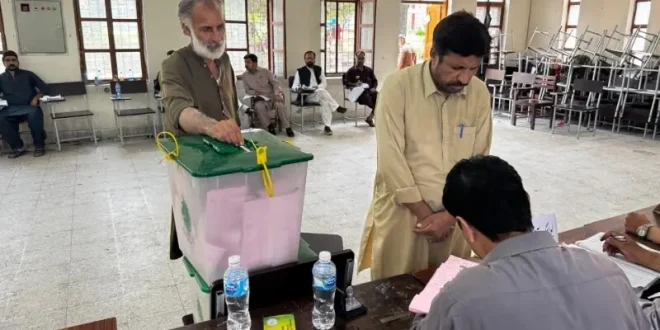
After a tense period marked by allegations of rigging and withheld results, repolling in 23 stations across two key Bagh constituencies – LA-15 (Central Bagh) and LA-16 (Eastern Bagh) – has affirmed the initial leads. In LA-15, the PPP’s Sardar Ziaul Qamar secured his second consecutive victory, defeating PML-N’s Mushtaq Ahmed Minhas by a significant margin. Similarly, in LA-16, PML-N veteran Sardar Mir Akbar clinched his fifth overall and third consecutive win, overcoming PPP’s Sardar Qamaruz Zaman.
These results have further bolstered the PML-N’s overall tally in the AJK Legislative Assembly to 25 seats, with the PPP holding 12. Notably, Sajid Iqbal Abbasi, an independent victor from LA-14 (Dhirkot), has also reportedly pledged support to the PML-N, further strengthening its position for government formation. While the repolling itself proceeded peacefully amidst enhanced security, observations of low voter turnout at several stations present an interesting facet for analysis. Concurrently, the AJK Election Commission’s notification of Prime Minister Faisal Mumtaz Rathore’s victory in LA-17 (Haveli) remains shadowed by ongoing legal challenges, highlighting persistent concerns about electoral transparency.
Background: AJK Elections – A Microcosm of Pakistani Politics
Elections for the 53-member Azad Jammu and Kashmir Legislative Assembly are more than just local polls; they are often viewed as a crucial barometer of political sentiment within Pakistan itself. AJK, a self-governing territory under Pakistan’s administrative control, shares deep historical, cultural, and political ties with Pakistan. Consequently, major Pakistani political parties like the PML-N and PPP extend their organizational structures into AJK, often campaigning with the full might of their federal leadership.
The recent electoral cycle in AJK has been characterized by phased polling, with results from various divisions being announced sequentially. This particular round in Bagh and Haveli was part of the third phase, initially delayed due to law and order concerns. The necessity of repolling in these constituencies underscores the recurring challenges of electoral integrity in the region, where accusations of rigging from various candidates led to the withholding of original results. Such incidents, while addressed through corrective measures like repolling, inevitably contribute to public skepticism and shape the electoral narrative.
Impact on Pakistan: Beyond Regional Governance
The outcomes of the AJK elections resonate far beyond the administrative boundaries of Azad Kashmir. They serve several critical functions for Pakistan’s national political landscape:
- National Political Barometer: The performance of PML-N and PPP in AJK offers insights into their grassroots support and organizational strength in a region ethnically and culturally similar to parts of mainland Pakistan. A strong showing here can be leveraged by parties to project national momentum.
- Strategic Stability: A stable, democratically elected government in AJK, perceived as legitimate, is vital for Pakistan. It reinforces the narrative of self-determination and good governance in the Kashmir region, particularly in the context of the broader Kashmir dispute.
- Federal-AJK Dynamics: The party forming the government in AJK often seeks alignment or patronage from the ruling party in Islamabad. This dynamic influences resource allocation, development projects, and overall administrative coordination. A strong PML-N government in AJK, for instance, would likely seek synergy with any future PML-N-led federal government in Pakistan.
- Party Influence and Reach: For national parties, winning in AJK demonstrates their ability to mobilize voters across diverse geographical and political terrains, strengthening their claim as national representatives.
Analysis: Key Takeaways from the Bagh Repolling
Consolidation of Power and Party Fortunes
The PML-N’s clear lead and the reported support from an independent candidate suggest a likely path to forming the government in AJK. This outcome reflects a significant consolidation of PML-N’s influence in the territory, especially given its strong performance in earlier phases. For the PML-N, this success provides a much-needed morale boost and a platform to demonstrate its governance capabilities, which could be beneficial for its national political narrative ahead of future general elections in Pakistan.
The PPP, while not securing the dominant position, has shown resilience by retaining a key seat in Bagh. This indicates that despite its challenges at the national level, the party still commands a loyal voter base in specific regions of AJK, suggesting a more localized strength rather than a broad sweep.
The Enigma of Low Voter Turnout
Perhaps one of the most intriguing aspects of the repolling was the observed low voter turnout, with some voters “voluntarily” abstaining. This phenomenon can be interpreted in several ways:
- Voter Fatigue or Apathy: The multiple phases of polling, coupled with the initial controversies leading to repolling, might have exhausted voters or led to disillusionment with the electoral process.
- Confirmed Leads: With the leads already established prior to repolling, some voters might have felt their vote would not significantly alter the outcome, especially if their preferred candidate was already ahead.
- Local Satisfaction/Disengagement: The statement about the “exemplary” cooperation of local notables despite low voter presence could imply a tacit acceptance of the likely outcome or a sense of community harmony prevailing over intense electoral rivalry once the primary contest was resolved.
The peaceful conduct of polling despite low turnout is a positive sign for electoral administration, indicating that security measures were effective and tensions had subsided. However, low participation, regardless of its reasons, always raises questions about the strength of democratic engagement.
The Power of Local Connect: Sardar Mir Akbar’s Model
The news highlights Sardar Mir Akbar’s enduring popularity, attributed to his “sustained presence” and deep community engagement, even attending occasions marking the death of villagers’ livestock. This anecdote offers a powerful insight into the nature of politics in many rural and semi-urban constituencies in Pakistan and AJK. It underscores that beyond party manifestos and national political narratives, the personal connection, accessibility, and perceived empathy of a candidate can be paramount. Such grassroots engagement builds loyalty that can transcend party allegiances and withstand electoral challenges, proving that local service often trumps distant ideologies.
Persistent Electoral Integrity Challenges
Despite the successful, peaceful repolling, the journey to these results was fraught with accusations of rigging and controversies, exemplified by the situation in LA-17 concerning PM Rathore. These incidents underscore the ongoing need for robust electoral reforms and oversight mechanisms to enhance public trust in the fairness and transparency of the democratic process. While repolling offers a corrective, repeated instances can erode confidence and potentially deter future participation.
Conclusion: Navigating a Complex Political Landscape
The AJK repolling results in Bagh are more than just a tally of votes; they are a rich tapestry reflecting the complex interplay of national political tides, local candidate appeal, voter sentiment, and persistent challenges to electoral integrity. The PML-N’s expected formation of government will shape AJK’s trajectory in the coming years, while the quiet lessons from voter turnout and local strongmen like Sardar Mir Akbar offer valuable insights for political strategists across the region. As AJK moves forward with its new assembly, the imperative remains to foster stronger democratic institutions, address governance challenges, and ensure that the voices of its constituents are heard and truly represented.