Dost Pakistan Journeys Tours and safaris in the North & South Pakistsn
Related Articles


“`html
AJK at a Crossroads: Rathore’s Call for Dialogue, Development, and a New Vision
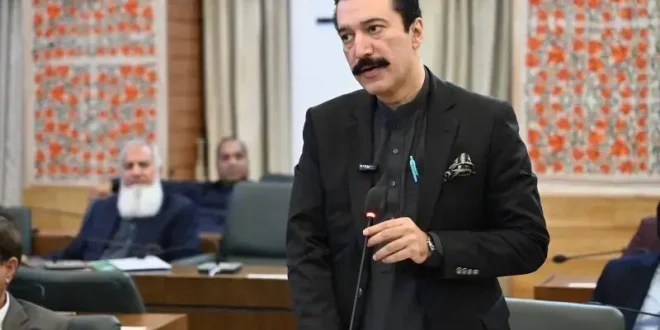
In a crucial period for Azad Jammu and Kashmir (AJK), outgoing Prime Minister Faisal Mumtaz Rathore has articulated a forward-looking, yet challenging, agenda for the region. His recent statements emphasize the urgent need for dialogue to de-escalate the volatile situation stemming from the Joint Awami Action Committee (JAAC) movement, while also advocating for a fundamental shift in AJK’s self-perception and governance. This analysis delves into the complexities of Rathore’s proposals, examining their context, potential impact on Pakistan, and the formidable challenges ahead for the incoming administration.
The News: A Call for Pragmatism Amidst Crisis
Outgoing AJK Prime Minister Faisal Mumtaz Rathore recently underscored that resolving the ongoing crisis ignited by the proscribed Joint Awami Action Committee (JAAC) would be the foremost challenge for the new government. Speaking to journalists, Rathore firmly advocated for dialogue as the singular path to resolution, even endorsing PPP Chairman Bilawal Bhutto-Zardari’s proposal for a truth and reconciliation commission to offer a way forward for all stakeholders.
Rathore also leveled criticism against the AJK leadership of the Pakistan Muslim League-Nawaz (PML-N), alleging they prioritized a swift grab for power over ensuring peace and stability during the recent regional elections. While defending the integrity of the polls in his own constituency, LA-17 Haveli, he acknowledged broader concerns about the electoral process. Perhaps most significantly, the outgoing premier called for a systemic overhaul of AJK’s “obsolete” governance model and urged a collective move beyond the traditional “base camp” mindset, advocating for a renewed focus on economic development, particularly in tourism and agriculture.
Background: Understanding AJK’s Evolving Landscape
The current unrest in AJK is deeply rooted in socio-economic grievances that have simmered for years, culminating in the widespread protests led by the Joint Awami Action Committee (JAAC). The JAAC’s demands centered on fundamental issues: affordable electricity, subsidized flour, and an end to perceived privileges for the elite. The AJK government’s decision to declare JAAC a “proscribed organisation” and launch a subsequent crackdown, accusing it of “terrorism” and “creating anarchy,” marks a critical escalation. This move, while intended to restore order, has fueled public resentment and left a deep scar on the region’s socio-political fabric.
AJK occupies a unique geo-strategic position as a semi-autonomous region directly administered by Pakistan but with its own legislative assembly. Historically, it has been conceptualized as the “base camp” for the Kashmir freedom movement – a symbolic staging ground and ideological beacon for the liberation of Indian-administered Kashmir. This identity has profoundly shaped its governance, economy, and political discourse, often prioritizing the broader Kashmir cause over internal development.
The recent regional elections, which saw the PML-N emerge with a clear majority amid allegations of rigging from the PPP, further complicated this volatile environment. These electoral disputes not only reflect local power struggles but also echo the broader political rivalries within Pakistan itself. Against this backdrop, AJK faces significant economic challenges, heavily reliant on subsidies from Islamabad, with underdeveloped sectors like tourism and agriculture offering untapped potential for self-sufficiency.
Impact on Pakistan: Implications for Regional Stability and Policy
The unfolding situation in Azad Jammu and Kashmir carries significant implications for Pakistan, affecting its internal stability, economic burden, and international standing. As a contiguous territory to India, a volatile AJK directly impacts the security of Pakistan’s eastern border. Continued unrest, particularly a prolonged struggle between the state and popular movements like the JAAC, risks destabilizing a region critical to Pakistan’s broader national security interests and its Kashmir policy.
Economically, Pakistan has historically provided substantial financial support to AJK. Rathore’s call for economic development and self-reliance, if realized, could alleviate some of this burden. However, sustained instability, crackdowns, and a lack of effective governance will continue to divert resources and attention from Islamabad, hindering not only AJK’s progress but also Pakistan’s economic recovery efforts.
Politically, the allegations of electoral irregularities and the handling of the JAAC movement reflect poorly on Pakistan’s democratic credentials and its capacity for good governance in its administered territories. The internal dynamics and political disputes within AJK often mirror or influence national political discourse, particularly concerning the relationship between the major political parties. Internationally, any perceived human rights abuses or suppression of dissent in AJK can be exploited by critics to undermine Pakistan’s moral authority on the Kashmir issue, weakening its advocacy for the self-determination of Kashmiris.
Moreover, Rathore’s bold proposal to re-evaluate AJK’s “base camp” identity challenges a cornerstone of Pakistan’s decades-old Kashmir narrative. While potentially paving the way for pragmatic development, this shift requires careful management to avoid misinterpretation or dilution of the core Kashmir cause, which remains central to Pakistan’s foreign policy.
Analysis: Navigating a New Path for AJK
Prime Minister Rathore’s statements signal a crucial moment of introspection and potential reorientation for Azad Jammu and Kashmir. His advocacy for dialogue, even after the proscription of the JAAC, represents a pragmatic acknowledgment that security operations alone cannot resolve deeply rooted public grievances. The proposal for a truth and reconciliation commission further underscores a recognition of past injustices or unmet expectations, aiming to heal societal divisions rather than merely suppressing dissent. Such a commission, if implemented genuinely, could foster much-needed trust between the state and its citizens, but its success would hinge on its impartiality and the willingness of all stakeholders to engage constructively.
Perhaps the most significant aspect of Rathore’s address is his direct challenge to the “base camp” mindset. For decades, AJK’s identity and existence have been inextricably linked to its role in the larger Kashmir dispute, often at the expense of its internal development and governance. Moving beyond this paradigm implies a bold shift towards prioritizing local economic growth, infrastructure, and quality of life for its citizens. It suggests transforming AJK from a symbolic outpost into a self-sustaining, prosperous entity where development, tourism, and agriculture become key drivers. While this vision holds immense potential for reducing dependency on Pakistan and improving livelihoods, it faces formidable ideological and practical hurdles. Overcoming historical narratives and bureaucratic inertia will require sustained political will and public buy-in.
The backdrop of contested elections and allegations of rigging further complicates this agenda. Such disputes undermine democratic legitimacy and divert attention from critical governance issues, fostering an environment of mistrust. Rathore’s defense of his own constituency, while alleging broader rigging by the PML-N, highlights the fragmented political landscape that makes consensus-building exceptionally difficult. The incoming PML-N government will immediately inherit the dual challenge of addressing the JAAC crisis – balancing security with dialogue – and navigating the demands for political and economic reforms proposed by Rathore.
Ultimately, Rathore’s departing message is a call for AJK to reclaim its agency, to balance its historic role with a modern imperative for sustainable development and good governance. The success of this vision will depend on the ability of AJK’s new leadership, in cooperation with Islamabad, to move beyond political rivalries and genuinely address the aspirations of its people, transforming the “base camp” into a vibrant, self-reliant region.
“`