Dost Pakistan Journeys Tours and safaris in the North & South Pakistsn
Related Articles
“`html
Aleema Khan Detention: A Glimpse into Pakistan’s Political Climate
The News
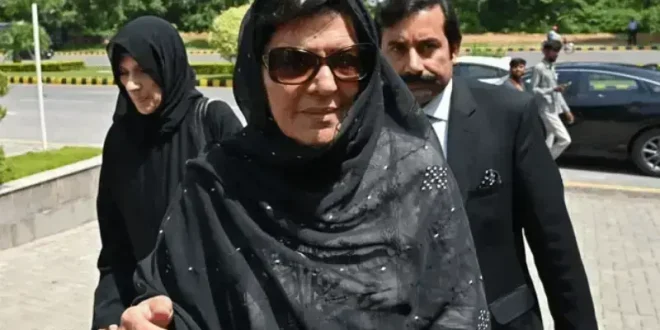
The Lahore High Court (LHC) recently saw the Punjab government confirm that Aleema Khan, sister of Pakistan Tehreek-e-Insaf (PTI) founder Imran Khan, had been provided with basic facilities and essential items during her detention in Kot Lakhpat jail. This declaration came during the hearing of a petition filed by her son, Shahraiz Khan, which sought to challenge her detention and ensure her well-being.
Aleema Khan was detained on September 20 under the controversial Maintenance of Public Order (MPO) Ordinance, following an order from the Lahore deputy commissioner. This detention occurred amidst a broader government crackdown on PTI activists and leaders ahead of planned countrywide protests demanding Imran Khan’s release and the supremacy of the Constitution – protests that were subsequently postponed to October 4.
The report submitted to the LHC detailed the provision of a bedsheet, blanket, shoes, six suits, a towel, face wash, a toothbrush, a skincare kit, and a shawl to Aleema Khan. In light of this report, Justice Abher Gul Khan disposed of the petition. However, the court also directed the home secretary to address the petitioner’s request for permission to meet Aleema Khan in accordance with the law, highlighting ongoing concerns about access and due process.
Background: The MPO and Pakistan’s Tumultuous Politics
To understand Aleema Khan’s detention, one must consider the charged political environment in Pakistan, particularly since the ouster of Imran Khan from power in April 2022 and his subsequent arrest in May 2023. The PTI, once a ruling party, has faced an unprecedented crackdown, with numerous leaders and workers arrested, and its political activities severely restricted.
The **Maintenance of Public Order (MPO) Ordinance**, under which Aleema Khan and many other PTI figures have been detained, is a relic of colonial-era laws. It grants the executive broad powers to detain individuals preventively if there are “reasonable grounds” to believe they might act in a manner prejudicial to public safety or the maintenance of public order. While ostensibly designed for security, critics argue it is frequently misused as a tool for political suppression, allowing for detention without formal charges or trial for extended periods, effectively bypassing standard judicial processes.
Aleema Khan’s detention is not an isolated incident. Her sisters, Dr. Uzma Khan and Noreen Niazi, were also detained, indicating a targeted approach towards Imran Khan’s family. This strategy appears aimed at increasing pressure on the PTI founder and disrupting the party’s organizational capacity to mobilize protests. The initial petition to the LHC also brought to light concerns regarding Aleema Khan’s access to medicines and other essentials, underscoring the challenges faced by detainees under MPO.
The repeated calls for protests by PTI, often met with state action, underscore the deep political polarization gripping Pakistan. With general elections looming, the current climate of arrests, restrictions, and legal challenges significantly impacts the democratic space and the fairness of the electoral process.
Impact on Pakistan: Rule of Law, Democracy, and Stability
The detention of Aleema Khan and other political figures under the MPO Ordinance has profound implications for Pakistan’s democratic health and its commitment to the rule of law:
- Erosion of Rule of Law: The frequent use of MPO, a preventive detention law, raises serious questions about due process and fundamental rights. When individuals can be detained without specific charges or transparent legal proceedings, it undermines the principle of rule of law and breeds a climate of fear and uncertainty.
- Stifling Political Dissent: The crackdown on PTI, including the detention of family members and activists, creates an environment where political opposition is systematically suppressed. This not only curtails freedom of speech and assembly but also limits the space for healthy political debate, which is essential for a functioning democracy.
- Judiciary’s Role Under Scrutiny: The judiciary, particularly the High Courts, often finds itself in the difficult position of balancing executive authority with the protection of fundamental rights. While the LHC sought a report and issued directives, the ultimate disposal of the petition after the government’s submission highlights the challenges in challenging MPO detentions effectively, potentially reinforcing public perception of institutional alignment.
- Deepening Political Polarization: Such actions further deepen the existing political divides. Supporters of the PTI view these detentions as politically motivated persecution, while the government often justifies them as necessary for maintaining law and order. This polarization makes national consensus-building incredibly difficult and exacerbates political instability.
- Human Rights Concerns: The pattern of arrests and restrictions draws the attention of national and international human rights organizations, who frequently call for respect for civil liberties and due process, potentially impacting Pakistan’s international standing.
Analysis: Beyond the ‘Basic Facilities’ Report
The Punjab government’s detailed report on the “basic facilities and essential items” provided to Aleema Khan, leading to the disposal of her petition, offers a fascinating insight into the ongoing political and legal battles. On the surface, it portrays an administration keen to demonstrate compliance with legal requirements and address concerns about detainee welfare. The specificity of items—from a bedsheet to a skincare kit—serves to counter potential allegations of harsh or inhumane treatment, thereby minimizing public outcry and satisfying judicial scrutiny.
However, the real story goes deeper than a list of amenities. The core issue remains the legitimacy and application of the MPO Ordinance. The detention of Aleema Khan, like many others, appears to be a pre-emptive measure to neutralize potential leadership for the planned protests. It’s a strategic move in a larger political game, where the state seeks to pre-empt dissent rather than engage with it through conventional political means. The very act of having to file a petition to ensure basic rights or meeting access for a high-profile political detainee underscores the systemic issues with preventive detention laws.
The judiciary’s role, while crucial in ensuring accountability, often operates within the constraints of established legal frameworks. Disposing of the petition after the government’s report, while simultaneously directing the home secretary on meeting requests, reflects a cautious judicial approach. It acknowledges the executive’s prerogative under laws like MPO but attempts to safeguard fundamental rights where possible. This delicate balance, however, can be perceived by critics as not sufficiently challenging the broader executive overreach in political matters.
Ultimately, the Aleema Khan case is a microcosm of Pakistan’s current political climate. It highlights the strategic use of legal instruments like MPO to manage political opposition, the ongoing struggle for fundamental rights in a polarized environment, and the complex interplay between the executive, the judiciary, and political parties. As Pakistan heads towards elections, the question of whether such tactics will truly pacify the political landscape or merely intensify public resentment remains a critical challenge for the nation’s democratic future.
“`