Dost Pakistan Journeys Tours and safaris in the North & South Pakistsn

Related Articles


Balochistan Under Siege: Analyzing Pakistan’s Intensified Counter-Terrorism Campaign and the ‘Fitna al Hindustan’ Narrative
The News: Intensified Counter-Terrorism Operations in Balochistan
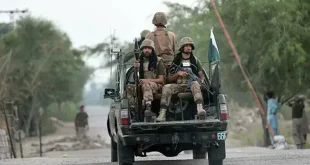
Recent intelligence-based operations (IBOs) in Balochistan have once again underscored the volatile security landscape of Pakistan’s largest province. In a significant development, the military’s media wing, ISPR, reported the martyrdom of Major Wajahat Waheed and the elimination of four terrorists during operations across Shadi Kaur, Pasni (Gwadar), and Jattakabad (Kalat district). These operations, targeting alleged hideouts of what the state now terms “Fitna al Hindustan,” also led to the recovery of a substantial cache of arms and ammunition.
The incident is not isolated. It follows a series of successful IBOs in recent weeks, including the killing of eight “India-sponsored” terrorists in Quetta, Nushki, and Khuzdar, and five in Washuk. Furthermore, security forces have apprehended several high-profile militants, including six affiliated with the banned Tehreek-i-Taliban Pakistan (TTP), two potential female suicide bombers, and two commanders of other proscribed organizations. These concerted efforts highlight a robust and relentless counter-terrorism campaign, which the ISPR states will continue “at full pace” under the new national vision of “Azm-e-Istehkam.”
President Asif Ali Zardari and Prime Minister Shehbaz Sharif have both lauded the security forces and paid tribute to Major Waheed, reaffirming the nation’s resolve to eradicate foreign-sponsored terrorism and thwart conspiracies by “terrorists’ foreign patrons and their local facilitators.”
Background: Balochistan’s Volatile Landscape and Pakistan’s Evolving Strategy
Balochistan, a mineral-rich province bordering Iran and Afghanistan, has long been a hotbed of insurgency and separatist movements. Its strategic location, vast undeveloped resources, and perceived political and economic marginalization have fueled discontent, leading to sporadic militant activities by various ethno-nationalist and religiously motivated groups. The province is also a critical component of the China-Pakistan Economic Corridor (CPEC), making its stability paramount for Pakistan’s economic future.
The ongoing struggle is further complicated by allegations of external interference. Pakistan has consistently accused India of sponsoring terrorism and destabilization efforts in Balochistan. In an apparent move to formalize and strengthen this narrative, the military has recently coined the term “Fitna al Hindustan“ (loosely translated as “Mischief/Discord from India”). This phrase serves as a deliberate framing mechanism, aiming to highlight India’s alleged role in terrorism and destabilization across Pakistan, potentially to galvanize domestic support and build an international case against perceived Indian sponsorship.
Adding to the strategic framework is the recently approved national vision, “Azm-e-Istehkam“ (Resolve for Stability). This comprehensive counter-terrorism campaign, sanctioned by the Federal Apex Committee on the National Action Plan, signifies a renewed, holistic approach to tackling militancy. Unlike previous operations, it aims to integrate all facets of national power – military, economic, and social – to achieve lasting peace and stability, moving beyond purely kinetic operations to address the root causes of extremism.
The scale of the challenge is evident in recent data from the Pakistan Institute for Conflict and Security Studies (PICSS), which reported an increase in terrorist attacks in Balochistan, declaring it the “most affected” province by terrorism. This context underscores the urgency and necessity of the intensified operations.
Impact on Pakistan: Navigating Security, Economic, and Geopolitical Challenges
The ceaseless cycle of violence and counter-terrorism operations in Balochistan carries profound implications for Pakistan:
- Human Cost: The martyrdom of Major Wajahat Waheed is a grim reminder of the sacrifices made by security forces. These losses weigh heavily on the nation, impacting military morale and public sentiment.
- National Security Imperative: The sustained presence of militant groups, whether separatist or religiously motivated, poses a direct threat to Pakistan’s territorial integrity and internal stability. The operations are crucial for maintaining law and order and protecting vital infrastructure, particularly CPEC projects.
- Economic Development: Instability in Balochistan deters domestic and foreign investment. The province, despite its vast reserves of natural gas, copper, and gold, remains one of the least developed. Ongoing terrorism hinders resource extraction, infrastructure development, and overall economic growth, perpetuating a cycle of grievance and underdevelopment.
- Geopolitical Tensions: The explicit use of “Fitna al Hindustan” escalates the narrative against India, potentially heightening regional tensions. While intended for domestic and international messaging, it complicates efforts towards de-escalation and regional cooperation.
- Public Trust and Cohesion: The government’s ability to protect its citizens and establish peace is vital for maintaining public trust. The “Azm-e-Istehkam” campaign seeks to unify national resolve, but its success hinges on transparent operations and a clear strategy that addresses local grievances alongside military action.
Analysis: Beyond the Battlefield – A Multi-faceted Approach to Peace
The recent surge in IBOs and the introduction of new terminologies signal a strategic evolution in Pakistan’s approach to counter-terrorism. The “Azm-e-Istehkam” vision, coupled with the “Fitna al Hindustan” narrative, reflects a dual strategy:
- Enhanced Kinetic Action: The intensified operations demonstrate a firm resolve to neutralize militant threats and dismantle their networks across Balochistan. The focus on intelligence-based operations suggests a more targeted and effective approach.
- Shaping the Narrative: The term “Fitna al Hindustan” aims to create a unified national consensus against externally sponsored terrorism. By attributing destabilization to foreign actors, Pakistan seeks to galvanize internal support and legitimate its counter-terrorism efforts on the international stage.
However, several critical challenges remain:
- Addressing Root Causes: While military operations are necessary to degrade militant capabilities, lasting peace in Balochistan requires addressing the deep-seated socio-economic grievances and political alienation that make its populace susceptible to militant recruitment. Genuine political dialogue, equitable resource distribution, and inclusive development are paramount.
- Avoiding Over-Simplification: Attributing all militancy solely to “Fitna al Hindustan” risks over-simplifying a complex issue with multiple internal and external dimensions. Acknowledging and addressing the diverse motivations of various groups, including local grievances, is crucial for effective strategy.
- Regional Dynamics: The interplay with Afghanistan, given the TTP’s presence and historical ties, and the broader regional geopolitical landscape, will continue to influence stability in Balochistan. Effective border management and regional cooperation are essential.
- Sustaining the “Azm-e-Istehkam“: The success of this ambitious vision depends on sustained political will, inter-agency coordination, and the allocation of sufficient resources. It must encompass not just security but also governance, development, and justice reforms.
In conclusion, Pakistan’s intensified counter-terrorism campaign in Balochistan, exemplified by recent IBOs and the “Azm-e-Istehkam” initiative, represents a determined effort to reclaim stability. While the immediate focus on eliminating militant threats is critical, long-term peace will necessitate a comprehensive strategy that transcends military action, embracing political inclusivity, socio-economic uplift, and a nuanced understanding of the multifaceted challenges plaguing the restive province. The memory of brave soldiers like Major Wajahat Waheed underscores the profound human cost of this ongoing struggle and the unwavering commitment required to secure a stable future for Balochistan and Pakistan.