Dost Pakistan Journeys Tours and safaris in the North & South Pakistsn
Related Articles


“`html
Pakistan’s Fuel Price Volatility: Navigating Geopolitical Storms and Economic Realities
The Immediate Shift: Pakistan Confronts Soaring Fuel Costs
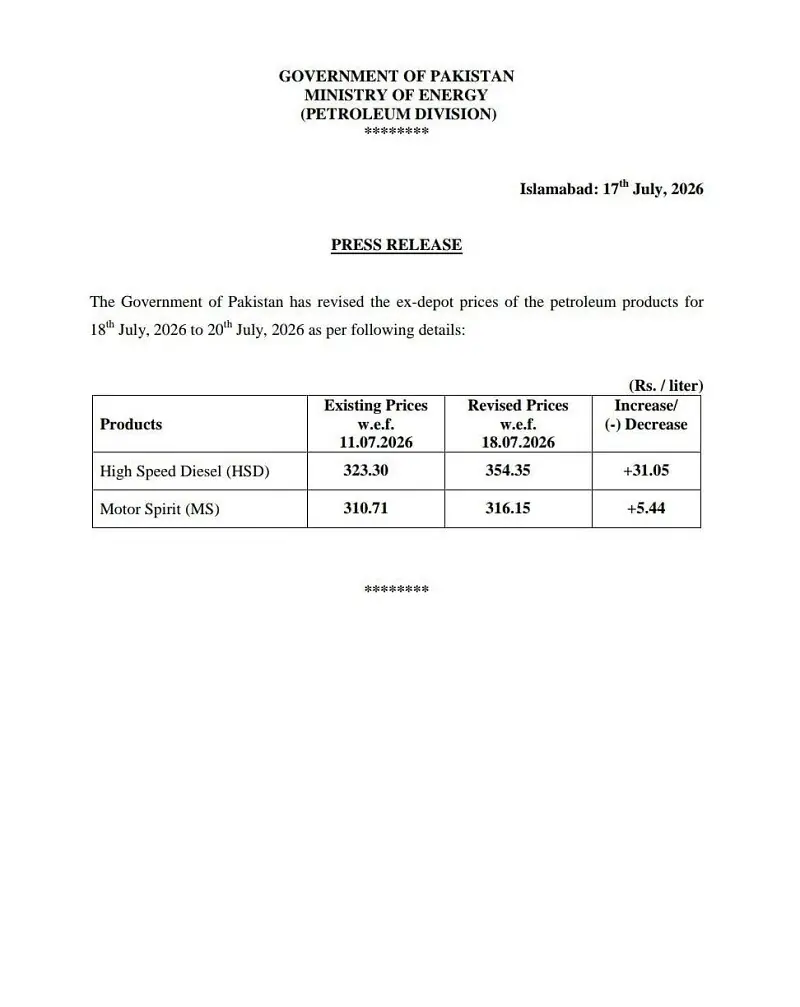
Pakistan’s government has announced a significant hike in petroleum product prices, raising petrol by Rs5.44 and high-speed diesel (HSD) by a substantial Rs31.05 per litre. Effective immediately and slated for the next three days until July 20, this adjustment brings petrol to Rs316.15 per litre and HSD to Rs354.35. This move is a direct consequence of escalating international oil prices and higher import premiums, largely attributed to renewed hostilities between the United States and Iran, intensifying regional tensions in the Persian Gulf.
Adding another layer of complexity, Petroleum Minister Ali Pervaiz Malik revealed a pivotal policy change: fuel prices will now be revised on a daily basis. This new mechanism, overseen by the Oil and Gas Regulatory Authority (OGRA), aims to reflect global market fluctuations in real-time. OGRA is tasked not only with publishing the new rates but also detailing the factors influencing these daily adjustments, promising a new era of transparency in fuel pricing.
Geopolitical Undercurrents and Global Oil Market Dynamics
The recent spike in fuel prices in Pakistan is not an isolated event but rather a direct ripple from volatile global oil markets, exacerbated by critical geopolitical developments. The renewed tensions between the US and Iran, particularly concerning the Persian Gulf region, are a primary driver. This strategic waterway is crucial for global oil shipments, and any perceived threat to its stability immediately triggers anxieties over supply disruptions, leading to sharp increases in crude oil prices and associated import premiums.
Pakistan, as a net oil importer, is acutely vulnerable to such international fluctuations. The country has already experienced extreme volatility this year. For instance, HSD prices peaked at Rs520.35 per litre on April 3, having surged from Rs281 since the US-Iran conflict began in late February. Similarly, petrol reached Rs458.41 per litre in April, up from Rs266 in early March. While current prices are below these historical peaks, they represent a significant increase from recent lows, underscoring the ongoing instability and the difficulty for governments to maintain consistent pricing.
The shift from weekly price revisions—a policy implemented since early March alongside fuel conservation efforts and targeted subsidies—to a daily pricing model reflects the government’s struggle to absorb the rapid swings in international markets. Previous attempts at cushioning consumers through subsidies proved fiscally unsustainable, pushing the government towards a more market-responsive, albeit potentially more volatile, pricing strategy.
A Ripple Effect: Economic Strain on the Pakistani Populace and Economy
The increase in fuel prices carries profound implications for Pakistan’s already struggling economy and its citizens. The burden is multi-faceted:
- Inflationary Pressure: Both petrol and diesel are fundamental to transportation. Higher petrol costs directly impact the daily commute for the middle and lower-middle classes, affecting private vehicle owners, motorcyclists, rickshaw drivers, and small businesses. Diesel, primarily used in heavy transport, agriculture, and industrial power generation, triggers a cascading effect. Increased freight costs translate to higher prices for essential goods, food, and commodities, fueling overall inflation and eroding purchasing power.
- Business Operational Costs: Industries reliant on logistics and transport will face elevated operational costs. Farmers, who depend on diesel for machinery and irrigation pumps, will see their input costs rise, potentially leading to increased food prices or reduced agricultural output.
- Electricity Generation: Pakistan’s power sector still relies on thermal generation, often fueled by diesel or other petroleum products. Higher HSD prices can lead to increased electricity tariffs, further burdening households and industries, and potentially exacerbating energy crises.
- Government Revenue vs. Public Welfare: The government currently levies significant taxes on petroleum products, including approximately Rs105 per litre in customs duty, alongside petroleum levy, climate support levy, and inland freight equalisation margin. While these levies are crucial revenue streams for the national exchequer, they also contribute significantly to the final consumer price, creating a delicate balance between fiscal needs and public affordability.
- Supply Chain Disruptions: The All Pakistan Dealers Association’s rejection of daily pricing and consideration of a protest plan indicates potential logistical challenges and resistance within the supply chain. Such disruptions could lead to artificial shortages or further price instability, compounding the economic woes.
OGRA’s New Mandate: A Double-Edged Sword for Stability?
The government’s decision to shift to daily fuel price adjustments, empowering OGRA with this responsibility, marks a significant policy pivot. On one hand, this move aims to foster greater transparency and real-time responsiveness to global market dynamics. By publishing both the rates and the underlying factors, OGRA seeks to demystify the pricing mechanism, potentially building public trust and accountability. This approach could also reduce the government’s fiscal strain by eliminating the need for periodic, large subsidy payouts to absorb international price shocks, ensuring that the market directly dictates costs.
However, the daily pricing model is not without its challenges and potential pitfalls. For consumers, it introduces an unprecedented level of price volatility. Planning budgets becomes harder when fuel costs can change overnight, leading to uncertainty and anxiety. Businesses, particularly those in logistics and manufacturing, will struggle with daily cost adjustments, impacting their pricing strategies and profitability margins. The administrative burden on fuel stations and the entire distribution network will also increase significantly.
The Road Ahead: Challenges and Potential Mitigation
The immediate rejection by the All Pakistan Dealers Association highlights a critical stakeholder challenge. Dealers rely on predictable pricing for inventory management and profit margins. Frequent, unpredictable changes can complicate their operations, leading to calls for protest and potential disruptions in fuel supply across the country. Addressing these concerns will be crucial for the smooth implementation of the new policy.
For the government, the dilemma remains. While the daily pricing aligns with market realities and reduces the subsidy burden, it transfers the full brunt of global volatility directly onto consumers and businesses. This could exacerbate social discontent and political instability, especially in a country already grappling with high inflation and economic hardship. Long-term strategies beyond mere price adjustments are vital. These could include accelerating the shift towards indigenous energy sources, promoting energy efficiency, exploring alternative fuels, and engaging in proactive energy diplomacy to secure stable, affordable supplies. Diversifying energy imports and hedging against price risks could also offer some stability.
Conclusion: Steering Through Uncertain Waters
Pakistan finds itself at a critical juncture, navigating the treacherous waters of global geopolitical turmoil and domestic economic pressures. The latest fuel price hike and the shift to daily pricing underscore the immediate challenges posed by international oil market volatility, amplified by regional tensions. While the new pricing mechanism aims for transparency and market responsiveness, its implications for inflation, public welfare, and business operations are profound.
The success of this new policy will hinge not only on its technical implementation but also on the government’s ability to manage stakeholder expectations, address public concerns, and, most importantly, formulate comprehensive long-term energy strategies that reduce Pakistan’s vulnerability to external shocks. Without such a holistic approach, the journey through these uncertain waters risks leaving the nation’s economy and its citizens adrift.
“`