Dost Pakistan Journeys Tours and safaris in the North & South Pakistsn
Related Articles
“`html
Lahore’s Basant Revival: A Soaring Hope or a Risky Affair?
The vibrant city of Lahore is once again preparing to embrace its iconic Basant festival, with the Punjab government approving an ambitious 10-day celebration from January 29 to February 7, 2027. This announcement, coming directly from Chief Minister Maryam Nawaz, signifies a strong governmental push to reinstate a cultural tradition that has long been synonymous with Lahore’s identity. However, after an 18-year ban due to severe safety concerns, the extended duration of the festival raises critical questions about how the city plans to balance joyous festivities with paramount public safety.
The News: An Extended Cultural Extravaganza
Chief Minister Maryam Nawaz has given the green light for Lahore to host an extended Basant festival, marking the arrival of 2027 with a burst of cultural colours. Scheduled to run for ten days, from January 29 to February 7, the festivities will observe a one-day pause on February 5 for Kashmir Day. This decision follows a much shorter, three-day revival in February 2024, which itself came after an almost two-decade prohibition.
The Chief Minister has framed the event as a “gift” to the people of Lahore and a crucial step in promoting Punjab’s rich cultural heritage and the provincial capital’s centuries-old traditions on a global stage. Recognizing the inherent risks, she has explicitly directed authorities to ensure superior arrangements for public safety and convenience compared to previous festivals. Furthermore, CM Nawaz issued a direct appeal to citizens for responsible celebration, emphasizing that the success of this extended event hinges on strict adherence to safety regulations and a collective commitment to protecting human lives. The government had previously announced new rules and regulations for kite-flying for next year’s Basant, underscoring a proactive approach to mitigate risks.
Background: A Tradition Grounded, A Culture Reborn
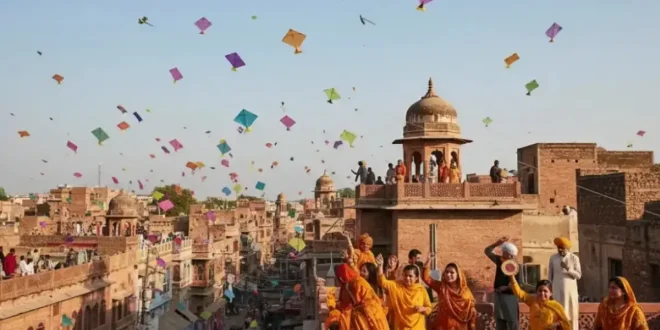
Basant, traditionally celebrated to welcome the arrival of spring, is much more than just a kite-flying festival in Lahore; it is an integral part of the city’s social fabric and cultural heritage. For generations, the skies above Lahore would burst into a kaleidoscope of colours as thousands of kites soared, accompanied by rooftop parties, traditional music, and delectable food. It was a time of communal joy, family gatherings, and vibrant street life, deeply embedded in the identity of Punjab.
However, this beloved tradition took a tragic turn. By the early 2000s, the festival became increasingly associated with fatalities and severe injuries. The proliferation of sharp, metallic, or chemical-coated kite strings (locally known as ‘Dore’), designed to cut opponents’ kites, posed an extreme danger to motorcyclists and pedestrians. Adding to the peril was the alarming trend of celebratory aerial gunfire, which often resulted in stray bullets claiming innocent lives. The escalating human cost led the government to impose a complete ban on Basant in 2007, a decision met with mixed reactions but widely seen as a necessary measure to curb the avoidable casualties.
For 18 years, the Lahori skies remained empty of Basant kites, leaving a void in the city’s cultural calendar. The brief return in February 2024 signaled a cautious willingness to revive the festival, albeit under stringent regulations. The current announcement for a 10-day celebration in 2027 demonstrates a more confident, yet still safety-focused, approach from the provincial government to restore this cherished cultural icon.
Impact on Pakistan: Beyond Lahore’s Skies
The revival and extension of the Basant festival carry significant implications not just for Lahore, but for Pakistan as a whole, touching upon cultural, economic, and social spheres.
Cultural Revival and National Identity
Basant’s return is a powerful statement about Pakistan’s commitment to preserving and promoting its diverse cultural heritage. For years, the absence of Basant was felt keenly by those who remembered its vibrant past. Reinstating it, especially with a focused effort on safety, allows a new generation to connect with a historical tradition, fostering a sense of national pride and cultural continuity. It positions Punjab, and Lahore in particular, as a hub for traditional festivities, potentially attracting cultural tourists from within Pakistan and abroad.
Economic Boost and Tourism Potential
A 10-day festival of this scale offers substantial economic opportunities. The demand for kites, strings (of approved varieties), food, beverages, and hospitality services will skyrocket. Local businesses, from small-scale kite makers to street vendors and restaurants, stand to benefit immensely, creating temporary employment and injecting significant revenue into the local economy. Moreover, a well-managed Basant can become a major tourist attraction, drawing visitors who wish to experience the unique cultural spectacle, thereby boosting the broader tourism sector and contributing to Pakistan’s image as a vibrant destination.
Public Safety: The Ultimate Test of Governance
The primary challenge and most critical impact will undoubtedly be on public safety. The government’s ability to enforce stringent regulations – particularly the ban on dangerous strings and aerial firing – will be under intense scrutiny. A successful, casualty-free festival would demonstrate effective governance and administrative prowess. Conversely, any repeat of past tragedies could lead to renewed calls for a ban, undermining both cultural revival efforts and public trust. This makes the administrative arrangements, public awareness campaigns, and law enforcement crucial for the festival’s long-term sustainability and positive perception.
Social Cohesion and Responsible Citizenship
Basant has the potential to foster social cohesion, bringing people from all walks of life together in shared celebration. However, the Chief Minister’s appeal for responsible celebration underscores the need for collective action. The festival serves as a litmus test for civic responsibility, highlighting whether citizens can embrace tradition while prioritizing the safety and well-being of their community. A successful Basant requires not just government enforcement but also active public participation in adhering to safety guidelines.
Analysis: Navigating the Winds of Change
The decision to hold a 10-day Basant festival in Lahore for 2027 is a bold and ambitious move, representing a significant shift from a long period of prohibition. It reflects a government keen on reclaiming and celebrating its cultural identity, but also one acutely aware of the historical pitfalls.
The fundamental challenge lies in striking a delicate balance: reinvigorating a cherished tradition without compromising human lives. The initial, shorter Basant in 2024 served as a cautious experiment, providing valuable lessons. The Chief Minister’s emphasis on “better arrangements” and “strict adherence to safety regulations” suggests these lessons have been absorbed. This likely includes establishing designated kite-flying zones, rigorous checks on string types, robust enforcement against aerial firing, and extensive public awareness campaigns about responsible conduct.
The extended duration of ten days, while amplifying the cultural and economic potential, also intensifies the logistical and security challenges. Sustaining vigilance and enforcement over such an extended period requires meticulous planning, significant resource allocation, and unwavering commitment from all levels of administration and law enforcement. The break on Kashmir Day, while politically significant, also offers a brief respite for authorities to reassess and regroup their efforts.
For Basant to truly become a “gift” and a global promoter of Punjab’s culture, as envisioned by CM Maryam Nawaz, it must first and foremost be a safe celebration. The government’s proactive announcement of new rules and regulations indicates a seriousness towards this objective. However, the ultimate success will hinge on two key factors: uncompromising enforcement by authorities and unwavering responsible behavior by citizens. The festival is a test of collective maturity – can Lahore reclaim its vibrant spring tradition and present it to the world as an example of cultural revival achieved with modern safety standards?
If managed effectively, the 2027 Basant festival could indeed mark a triumphant return, symbolizing resilience and a renewed appreciation for cultural heritage. It could position Lahore as a premier destination for unique cultural experiences. Conversely, any failure to uphold safety standards would not only risk lives but also jeopardize the future of this historic festival, potentially consigning it back to the annals of prohibited traditions. The kites of Basant are ready to fly once more, but their journey must be guided by safety, responsibility, and a deep respect for human life.
“`