Dost Pakistan Journeys Tours and safaris in the North & South Pakistsn

Related Articles


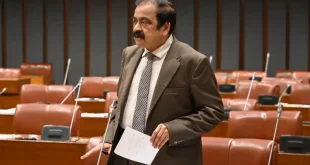
Pakistan’s Administrative Overhaul: The Push for New Provinces and Its Complex Implications
Pakistan finds itself at a critical juncture, with intense discussions brewing in official circles regarding the potential creation of new administrative units. This debate, described as a precursor to the proposed 28th Constitutional Amendment, highlights fundamental questions about governance, resource distribution, and the very structure of the Pakistani federation. While proponents argue for enhanced administrative efficiency and equitable development, the path to such a significant constitutional change is fraught with political, economic, and social complexities.
The News: A Blueprint for Redrawing Pakistan’s Map
Recent reports indicate a serious consideration within Pakistan’s power corridors for an extensive administrative overhaul. Proposals under discussion include bringing major economic hubs like Karachi and the strategic port city of Gwadar under direct federal control. Furthermore, there are talks of fragmenting Pakistan’s largest province, Punjab, into three new units, dividing Khyber Pakhtunkhwa (KP) into two (Pakhtun and Hazara regions), and splitting Balochistan into two provinces. Interior Minister Mohsin Naqvi has publicly advocated for these reforms, asserting they are the only viable solution to what he describes as a “collapsed” national system. While the Supreme Court Bar Association (SCBA) has endorsed the idea, citing benefits in governance, devolution, and economic development, the Pakistan Bar Council (PBC) emphasizes the necessity of adhering strictly to the constitutional framework and achieving national consensus before any such move.
Background: The Enduring Debate on Decentralization
The discussion around new provinces is not novel in Pakistan; it is deeply rooted in the country’s administrative history and the aspirations for greater regional autonomy. The most significant shift in provincial powers came with the 18th Constitutional Amendment in 2010. This landmark amendment largely curtailed the President’s powers, strengthened parliamentary democracy, and, crucially, devolved considerable authority and financial resources from the federal government to the provinces. While celebrated for empowering provinces and fostering a more federal structure, the aftermath of the 18th Amendment has also sparked debates. Some argue that the extensive devolution, particularly in sectors like health and education, has led to administrative inefficiencies, uneven development across regions, and an increased burden on provincial finances without commensurate capacity building. The current proposal to create new provinces is, in part, an attempt to address these perceived “consequences” of the 18th Amendment.
Historically, demands for new provinces have often emerged from regions feeling marginalized or neglected by larger provincial administrations. For instance, the call for a South Punjab (Seraiki province) has been a persistent one, driven by perceptions of underdevelopment and a lack of representation. Similarly, the Hazara division within KP has long agitated for its own provincial status, citing distinct linguistic and cultural identities. The unique challenges of administering vast, resource-rich but sparsely populated Balochistan also feed into discussions about its division. Furthermore, the administrative complexities arising from the 2018 merger of the erstwhile Federally Administered Tribal Areas (FATA) into KP have added another layer to the provincial landscape, making any further division of KP particularly intricate.
Another critical aspect of this background is the role of local government systems. The news highlights a perspective that had President Pervez Musharraf’s local government model (2001-2008) continued uninterrupted, Pakistan would now possess a robust cadre of experienced local administrators. This system aimed at decentralizing power to district and union council levels, directly empowering local communities and fostering grassroots development. Its discontinuation by subsequent civilian governments, often driven by political expediency and provincial reluctance to cede control, has left a void in effective local governance, fueling arguments for more fundamental structural changes like new provinces.
Impact on Pakistan: Navigating a Minefield of Opportunities and Challenges
The creation of new administrative units in Pakistan would undoubtedly trigger profound ripple effects across the nation. From governance to economic equity and political stability, the implications are vast and multifaceted.
Enhanced Governance and Development
Proponents argue that smaller, more manageable administrative units would bring governance closer to the people, leading to more responsive public services and targeted development initiatives. Regions like South Punjab, which have long grappled with underdevelopment, could see direct resource allocation and focused attention. Bringing Karachi and Gwadar under federal control could streamline their administration, optimize revenue generation, and accelerate strategic projects, particularly those related to the China-Pakistan Economic Corridor (CPEC) in Gwadar. This could potentially boost Pakistan’s overall economic growth and improve living standards by addressing localized economic hardships.
Economic Redistribution and Resource Allocation
The economic impact would be substantial. New provinces would necessitate a renegotiation of resource distribution, particularly under the National Finance Commission (NFC) Award, which determines the sharing of revenues between the federal government and provinces. While new, smaller provinces might gain a greater share of resources, the process of allocation itself could become highly contentious, pitting new entities against older ones and potentially leading to inter-provincial disputes. The economic viability of each new province would also be a critical factor, as creating administrative overhead without a robust revenue base could strain the national exchequer.
Political Landscape and Consensus Building
Perhaps the most significant challenge lies in the political sphere. Any constitutional amendment, especially one as sweeping as redrawing provincial boundaries, requires a two-thirds majority in both houses of Parliament. This necessitates a broad-based political consensus, which has historically been elusive on such sensitive issues. Major political parties, often rooted in existing provincial power structures, have shown reluctance to support such changes, fearing a dilution of their influence or an alteration of their electoral strongholds. The division of Punjab, in particular, would be a politically charged undertaking, given its demographic weight and political centrality. Without genuine consensus, such reforms risk exacerbating political polarization and fueling regional grievances rather than resolving them.
Federal-Provincial Relations and National Unity
The restructuring could redefine federal-provincial relations. While potentially reducing the dominance of larger provinces, it could also lead to a proliferation of demands for similar restructuring from other regions. The careful balancing of regional identities, ethnic aspirations, and national unity would be paramount. If handled poorly, the process could inadvertently create new fault lines and destabilize the federal structure rather than strengthening it.
Analysis: Weighing the Viability of Administrative Restructuring
The current debate reflects a growing impatience with Pakistan’s persistent governance challenges and economic woes. The Interior Minister’s declaration of a “collapsed” system underscores a perception that existing structures are inadequate to address national problems. However, the proposed solutions – creating new provinces or empowering local governments – each come with distinct advantages and formidable obstacles.
The Case for New Provinces
The arguments for new provinces are compelling on paper: improved administrative control, better resource allocation to neglected areas, and a more equitable distribution of development opportunities. This is particularly appealing for regions that feel marginalized by the current provincial behemoths. Smaller administrative units theoretically allow for more focused policymaking and quicker response to local needs. The SCBA’s endorsement highlights these potential benefits, envisioning a more grassroots-oriented governance model.
The Hurdles to Implementation
Despite the potential benefits, the practical implementation of creating new provinces is a monumental task. Beyond the constitutional requirement for a supermajority, there are profound questions about the criteria for division (linguistic, administrative, economic viability), border demarcation, capital cities, and the fair distribution of assets and liabilities. The political opposition, as noted, is a major hurdle. Even if a consensus were achieved, the process itself would be lengthy, complex, and potentially disruptive, diverting national focus and resources away from other pressing issues.
The Local Government Alternative
The alternative proposed – strengthening the local government system with direct federal funding – offers a less disruptive yet potentially effective path to decentralization. A truly empowered local government system can achieve many of the same goals as new provinces, such as bringing governance closer to the people, improving service delivery, and fostering local development, without the contentious and costly process of redrawing provincial maps. By ensuring financial autonomy and direct accountability, local bodies could address grassroots issues more effectively. The challenge here, however, has historically been the reluctance of provincial governments to devolve significant power and resources to local tiers, often preferring to maintain centralized control.
Beyond Administrative Fixes
It is crucial to recognize that while administrative restructuring can play a role, it is not a panacea for all of Pakistan’s problems. Issues such as economic instability, corruption, institutional weaknesses, and a lack of political will often transcend administrative boundaries. A robust legal framework, transparent governance, accountability, and consistent policy implementation are essential, regardless of the number or size of administrative units. Simply changing boundaries without addressing these underlying systemic issues might only shift problems rather than solve them.
In conclusion, Pakistan stands at a crossroads. The debate over new administrative units reflects a genuine desire to improve governance and foster equitable development. While creating new provinces offers a vision of more localized control and targeted growth, it comes with immense political and constitutional challenges. A strengthened and financially autonomous local government system presents a potentially more pragmatic and less divisive alternative. Ultimately, any path chosen must prioritize national unity, political consensus, and a clear vision for sustainable, inclusive development, ensuring that administrative changes genuinely serve the welfare of all Pakistanis rather than exacerbating existing divides.