Dost Pakistan Journeys Tours and safaris in the North & South Pakistsn
Related Articles


“`html
Pakistan’s Urgent Call for Gulf De-escalation: Navigating Future Maritime Tensions
The geopolitical landscape of the Persian Gulf, a critical artery for global commerce and energy supplies, finds itself at a perilous crossroads. Recent events, as highlighted by a pivotal UN Security Council meeting, reveal a deep chasm of accusations and counter-accusations between major powers, pushing the region closer to a dangerous escalation. In this volatile environment, Pakistan has emerged as a vocal proponent for immediate de-escalation and renewed diplomatic efforts, underscoring the universal stakes involved.
The Unfolding Crisis: Conflicting Narratives at the UN
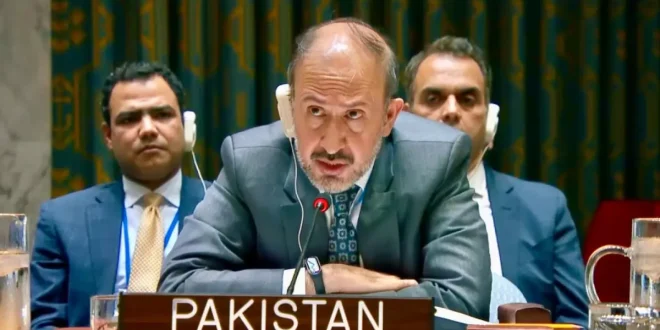
At a recent UN Security Council session focusing on attacks against shipping and threats to maritime security, Pakistan’s Permanent Representative, Ambassador Syed Haider Shah, urged an immediate halt to military provocations in the Gulf. He emphasized the need for regional diplomacy, condemning attacks against Gulf countries, particularly Houthi militia threats against Saudi Arabia’s civilian infrastructure and commercial vessels. Ambassador Shah underscored the critical importance of the Strait of Hormuz and the Bab el-Mandab Strait, warning that disruptions endanger global trade, energy, and food security.
The debate vividly illustrated the entrenched positions of the key players. Iran, represented by Ambassador Gholamhossein Darzi, attributed the insecurity to “unprovoked wars launched by the United States and Israel” on specific future dates (June 13, 2025, and February 28, 2026), citing massive Iranian casualties and violations of international law. Tehran insisted on its commitment to peace but deemed foreign military presence a source of instability, rejecting Security Council Resolution 2817 (2026) as biased. Iran called for an end to US military actions, credible guarantees against future aggression, and the lifting of sanctions.
Conversely, US Ambassador Jennifer Locetta painted a starkly different picture, accusing Iran of aggression against neighbors, firing on commercial ships, arming proxies, and defying the Council. She highlighted Iranian missiles, drones, and mines in the Strait of Hormuz and attacks in the Bab el-Mandab, all threatening global energy and food security. Ambassador Locetta urged accountability for Iran’s actions, particularly its alleged backing of Houthi attacks on Saudi targets.
The Gulf Cooperation Council (GCC), through Secretary-General Jasem Mohamed Albudaiwi, recounted over 7,000 alleged Iranian missile and drone attacks since February 28, targeting critical infrastructure across member states. Bahrain’s Ambassador Jamal Fares Alrowaiei welcomed mediation efforts by Oman, Qatar, and Pakistan, stressing the indivisible security of GCC states and their prerequisite participation in any regional security negotiations. This complex interplay of accusations underscores the profound difficulty in forging a path towards resolution amidst escalating threats to global maritime stability.
Contextualizing the Gulf’s Geopolitical Chessboard
Understanding the current standoff requires appreciating the deep historical currents and strategic significance of the Gulf region. The **Strait of Hormuz** and **Bab el-Mandab Strait** are not merely waterways; they are choke points through which a substantial portion of the world’s oil and liquefied natural gas (LNG) transits. Any sustained disruption here would send shockwaves through the global economy, impacting energy prices, supply chains, and inflation worldwide.
US-Iran Tensions: A Persistent Undercurrent
The animosity between the United States and Iran has been a defining feature of Middle Eastern geopolitics for decades. Rooted in the 1979 Iranian Revolution, this rivalry deepened significantly following the US withdrawal from the Joint Comprehensive Plan of Action (JCPOA), or Iran nuclear deal, and the subsequent “maximum pressure” campaign of sanctions. This policy aimed to cripple Iran’s economy and force it back to the negotiating table for a broader agreement on its nuclear program, missile capabilities, and regional influence. Iran, in turn, has often responded with asymmetric tactics, including alleged support for regional proxies and actions aimed at demonstrating its capacity to disrupt shipping, which it views as a response to perceived aggression and economic warfare. The specific “unprovoked wars” cited by Iran with future dates indicate a perceived trajectory of aggression from Tehran’s standpoint, anticipating future clashes.
The Yemen Conflict and Houthi Calculus
Central to the current maritime security concerns is the protracted conflict in Yemen. The Houthi rebels, an Iran-aligned group, have been engaged in a brutal civil war against the internationally recognized government, backed by a Saudi-led coalition. The strategic location of Houthi-controlled territories along the Bab el-Mandab Strait provides them with leverage over maritime traffic. Their attacks on Saudi targets, including airports and oil installations, have been a consistent feature of this conflict, drawing strong condemnation from Riyadh and Washington, who accuse Iran of providing significant military backing.
The GCC’s Regional Security Imperatives
The GCC states—Saudi Arabia, UAE, Bahrain, Kuwait, Qatar, and Oman—share borders with or are in close proximity to Iran, making them acutely sensitive to its regional activities. Their concerns are often aligned with the US, viewing Iran as a primary threat to their sovereignty and stability. The GCC’s stated experience of numerous missile and drone attacks underscores their vulnerability and their demand for robust international action.
This complex web of alliances, historical grievances, and strategic vulnerabilities sets the stage for the current crisis, making any path to de-escalation inherently challenging.
Pakistan’s Stake: A Nexus of Economy, Security, and Diplomacy
For Pakistan, the stability of the Gulf region is not merely a matter of international relations; it is intricately linked to its national interests across economic, security, and diplomatic spheres. The country’s proactive call for de-escalation at the UN stems from a deep-seated understanding of these dependencies.
Economic Vulnerability and Interdependence
- Energy Security: Pakistan is heavily reliant on oil and gas imports, a significant portion of which transits through the Strait of Hormuz. Disruptions or increased shipping costs in these vital waterways directly impact Pakistan’s energy security, leading to higher fuel prices and inflation, which can severely destabilize its economy.
- Remittances: Millions of Pakistanis work in the GCC countries, forming a massive diaspora whose remittances are a cornerstone of Pakistan’s foreign exchange earnings. Regional instability, economic downturns, or conflicts could jeopardize these jobs and consequently, a vital source of national income.
- Trade Routes: The Gulf is a major trading partner for Pakistan. Escalating tensions could disrupt maritime trade routes, affecting exports and imports and hindering the potential of initiatives like the China-Pakistan Economic Corridor (CPEC), which envisions Gwadar Port as a regional trade hub.
Security Implications
A wider regional conflict would undoubtedly have spillover effects on Pakistan. While Pakistan maintains strong defense ties with Saudi Arabia and other GCC nations, it also seeks to maintain working relations with Iran. Any deepening of the conflict could force difficult choices, divert resources, and potentially create internal security challenges. Pakistan’s focus on its eastern border and domestic counter-terrorism efforts means regional stability is paramount to avoid stretching its security apparatus.
A Pivotal Diplomatic Role
Pakistan historically maintains a nuanced foreign policy, seeking to balance its relationships with both its traditional Gulf allies and neighboring Iran. This delicate equilibrium, coupled with its strategic location and a history of engaging with both sides, positions Pakistan as a potential, albeit challenging, mediator. Its inclusion by Bahrain’s Ambassador as one of the nations undertaking mediation efforts underscores this potential. Pakistan’s consistent advocacy for dialogue and peaceful resolution is a reflection of its national interest in a stable neighborhood.
Navigating the Future Storm: A Call for Principled Engagement
The UN Security Council debate served as a stark reminder of the deeply ingrained mistrust and fundamentally divergent perspectives defining the US-Iran-GCC dynamic. The core challenge lies in the irreconcilable narratives: one side views Iranian actions as pure aggression and a threat to international norms, while the other perceives itself as a victim of external aggression and economic coercion, reacting in self-defense. The explicit mention of future “unprovoked wars” by Iran highlights a pre-emptive framing of potential conflict, suggesting a deeply entrenched perception of ongoing antagonism.
The Cycle of Escalation and Global Repercussions
This cycle of accusation and counter-accusation, often followed by retaliatory actions, risks spiraling into a wider regional conflict with catastrophic global consequences. The vulnerability of global maritime trade through the Strait of Hormuz and Bab el-Mandab cannot be overstated. Beyond energy, the disruption of food shipments, particularly to vulnerable economies, poses a significant humanitarian and economic threat far beyond the immediate region.
Challenges to Diplomacy and the Path Forward
Despite the dire warnings, the path to a diplomatic settlement remains fraught with obstacles. Entrenched positions, historical grievances, and a lack of credible guarantees against future aggression make direct US-Iran talks difficult. The rejection of UN resolutions by Iran further complicates multilateral approaches. However, the universal concern over freedom of navigation, protection of seafarers, and humanitarian access provides a potential common ground for engagement.
Pakistan’s Enduring Role
Pakistan’s consistent plea for de-escalation and its active, though often discreet, role in mediation efforts are vital. Its unique position, straddling both blocs and possessing leverage through historical ties, allows it to be a bridge-builder where direct communication channels are strained. By advocating for a framework based on common security, peaceful coexistence, and mutual prosperity, Pakistan is not only safeguarding its own interests but also contributing to the broader goal of regional and international stability. The call for addressing the “underlying causes” of conflict is particularly pertinent, suggesting a need for comprehensive solutions that go beyond immediate security concerns to tackle economic grievances and political disenfranchisement.
As the Gulf stands on the precipice of further future volatility, the international community, led by principled voices like Pakistan, must intensify efforts for sustained dialogue and creative diplomacy. The alternative—a descent into wider conflict—is a cost the global community cannot afford.
“`