 Dost Pakistan Journeys Tours and safaris in the North & South Pakistsn
Pakistan’s Urgent Warning: West Bank Settlements Push Region Towards ‘Tipping Point’
The News: A Dangerous Escalation in the West Bank
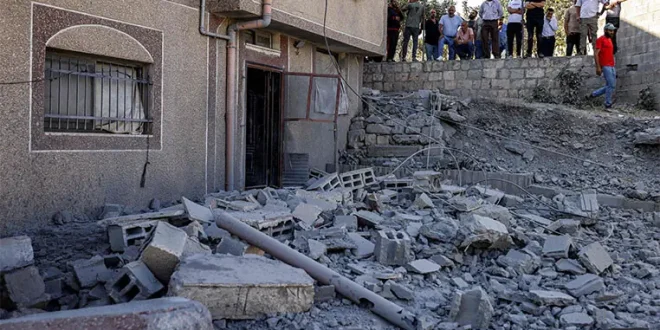
During a recent UN Security Council debate, Pakistan delivered a stark warning: the situation in the occupied West Bank is rapidly approaching a “dangerous tipping point” due to relentless Israeli settlement expansion and escalating settler violence. Pakistan’s UN Ambassador Asim Iftikhar Ahmad urged the international community to compel Israel to halt these activities, highlighting their detrimental impact on the prospects of a viable Palestinian state and regional stability.
This urgent appeal was echoed by other nations and UN officials. UN Secretary-General António Guterres reiterated that Israeli settlements lack legal validity and constitute a “flagrant violation” of international law. Britain condemned the “appalling” attacks by Israeli settlers, often alongside Israeli Defence Forces, calling for greater accountability. Russia also warned of the West Bank nearing a “point of no return,” blaming Israel’s “creeping” settlement policy and tightening restrictions on Palestinians. The UN has documented a disturbing rise in Palestinian casualties and settler attacks, underscoring the severity of the humanitarian crisis and the increasing fragility on the ground.
Background: Decades of Conflict and Contested Land
To understand the gravity of Pakistan’s warning, it’s crucial to contextualize the decades-long Israeli-Palestinian conflict. The West Bank, including East Jerusalem, has been under Israeli occupation since the 1967 Six-Day War. International law, particularly the Fourth Geneva Convention, prohibits an occupying power from transferring parts of its own civilian population into occupied territory. Despite this, Israel has continuously established and expanded settlements, which are home to hundreds of thousands of Israelis.
These settlements are widely considered illegal under international law by most of the global community, including the UN, the International Court of Justice, and numerous states. They are seen as a primary impediment to the two-state solution – the internationally endorsed framework for peace envisioning an independent Palestinian state alongside Israel. The continuous expansion fragments Palestinian territory, restricts Palestinian movement, disrupts their daily lives, and often involves the demolition of Palestinian homes and infrastructure. Recent reports from OCHA and the UN human rights office highlight an alarming increase in settler violence, often perpetrated with impunity and, at times, in conjunction with Israeli security forces, creating an environment of fear and forced displacement for Palestinian communities.
The situation has been further exacerbated since the onset of the Gaza conflict in October 2023, with the West Bank experiencing a dramatic surge in violence, displacement, and settlement activity, pushing an already volatile region closer to outright collapse.
Impact on Pakistan: A Principled Stance and Regional Ramifications
Pakistan’s unequivocal stance on the Palestinian issue is a cornerstone of its foreign policy, deeply rooted in historical solidarity, religious affinity, and the principle of self-determination. From its inception, Pakistan has been a vocal advocate for Palestinian rights, consistently supporting the establishment of an independent, sovereign, and contiguous Palestinian state with Al Quds Al Sharif (Jerusalem) as its capital, based on the pre-1967 borders.
- Historical Solidarity: Pakistan’s unwavering support for Palestinians resonates deeply with its population, who view the struggle as a matter of justice and human rights. This solidarity is not merely diplomatic; it is a deeply held conviction that transcends political divides.
- OIC and Muslim World Unity: As a prominent member of the Organization of Islamic Cooperation (OOIC), Pakistan often champions issues critical to the Muslim world. Its strong advocacy for Palestine reinforces its role within this bloc and reflects a broader pan-Islamic concern over the fate of Al Aqsa Mosque, a site revered by Muslims worldwide, and the plight of Palestinians.
- Domestic Resonance: The Palestinian cause garners significant public and political support within Pakistan. Taking a firm stand at international forums like the UN Security Council reinforces national sentiment and aligns with the aspirations of its populace.
- Geopolitical Alignment: Pakistan’s consistent position aligns it with a significant portion of the international community that upholds international law and the rights of occupied peoples. In an increasingly polarized global landscape, this principled stance defines Pakistan’s diplomatic identity and its commitment to international justice. The deterioration of the situation in the West Bank further validates Pakistan’s long-held concerns and its calls for concrete international action.
Analysis: Beyond the Tipping Point – Geopolitical Stakes and the Path Forward
Pakistan’s warning of a “dangerous tipping point” is not mere diplomatic rhetoric; it underscores a profound concern that the window for a viable two-state solution is rapidly closing, potentially with catastrophic consequences. The “tipping point” refers to the irreversible fragmentation of Palestinian territory, rendering any future state economically unviable, geographically dislocated, and politically powerless.
- Erosion of International Norms: The continued expansion of settlements, despite widespread international condemnation, highlights a fundamental challenge to the efficacy of international law and institutions. If core principles like the prohibition against acquiring territory by force and respecting human rights in occupied territories are routinely flouted without meaningful consequences, it erodes the entire framework of global governance.
- Weakness of International Institutions: The UN Security Council, despite repeated condemnations and resolutions, has largely failed to enforce compliance with international law regarding settlements. This paralysis is often attributed to geopolitical dynamics, particularly the use of veto power by permanent members, which prevents decisive action and perpetuates a cycle of impunity.
- The Confluence of Factors: The current crisis is a result of a confluence of factors: accelerated settlement approvals, unprecedented settler violence, land seizures, and the humanitarian strain on Palestinian institutions due to withheld tax revenues. This integrated approach, as highlighted by Pakistan, aims to entrench occupation and undermine any pathway to self-determination.
- Regional Instability: The ramifications of a collapsed two-state solution extend far beyond the immediate Israeli-Palestinian context. It risks igniting wider regional instability, fueling extremism, and complicating security dynamics across the Middle East. The escalating provocations at Al Aqsa Mosque, a sensitive religious site, further amplify this risk, threatening to transform a political conflict into a religious one.
- The Elusive Path to Peace: To genuinely reverse this trajectory, mere condemnations are insufficient. The international community, particularly influential powers, must move beyond rhetorical statements to impose tangible costs for violations of international law. This could involve stronger diplomatic pressure, sanctions, robust accountability mechanisms for settler violence, and a renewed, impartial peace process grounded in established international parameters. Pakistan’s call for international protection for Palestinians and the immediate release of withheld tax revenues points towards critical immediate steps required to de-escalate the humanitarian crisis and stabilize Palestinian institutions.
Ultimately, the crisis in the West Bank is a litmus test for the international community’s commitment to justice, human rights, and the rule of law. Failure to act decisively now risks cementing an irreversible reality on the ground, thereby extinguishing the last embers of hope for a peaceful resolution and condemning both Palestinians and Israelis to a future of perpetual conflict.
