Dost Pakistan Journeys Tours and safaris in the North & South Pakistsn
Related Articles

Beyond the Ballot Box: Nawaz Sharif’s Call for Civility Amidst AJK Tensions
In the politically charged atmosphere following the recent elections in Azad Jammu and Kashmir (AJK), Pakistan Muslim League-Nawaz (PML-N) supremo and former Prime Minister Nawaz Sharif has issued a significant appeal for political differences to be managed without devolving into animosity. His statements, delivered amidst ongoing tensions and allegations of rigging from a key federal coalition partner, the Pakistan Peoples Party (PPP), highlight the delicate balance of power within Pakistan’s current political landscape.
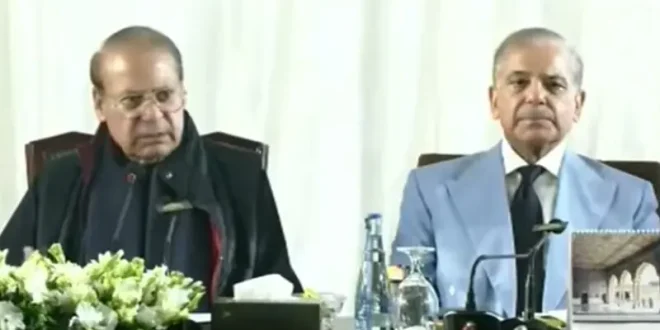
Nawaz Sharif addresses a party convention in Murree, emphasising the importance of political civility and development in AJK.
The AJK Electoral Landscape and Rising Discord
The AJK elections, contested in phases amid reported unrest, saw the PML-N emerge as a dominant force. Securing 24 seats primarily from the Mirpur and Muzaffarabad divisions, the party established a clear majority. In contrast, the PPP managed to win only 10 constituencies. This disparity in results quickly ignited a firestorm of controversy, with the PPP vocally criticizing the conduct of the polls.
The PPP leadership, in high-level meetings, denounced the elections as “rigged and violent,” expressing grave concerns over the role of the AJK Election Commission. Their complaints included allegations of suspended internet services, shortages of polling materials, and inadequate security arrangements—issues that resonate with long-standing concerns about electoral integrity in Pakistan. These accusations, as Nawaz Sharif noted, have been particularly “upsetting” given the PML-N and PPP’s shared platform in the federal government.
Punjab Chief Minister Maryam Nawaz Sharif swiftly moved to defend her party, urging the PPP to “consider the logic” of their claims. She highlighted the perceived inconsistency in their stance: celebrating victories in regions like Gilgit-Baltistan without alleging rigging, but immediately crying foul after losses in AJK. Maryam Nawaz further pointed out that the administrative machinery in AJK, including the government, president, and prime minister, was under the PPP’s influence, making their accusations against the PML-N seem contradictory.
Beyond the immediate political friction, Nawaz Sharif used his address to articulate an ambitious development agenda for AJK. Lamenting the erosion of the region’s historically “good atmosphere” due to accumulating animosity and governmental failures, he pledged to emulate Punjab’s development model. His vision encompasses significant infrastructure upgrades—roads, hospitals—along with promoting tourism, establishing industries, offering agricultural loans, and launching housing schemes. He specifically tasked Prime Minister Shehbaz Sharif to ensure ample funding for these initiatives, stressing the need to address public sentiment and avoid further alienation.
Contextualizing the Political Chessboard: PML-N, PPP, and Pakistan’s Coalition Dynamics
The AJK elections and the subsequent fallout are not isolated events; they are deeply intertwined with the broader currents of Pakistani politics. Azad Jammu and Kashmir, a strategically vital and emotionally resonant self-governing territory, often sees its local elections as a microcosm of national political battles. The outcomes here can significantly impact the morale and positioning of national parties.
The federal government in Islamabad operates as a coalition, with the PML-N and PPP serving as its foundational pillars. Historically, these two parties have been arch-rivals, frequently clashing for political supremacy. Their current alliance, forged out of a shared opposition to the previous government, is often characterized by pragmatic cooperation punctuated by underlying strategic competition. Such alliances are inherently fragile, demanding constant negotiation and compromise.
Allegations of electoral rigging are a recurrent feature in Pakistan’s political narrative, reflecting persistent debates over the fairness and transparency of the democratic process. For the PPP, a significant defeat in AJK represents a setback to its aspirations of maintaining a national presence beyond its traditional stronghold in Sindh. Lodging rigging complaints is a common tactical response, allowing parties to deflect responsibility for losses and challenge the legitimacy of their opponents’ victories, even when those opponents are coalition partners.
Nawaz Sharif’s call for civility, therefore, can be seen as a strategic move. While it appeals to a higher ideal of political conduct, it also serves to consolidate the PML-N’s AJK victory, deflect criticisms of electoral irregularities, and project an image of responsible governance and a focus on development. By promising AJK the “Punjab model” of progress, he aims to legitimize his party’s rule and address the underlying socio-economic grievances that have contributed to unrest in the region.
Key Takeaways for Pakistan Politics:
- Coalition Stability: AJK tensions strain the PML-N/PPP federal alliance, crucial for national stability.
- Electoral Integrity: Allegations of rigging continue to erode public trust in democratic processes.
- Regional Development: Promises of AJK upliftment signify a strategic shift to address local grievances and consolidate power.
- Political Civility: Nawaz Sharif’s call highlights the ongoing struggle to balance intense competition with constructive dialogue.
Impact on Pakistan’s Political Stability and Governance
The deepening discord over the AJK elections carries significant implications for Pakistan’s overall political stability. A federal coalition, already navigating a turbulent economic landscape and myriad governance challenges, cannot afford sustained internal friction. If the PPP’s allegations continue to escalate and the PML-N maintains its dismissive stance, it could lead to an erosion of trust that undermines the functionality of the central government. Such instability could hinder critical legislative processes, economic reforms, and policy implementation at a time when Pakistan desperately needs decisive leadership.
Furthermore, Nawaz Sharif’s ambitious development promises for AJK, while potentially beneficial for the region, will necessitate substantial financial outlays from an already strained national budget. Delivering on these commitments could set a positive precedent for equitable regional development and potentially mitigate future unrest in AJK. Conversely, failure to deliver could further exacerbate public discontent and reinforce cynicism about political rhetoric.
The ongoing debate surrounding electoral transparency also has a corrosive effect on public faith in democratic institutions. When leading political parties accuse each other of manipulating electoral outcomes, it reinforces public skepticism, making it challenging for any elected government to claim a strong, unchallenged mandate. This cycle perpetuates political instability and hinders the maturation of democratic governance in Pakistan.
Analysis: Navigating the Delicate Balance of Power
Nawaz Sharif’s recent intervention is a masterclass in navigating a delicate political tightrope. While celebrating his party’s electoral triumph in AJK, he simultaneously extends an olive branch to a crucial federal ally, attempting to de-escalate tensions. His pivot towards a development-centric agenda for AJK serves multiple purposes: it offers a positive vision for the region, seeks to address underlying grievances that contributed to recent unrest, and positions PML-N as a responsible, forward-thinking party.
The PPP, on the other hand, finds itself in a challenging strategic position. A significant loss in AJK diminishes its political footprint and potentially its leverage within the coalition. Their decision to lodge strong rigging allegations, while a natural response to defeat, must be carefully balanced against the imperative to maintain a functional working relationship with the PML-N at the federal level. Pushing too hard could risk isolating the party or even destabilizing the coalition, leading to unpredictable political outcomes.
Ultimately, the AJK elections and their contentious aftermath serve as a microcosm of Pakistan’s complex and often volatile political landscape. They highlight the intense competition for power, the perennial challenges to electoral integrity, and the intricate art of managing coalition dynamics. Nawaz Sharif’s plea for political civility is not merely an idealistic statement; it is a pragmatic recognition of the necessity to prevent political differences from spiraling into destructive animosity, especially when the nation’s stability and progress hinge on fragile alliances. The unfolding events will determine whether this call for restraint is heeded, or if the relentless pursuit of political advantage continues to overshadow the imperative for collective national interest.