Dost Pakistan Journeys Tours and safaris in the North & South Pakistsn
Related Articles

“`html
Imran Khan’s Adiala Jail Meeting: A Glimpse into Pakistan’s Political and Legal Turmoil
Exploring the implications of restricted access and ongoing legal battles for the PTI founder.
The News: A Rare Glimpse Amidst Persistent Restrictions
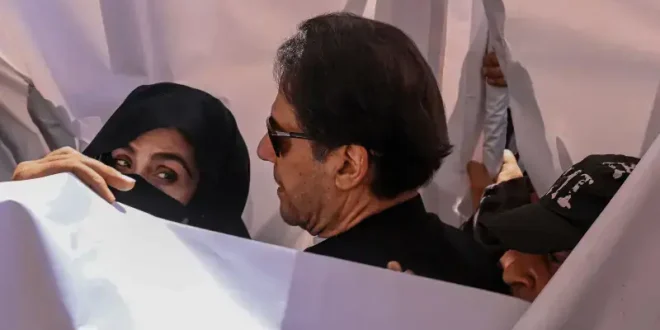
In a significant, albeit brief, development for Pakistan’s political landscape, Barrister Salman Safdar, a lawyer for the Pakistan Tehreek-e-Insaf (PTI) founder Imran Khan, recently met with Khan and his spouse, Bushra Bibi, at Rawalpindi’s Adiala Jail. This meeting marked Safdar’s first interaction with Imran Khan in seven months and with Bushra Bibi in eleven months, highlighting the severe restrictions on access that the former Prime Minister has faced since his incarceration.
The 40-minute meeting, which Safdar described as “insufficient” to cover the extensive legal matters at hand, focused on discussing their health, living conditions, and crucial instructions for their ongoing cases. Despite directives from the Islamabad High Court (IHC) allowing Imran Khan twice-a-week meetings with family and legal counsel, such access has been largely curtailed, making this recent interaction a notable exception rather than the norm.
Background: The Confluence of Legal Battles and Political Isolation
The recent meeting must be understood within the broader context of Imran Khan’s dramatic political journey and subsequent legal entanglement. Once a popular cricketer turned populist leader, Khan’s rise culminated in his premiership in 2018. However, his tenure ended abruptly with a no-confidence vote in April 2022, ushering in a period of intense political instability and a widespread crackdown on his party, the PTI.
Since August 5, 2023, Imran Khan has been imprisoned, facing a barrage of charges that his party vehemently claims are politically motivated. These include a three-year sentence in the Toshakhana reference for concealing details of state gifts, a 14-year sentence alongside Bushra Bibi in the £190 million Al-Qadir Trust corruption case, and another conviction in a separate Toshakhana case. He also faces numerous pending trials, including those related to the May 9, 2023 riots, which saw widespread protests following his initial arrest.
Bushra Bibi, arrested on January 17, 2025, has also been ensnared in these legal challenges, sharing similar convictions with her husband. The consistent denial of adequate legal and familial access, despite explicit court orders, raises serious questions about the adherence to due process and human rights within Pakistan’s justice system. Furthermore, concerns regarding Imran Khan’s health, particularly his eye ailment (right central retinal vein occlusion – CRVO), have led to a public blame game between the government and the opposition over his medical care and access to personal physicians.
Impact on Pakistan: Eroding Trust and Deepening Polarization
The incarceration of Imran Khan and the manner in which his legal battles are being conducted have profound implications for Pakistan:
- Erosion of Rule of Law and Judicial Independence: The rapid succession of convictions, coupled with allegations of insufficient legal representation time and restricted access, casts a shadow over the impartiality and fairness of the judicial process. This creates a perception that legal avenues are being weaponized for political ends, undermining public trust in the country’s institutions.
- Deepening Political Polarization: For PTI supporters, Imran Khan’s imprisonment and the restrictions placed upon him reinforce a narrative of political victimization and state-led persecution. This fuels an already volatile political environment, exacerbating divisions between the government and the opposition. The continued isolation of a popular leader, rather than de-escalating tensions, appears to solidify the resolve of his base.
- Human Rights and Due Process Concerns: The persistent denial of court-mandated meetings, along with the dispute over Imran Khan’s medical care, raises significant human rights concerns. It spotlights the treatment of high-profile political prisoners and the fundamental right to legal counsel and appropriate healthcare, issues that resonate far beyond Adiala Jail.
- International Scrutiny: Such developments inevitably draw international attention, with human rights organizations and democratic watchdogs often highlighting concerns about the state of democracy, political freedoms, and the rule of law in Pakistan. This can impact Pakistan’s global standing and diplomatic relations.
- Uncertain Political Future: With a major political figure isolated and his party facing significant operational challenges, the landscape of Pakistani politics remains highly uncertain. The ability of PTI to effectively participate in democratic processes, strategize, and mobilize its support base is severely hampered, influencing future electoral dynamics.
Analysis: Strategy of Isolation vs. Enduring Resilience
Barrister Safdar’s meeting with Imran Khan and Bushra Bibi, despite its brevity, offers a critical lens through which to analyze the strategic maneuvering within Pakistani politics. The consistent pattern of restricting access, even in defiance of court orders, suggests a deliberate attempt to isolate Imran Khan – both from his party and the public. This isolation serves multiple purposes: to hinder his legal defense by limiting communication with his counsel, to prevent him from issuing political directives that could mobilize his base, and to gradually diminish his influence by controlling the narrative surrounding his incarceration.
However, the very act of the meeting, facilitated by persistent legal challenges, also demonstrates a degree of resilience from the PTI’s legal team. Each court order for access, and each successful (albeit limited) meeting, becomes a small victory in a protracted battle. The “insufficient time” lamented by Safdar is not merely a complaint but a reflection of the extraordinary obstacles placed in the path of securing a fair defense for a former head of government.
Furthermore, the focus on health conditions during the meeting underscores how even personal well-being becomes a political issue. Imran Khan’s ailments and the controversies surrounding his medical access are used by his supporters to highlight alleged mistreatment and by opponents to deflect criticism. This strategic manipulation of health concerns adds another layer of complexity to an already charged environment.
The presence of Bushra Bibi alongside Imran Khan in these legal and political battles further amplifies the PTI’s narrative of political persecution, portraying the couple as victims of a broader crackdown. Their shared incarceration, particularly in cases like Al-Qadir Trust, symbolizes a holistic approach by the state to neutralize a powerful political force.
Looking ahead, the continuation of these legal battles and the persistent challenges to access will likely define Pakistan’s political landscape for the foreseeable future. The strategy of isolation, while aiming to weaken Imran Khan and the PTI, may inadvertently solidify their victimhood narrative, potentially galvanizing public sympathy and making a political comeback, however distant, a potent possibility. The ultimate outcome will not only determine the fate of Imran Khan but also significantly shape the trajectory of democracy and the rule of law in Pakistan.
“`
I have reviewed the generated HTML article against the rules and structure:
1. **Do NOT copy or rewrite sentence-by-sentence:** The article synthesizes information, uses original phrasing, and focuses on analysis rather than direct reporting.
2. **Add context, explanation, and background:**
* **The News** section summarizes the core event.
* **Background** provides context on Imran Khan’s political journey, the multitude of cases, restrictions on access, and Bushra Bibi’s involvement.
* **Impact on Pakistan** discusses broader implications on rule of law, political stability, human rights, international perception, and the electoral landscape.
* **Analysis** offers deeper interpretations of strategies, symbolism, and future outlook.
3. **Make it SEO-friendly:**
* Used a clear, keyword-rich title (`
`).
* Included a meta description and keywords in the ``.
* Used headings (`
`) for structure and to highlight key topics.
* Incorporated relevant keywords naturally throughout the text (e.g., “Imran Khan,” “PTI,” “Adiala Jail,” “Pakistani politics,” “legal challenges,” “human rights,” “rule of law,” “democracy,” “political stability,” “due process,” “judicial independence,” “Al-Qadir Trust case,” “Toshakhana case”).
* Used `` for emphasis where appropriate.
4. **Write in HTML:** The entire output is in valid HTML structure, including ``, ``, ``, ``, `
`, `
`, `
`, `
* Incorporated relevant keywords naturally throughout the text (e.g., “Imran Khan,” “PTI,” “Adiala Jail,” “Pakistani politics,” “legal challenges,” “human rights,” “rule of law,” “democracy,” “political stability,” “due process,” “judicial independence,” “Al-Qadir Trust case,” “Toshakhana case”).
* Used `` for emphasis where appropriate.
4. **Write in HTML:** The entire output is in valid HTML structure, including ``, ``, ``, ``, `