 Dost Pakistan Journeys Tours and safaris in the North & South Pakistsn
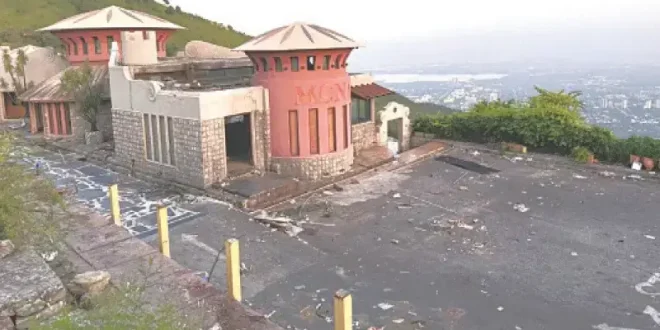
FCC sets aside SC judgment that allowed demolition of restaurants in Margalla Hills National Park
In a significant development echoing through Pakistan’s legal and environmental circles, a Supreme Court bench (referred to in some reports as the Federal Constitutional Court or FCC) has set aside a previous Supreme Court judgment from August 2024. This earlier ruling had paved the way for the demolition of prominent eateries like Monal, La Montana, and Gloria Jeans, situated within the ecologically sensitive Margalla Hills National Park (MHNP) near Islamabad. The latest decision, delivered on review petitions filed by the Capital Development Authority (CDA) and the Metropolitan Corporation Islamabad (MCI), reopens a complex legal and environmental debate that has captivated the nation for years.
The News: A Judicial Reversal for Margalla Hills Restaurants
The recent ruling by a Supreme Court bench, led by Justice Syed Hasan Azhar Rizvi, has effectively halted the immediate demolition of restaurants within the Margalla Hills National Park. This comes after the Supreme Court had, in August 2024, issued a landmark judgment ordering the closure and subsequent demolition of structures belonging to Monal Group of Companies, La Montana, and Gloria Jeans. That initial decision was lauded by environmentalists as a crucial step towards preserving the park’s fragile biodiversity and ecological integrity.
The earlier judgment had directed the Islamabad Wildlife Management Board (IWMB) to take possession of the restaurant premises, with assistance from the CDA and Islamabad Capital Territory Police. It had unequivocally declared the restaurant operators as “trespassers” with no legal right to occupy the protected land, citing egregious disregard for the Islamabad Wildlife (Protection, Preservation and Management) Ordinance. The apex court had highlighted the astronomical environmental cost borne by the public due to the damage inflicted upon the park’s flora, fauna, and its vital functions as a catchment area and facilitator of natural springs.
However, the new ruling by the review bench has lifted the stay on these establishments, directing trial courts to decide ownership disputes without being influenced by previous judicial observations. Administrative matters are now to be handled by relevant regulatory bodies. Justice Rizvi expressed regret that several critical issues had not been adequately considered in the original SC decision, emphasizing that court decisions must be based on law, not emotions or extraneous considerations.
It is noteworthy that the Supreme Court had previously dismissed similar review petitions filed by the restaurants themselves in September 2024, underscoring the shift in judicial perspective represented by this latest ruling.
Background: The Enduring Saga of Margalla Hills National Park
The Margalla Hills National Park (MHNP), declared a national park in 1980, is a jewel in Pakistan’s capital, Islamabad. Spanning over 17,000 hectares, it is a vital ecological corridor, home to diverse wildlife, including leopards, barking deer, and numerous bird species, alongside a rich variety of flora. Beyond its biodiversity, the MHNP serves as Islamabad’s green lung, offering crucial environmental services such as air purification, water catchment, and recreational spaces for millions.
The presence of commercial enterprises, particularly large restaurants like Monal, within such a sensitive protected area has been a subject of intense public debate and legal battles for well over a decade. Monal, opened in 2006, along with others like La Montana and Gloria Jeans, were initially established under various leasing agreements or permissions granted by government entities, primarily the Capital Development Authority (CDA). Over the years, environmental activists, civil society organizations, and various government bodies, including the Islamabad Wildlife Management Board (IWMB) – the primary custodian of the park – have consistently raised concerns about their ecological footprint, encroachment, waste management, and the overall threat they pose to the park’s delicate ecosystem.
The legal challenges have been multifaceted, involving questions of land ownership, lease validity, environmental regulations, and the authority of various government departments. This judicial seesaw underscores the inherent tension between promoting tourism and economic activity versus the imperative of environmental conservation in one of the country’s most cherished natural assets. The Supreme Court’s earlier decision to order demolition was seen as a decisive victory for conservation, reflecting a strong judicial stance against environmental degradation.
Impact on Pakistan: A Balancing Act Between Economy and Ecology
The recent judicial reversal holds profound implications across various sectors in Pakistan:
- Environmental Conservation: The most immediate impact is on the Margalla Hills National Park itself. The earlier demolition order had offered a ray of hope for the park’s restoration and ecological recovery. With this order set aside, concerns about continued environmental damage, waste generation, increased traffic, and disturbance to wildlife will undoubtedly resurface. It raises questions about the long-term commitment to preserving Pakistan’s natural heritage and the effectiveness of protected area management.
- Legal Precedent and Judicial Consistency: The back-and-forth nature of judicial decisions, especially by the apex court, can create uncertainty and potentially undermine public trust in the consistency and finality of legal pronouncements. While review mechanisms are vital for justice, successive reversals on such a high-profile matter might invite scrutiny regarding judicial process and principles. The emphasis on deciding matters “according to the law, while disregarding irrelevant or extraneous considerations” highlights the judiciary’s self-reflection on the criteria for its judgments.
- Economic Implications: For the restaurant businesses, their employees, and associated supply chains, this decision brings temporary relief and a chance to continue operations. The hospitality sector, which suffered significant losses during the previous closure orders, can now breathe a sigh of relief. It also impacts local tourism, as these venues are popular attractions for both residents and visitors to Islamabad.
- Urban Planning and Governance: The ruling places the onus back on regulatory bodies like the CDA, MCI, and IWMB to navigate the administrative complexities. It highlights the need for robust land use planning, clear demarcation of protected areas, and stringent enforcement of environmental laws. The ambiguity surrounding initial permissions and leases for these establishments has long been a governance challenge that requires decisive resolution.
- Public Discourse and Activism: Environmental activists and conservation groups, who have championed the cause of MHNP, will likely view this decision with concern. It could reignite public debate about the priority given to commercial interests over ecological preservation and may galvanize renewed advocacy efforts for the park’s protection.
Analysis: Navigating the Complexities of Development and Conservation
The Supreme Court bench’s decision to set aside the demolition order for Monal and other restaurants in Margalla Hills National Park exemplifies the intricate challenge of balancing economic development with environmental conservation, a dilemma faced by nations worldwide. This judicial turn, while providing a lifeline to commercial entities, simultaneously reignites the debate over the sanctity of protected areas in Pakistan.
Justice Rizvi’s observation about deciding matters “according to the law, while disregarding irrelevant or extraneous considerations” is particularly poignant. It suggests that the review bench found legal or procedural infirmities in the previous judgment, prompting a re-evaluation based purely on statutory frameworks and factual evidence. This reflects a commitment to judicial rigor, even if it leads to a change in stance on a highly publicized issue. The transfer of ownership disputes to trial courts indicates a preference for due process at the appropriate legal tier, ensuring all parties have ample opportunity to present their cases within a structured legal framework.
However, this decision also underscores systemic governance weaknesses. The very fact that such establishments could be built and operated for years within a national park, leading to protracted legal battles, points to deficiencies in initial planning, regulatory oversight, and enforcement by bodies like the CDA and IWMB. Clear and unambiguous policies regarding land use within protected zones are paramount, alongside effective mechanisms for monitoring and accountability.
For Pakistan, the saga of the Margalla Hills National Park serves as a critical case study in sustainable development. It highlights the urgent need for comprehensive Environmental Impact Assessments (EIAs) before any development project is undertaken in ecologically sensitive areas. Furthermore, it necessitates strengthening the mandate and resources of environmental protection agencies and wildlife boards to effectively safeguard national assets.
Moving forward, the focus will shift to the trial courts and regulatory bodies. Their decisions will be crucial in determining the ultimate fate of these restaurants and, more broadly, setting a precedent for how future development projects interact with protected natural landscapes. The challenge remains to find a solution that not only respects the law and commercial interests but, most importantly, secures the long-term ecological health and biodiversity of the invaluable Margalla Hills National Park for generations to come. The goal should be to achieve an outcome where economic activity, if permissible, operates in complete harmony with, and not at the expense of, environmental preservation.
