 Dost Pakistan Journeys Tours and safaris in the North & South Pakistsn
“`html
Pakistan’s Torkham Humanitarian Corridor: A Strategic Opening Amidst Border Tensions
The News: A Glimmer of Hope at Torkham
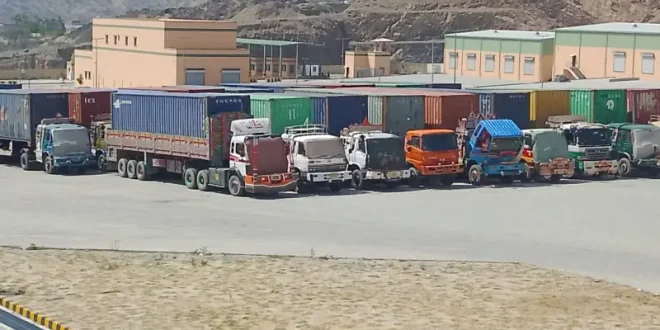
In a significant development that underscores the complex humanitarian and geopolitical landscape of the region, Pakistani customs authorities recently granted gate passes for 26 World Food Programme (WFP) containers to cross into Afghanistan via the Torkham border. This crucial consignment, laden with vital food and essential supplies, represents a potential lifeline for a nation grappling with a severe humanitarian crisis. The decision is particularly noteworthy given that the Torkham border, a primary conduit for trade and movement between the two countries, has been largely closed for regular cross-border activities since late 2023 due to an escalating security situation. The containers, after an all-day wait and requiring a “nod” from higher authorities, completed necessary clearance procedures, with their ultimate entry into Afghanistan now pending approval from the Taliban authorities.
Background: A Region on the Brink
The Torkham border crossing is more than just a checkpoint; it’s a vital artery connecting Pakistan and landlocked Afghanistan. Historically, it has been a bustling hub for commercial goods, transit trade, and people-to-people movement, serving as a critical economic lifeline for both nations. Its recent closure, prompted by a deterioration in security along the border—often attributed to clashes and tensions involving militant groups—has severely impacted Afghanistan’s accessibility and exacerbated its already dire humanitarian situation. Afghanistan faces one of the world’s most acute humanitarian emergencies, driven by decades of conflict, economic collapse following the Taliban’s return to power, international sanctions, and frequent natural disasters. Millions rely on humanitarian assistance for survival, making the role of organizations like the WFP indispensable.
This isn’t the first instance of humanitarian aid facing hurdles. Earlier this year, a similar WFP convoy destined for Afghanistan was reportedly turned back from Karachi after the Afghan Taliban authorities in Kabul refused to accept the assistance. Such rejections often stem from complex political dynamics, including the Taliban’s desire to assert control over aid distribution, or internal disagreements within their governance structure. This history of obstruction adds a layer of uncertainty to the current convoy’s fate, making the Taliban’s ultimate decision a critical barometer of regional engagement and humanitarian access.
Impact on Pakistan: Navigating a Tightrope
Pakistan’s decision to facilitate the WFP convoy, despite the general closure of the Torkham border, carries significant implications for its standing and strategy in the region. As a transit nation, Pakistan plays an indispensable role in providing access to landlocked Afghanistan, a responsibility that comes with both geopolitical leverage and complex challenges. By allowing these containers through, Pakistan reinforces its image as a crucial humanitarian corridor and a responsible regional actor, engaging with international bodies like the WFP and the broader United Nations system. This move could help assuage international concerns about aid delivery to Afghanistan, showcasing Pakistan’s commitment to humanitarian principles even amidst strained bilateral relations.
However, the decision also highlights Pakistan’s delicate balancing act. On one hand, it seeks to manage its own severe security challenges, primarily from cross-border terrorism that led to the border’s closure. On the other, it cannot entirely disengage from Afghanistan, a neighbor with profound historical, cultural, and strategic ties. Facilitating humanitarian aid allows Pakistan to maintain a channel of communication and influence without necessarily compromising its security posture regarding general border traffic. The “nod from higher authorities” suggests a carefully weighed decision, indicative of the high-level security and diplomatic considerations involved in managing the volatile frontier while upholding international obligations. Economically, while 26 containers are a small fraction of normal trade, the principle of facilitating movement, even for specific purposes, can signal a willingness to partially restore functionality to a vital trade route, which Pakistan also seeks to eventually achieve for its own economic benefit.
Analysis: Humanitarian Diplomacy and Geopolitical Overtures
The permission for the WFP convoy to proceed can be interpreted as a strategic move by Pakistan, reflecting a complex interplay of humanitarian imperatives, security concerns, and geopolitical maneuvering. It represents a form of “humanitarian diplomacy,” where the facilitation of aid serves not only to alleviate suffering but also as a subtle overture in a fraught bilateral relationship. By acting as a responsible facilitator for international aid, Pakistan strategically positions itself within the global framework addressing Afghanistan’s crisis, potentially earning goodwill from international partners even as it grapples with its own domestic and border security issues with the Afghan Taliban.
The uncertainty surrounding the Taliban’s acceptance of the aid is equally telling. Should the Taliban accept the consignment, it could signal a pragmatic shift on their part, perhaps acknowledging the desperate need for aid or a desire to project a more accommodating image to the international community. Conversely, another rejection would underscore the deep-seated political and ideological divisions that continue to impede humanitarian efforts, highlighting the internal complexities and external defiance within the Taliban regime. Such an outcome would further complicate efforts to address Afghanistan’s crisis and might lead to increased international pressure on the de facto authorities.
Ultimately, this specific incident at Torkham is a microcosm of the broader geopolitical chessboard in South Asia. Pakistan’s decision to open a humanitarian corridor, even temporarily, reflects a nuanced approach to managing a difficult neighbor. It allows Pakistan to maintain a degree of engagement, avoid accusations of obstructing vital aid, and test the waters for future cooperation, all while balancing its critical security interests. The fate of these 26 containers will not only determine the immediate relief for thousands of Afghans but also offer valuable insights into the evolving dynamics between Pakistan, the Taliban, and the international community in their shared quest for regional stability and humanitarian well-being.
“`
