Dost Pakistan Journeys Tours and safaris in the North & South Pakistsn
Related Articles


Australia-India Uranium Pact: Fueling India’s Future and Reshaping Regional Dynamics
India and Australia cement a landmark uranium supply deal, promising a significant boost to India’s clean energy goals and deepening strategic ties in the Indo-Pacific. This agreement, years in the making, underscores India’s burgeoning energy demands and Australia’s strategic pivot in resource diplomacy, with notable regional implications, particularly for Pakistan.
The News: A New Dawn for India’s Nuclear Ambitions
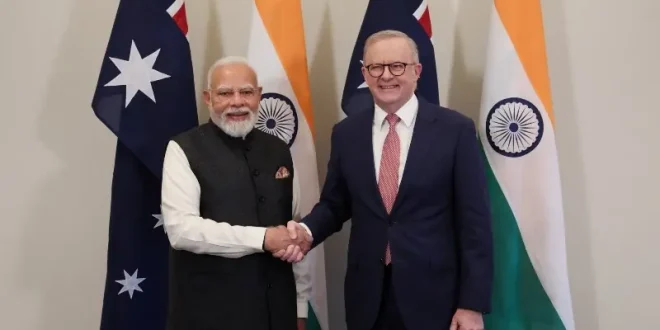
In a significant development for global energy security and bilateral relations, Indian Prime Minister Narendra Modi announced a crucial agreement for Australian uranium supply during his recent visit to Australia. This pact is hailed by Modi as providing “fresh momentum” to India’s clean energy objectives, signaling a new era for the nation’s ambitious nuclear power program. Australia, home to approximately 28% of the world’s uranium reserves, has long been a potential, yet often inaccessible, source for India due to complex legal and political considerations.
The agreement, reached after discussions with Australian counterpart Anthony Albanese, explicitly states that uranium exports will be for “exclusively peaceful purposes” and fall under the rigorous safeguards established by the International Atomic Energy Agency (IAEA). This framework addresses past concerns regarding nuclear proliferation, allowing Australia to facilitate India’s shift towards non-fossil fuel power capacity. The deal builds upon a 2015 nuclear cooperation agreement, finally overcoming previous hurdles that had rendered actual trade largely non-existent.
Beyond the energy aspects, the visit underscored the rapidly strengthening ties between the two nations. Albanese praised Modi’s leadership in fostering this bond, highlighting the growing influence of the Indian diaspora in Australia, which has now become the largest overseas-born community in the country. While the bonhomie was palpable, Modi’s visit also drew protests regarding his domestic policies and the rise of Hindu nationalism, underscoring the complex interplay of diplomacy and internal politics.
Background: India’s Insatiable Energy Appetite and Australia’s Strategic Resources
To fully grasp the significance of this India-Australia uranium pact, one must understand the underlying imperatives driving both nations. India, as the world’s most populous nation and a rapidly expanding economy, faces an almost insatiable demand for electricity. Its energy mix is heavily reliant on fossil fuels, particularly coal, which presents significant environmental challenges and contributes to global climate change. To sustain its growth while simultaneously meeting its climate commitments under the Paris Agreement, India is aggressively pursuing diversification into cleaner energy sources, with nuclear power being a cornerstone of this strategy.
India’s nuclear program has a unique history. While it developed its nuclear weapons independently and is not a signatory to the Nuclear Non-Proliferation Treaty (NPT), it secured a waiver from the Nuclear Suppliers Group (NSG) in 2008, opening the door for international civil nuclear cooperation. However, securing a consistent and reliable supply of uranium fuel has remained a critical challenge for India’s ambitious plans to substantially scale up its nuclear generation capacity. This makes the Australian agreement particularly vital.
Australia, on the other hand, possesses vast uranium resources but has historically maintained strict policies regarding exports, particularly to countries outside the NPT. The shift in its stance towards India reflects a broader strategic realignment. Canberra recognizes India’s democratic values and its growing strategic importance in the Indo-Pacific region. This resource diplomacy is not merely economic; it’s a strategic move to deepen partnerships, particularly within the framework of the Quad (Quadrilateral Security Dialogue) – involving Australia, India, Japan, and the United States – aimed at promoting a free and open Indo-Pacific and balancing regional power dynamics.
The burgeoning Indian diaspora in Australia also plays an increasingly important role, acting as a cultural and economic bridge that fosters deeper understanding and political will between the two nations, influencing policy decisions like this landmark uranium deal.
Impact on Pakistan: Shifting Regional Power Balances and Energy Security
The India-Australia uranium supply agreement, while framed around civilian nuclear energy, carries significant strategic implications for Pakistan, India’s historical rival and fellow nuclear-armed state. Both nations are non-signatories to the NPT and have an intertwined nuclear history, making any major development in India’s nuclear sector a point of keen observation in Islamabad.
Firstly, from a strategic perspective, Pakistan will view this deal as a significant enhancement of India’s overall strategic depth. While the uranium is explicitly for “peaceful purposes” under IAEA safeguards, the bolstering of India’s conventional energy security frees up other resources and capabilities. A more energy-secure India, capable of fueling its economic growth through diversified means, inherently gains greater strategic autonomy and power projection capabilities in the region and beyond. This could contribute to a perception of a widening strategic imbalance, potentially intensifying Pakistan’s existing concerns about India’s regional dominance.
Secondly, the agreement highlights a stark contrast in international cooperation on nuclear energy. While India has successfully leveraged its strategic importance and economic potential to gain access to critical nuclear fuel from major suppliers like Australia, Pakistan continues to face significant international restrictions and skepticism regarding its nuclear program, partly due to proliferation concerns (stemming from the A.Q. Khan network) and its ongoing geopolitical challenges. This disparity in access to global nuclear fuel markets could be a source of frustration for Pakistan, which also grapples with its own acute energy crisis and the need for reliable, diverse power sources.
Finally, the deal underscores the deepening of India’s global partnerships, particularly with Western-aligned nations. This increasing integration of India into critical global supply chains and strategic alliances could be perceived by Pakistan as further isolating it on the international stage, especially as it navigates its own complex relationships with traditional allies and new partners. While the deal itself does not directly threaten Pakistan’s security, it undeniably contributes to a shifting regional power matrix that Islamabad will need to carefully assess and respond to in its foreign policy and energy planning.
Analysis: A Win-Win for Energy, Economy, and Geopolitics
The Australia-India uranium pact represents a multi-faceted triumph for both nations, aligning critical energy needs with strategic imperatives and reinforcing a growing geopolitical partnership. For India, this agreement is a massive stride towards achieving energy security and meeting its ambitious clean energy objectives. By securing a reliable, long-term supply of uranium, India can significantly accelerate its nuclear power plant construction, reducing its heavy reliance on polluting fossil fuels like coal. This not only aids in combating climate change but also stabilizes its energy grid, crucial for sustaining its rapid economic expansion and improving living standards for its vast population.
From Australia’s perspective, the deal is a testament to its strategic foresight and resource diplomacy. Exporting uranium to India not only unlocks significant economic benefits from its vast natural resources but also strengthens its bond with a key Indo-Pacific partner. This aligns with Australia’s broader foreign policy goal of fostering stability and security in the region, particularly in the context of China’s assertive rise. The shared democratic values and common interests in a free and open Indo-Pacific make India a natural strategic partner, and this uranium deal is a tangible expression of that deepening trust and collaboration within the Quad partnership.
The explicit inclusion of IAEA safeguards for “exclusively peaceful purposes” is vital. It underscores the international community’s evolving approach to India’s nuclear program, moving beyond historical non-proliferation concerns to accommodate its legitimate energy needs under strict oversight. This pragmatic shift recognizes India’s responsible nuclear conduct within its unique framework.
Furthermore, the significant role of the Indian diaspora in Australia cannot be overstated. The growing influence of this community acts as a powerful cultural and political bridge, fostering a deeper understanding and impetus for stronger bilateral ties. This demographic shift highlights how people-to-people connections can translate into high-level strategic and economic agreements.
While the deal is overwhelmingly positive for bilateral relations and India’s energy future, it also casts a spotlight on broader regional dynamics. The strengthening of India’s strategic capabilities and global standing, partly fueled by such agreements, will invariably influence the strategic calculations of other regional players, including Pakistan. The protests against Modi during his visit, while not directly impacting the deal, serve as a reminder that diplomatic triumphs often coexist with complex domestic political narratives. Ultimately, this uranium pact is more than just a resource transfer; it’s a powerful symbol of evolving global partnerships, climate responsibility, and the intricate dance of regional power in the 21st century.