Dost Pakistan Journeys Tours and safaris in the North & South Pakistsn
Related Articles



Pakistan’s Afghan Repatriation: A Deep Dive into the Crackdown and Its Complexities
The News: Intensifying Crackdown on Undocumented Afghans
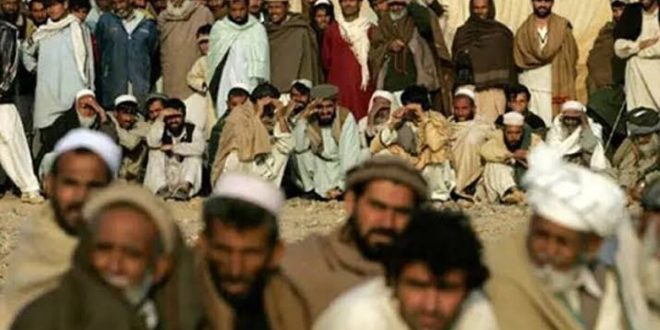
Recent data from a joint report by the International Organization for Migration (IOM) and UNHCR reveals the persistent and expanding scope of Pakistan’s drive to repatriate Afghan nationals. In a single week, from October 11 to 17, 2026, authorities arrested 517 Afghans across Balochistan, Sindh, and Khyber-Pakhtunkhwa. A staggering 97% of these detentions involved undocumented individuals or those holding Afghan Citizen Cards (ACC), with only a small fraction possessing Proof of Registration (PoR) status.
This localized crackdown is part of a much larger, ongoing campaign. Cumulatively, since September 15, 2023, over 2.7 million Afghans have reportedly returned to their home country from Pakistan. While the latest week saw a moderate decrease in overall returns and a significant drop in explicit deportations compared to the preceding week, the underlying pressure remains intense. The report highlights a critical finding: “fear of arrest” was cited as the primary driver for return among 95% of undocumented individuals and ACC holders, and 68% of PoR holders, underscoring the non-voluntary nature of many of these repatriations.
The IOM began systematically collecting data on arrests and detentions of ACC holders and undocumented Afghans in January 2023, providing critical insights into a process previously lacking comprehensive documentation.
Background: Decades of Displacement and Shifting Policies
The presence of millions of Afghans in Pakistan is a legacy spanning over four decades, rooted in successive waves of conflict in Afghanistan. The Soviet-Afghan War in the late 1970s and 1980s triggered the first mass exodus, followed by civil unrest and the rise of the Taliban in the 1990s, and more recently, the Taliban’s takeover in August 2021.
For decades, Pakistan has hosted one of the world’s largest refugee populations, initially welcoming them with open arms. Over time, this welcome has worn thin, with successive Pakistani governments expressing concerns over economic strain, social integration challenges, and increasingly, security issues. These concerns intensified following a surge in militant attacks in Pakistan, which officials have frequently attributed to elements operating from Afghanistan or linked to Afghan nationals within Pakistan.
The legal status of Afghans in Pakistan is complex:
- Proof of Registration (PoR) holders: These are refugees officially registered with UNHCR, granting them a degree of protection and legal status, though their rights are limited.
- Afghan Citizen Card (ACC) holders: Issued by the Pakistani government in a 2017 registration drive for unregistered Afghans, the ACC provided a temporary form of identification and some basic services, but not full refugee status.
- Undocumented Afghans: The largest group, lacking any official recognition, and thus most vulnerable to arrest and deportation.
The current large-scale repatriation drive formally commenced in October 2023, when Pakistan announced a strict deadline for all “illegal foreigners” to leave the country voluntarily, threatening arrests and forced deportations for those who remained. This policy shift marked a significant departure from previous, more lenient approaches, signaling a firm resolve by Islamabad to manage its long-standing Afghan population.
Impact on Pakistan: Geopolitical, Economic, and Social Ramifications
Pakistan’s policy has generated a multifaceted impact across various spheres:
- Geopolitical Strain: The mass expulsion has severely strained relations with the Taliban government in Afghanistan. Kabul has condemned the move as inhumane and against Islamic principles, creating diplomatic friction at a time when Pakistan seeks cooperation on border security and counter-terrorism.
- Security Calculus: The Pakistani government justifies the crackdown primarily on national security grounds, linking some Afghan nationals to cross-border terrorism and crime. While the immediate security benefits are debatable and difficult to quantify, officials maintain the policy is crucial for internal stability.
- Economic Repercussions: The departure of millions of Afghans has both positive and negative economic implications. On one hand, Pakistan argues it reduces the burden on its resources and infrastructure in a struggling economy. On the other, Afghans, particularly undocumented laborers, filled many informal sector jobs, contributing to local economies. Their departure leaves labor gaps in certain sectors and impacts local businesses that relied on their workforce or patronage.
- International Scrutiny: The policy has drawn widespread condemnation from international human rights organizations and bodies like the UN, which have raised concerns about forced returns, humanitarian conditions, and potential violations of international law, particularly the principle of non-refoulement, which prohibits returning individuals to a country where they face persecution. This scrutiny impacts Pakistan’s international image and diplomatic standing.
- Domestic Dynamics: Within Pakistan, the operation has sparked debates. While some segments of society support the government’s tough stance, others, including civil society groups and some political parties, have voiced concerns about the humanitarian aspect and the potential for ethnic profiling.
Analysis: Navigating Humanitarian Concerns and National Interests
The figures from the IOM and UNHCR report paint a stark picture: millions of Afghans have been compelled to leave Pakistan, driven primarily by the “fear of arrest.” This key finding challenges any notion of these being purely voluntary repatriations, raising significant humanitarian concerns.
Humanitarian Imperative vs. National Security
The policy places Pakistan’s declared national security interests in direct tension with fundamental humanitarian principles. Forcing people to return to an Afghanistan facing severe economic collapse, food insecurity, and a restrictive social environment under Taliban rule, especially as winter approaches, creates an acute humanitarian crisis. Women, children, and vulnerable individuals among the returnees face immense hardship, often arriving in Afghanistan with little to no resources or support infrastructure. The international community’s capacity to absorb and assist such a large influx in Afghanistan is already stretched thin.
Sustainability and Effectiveness
From an analytical perspective, the long-term effectiveness and sustainability of a mass deportation policy are questionable. While it may offer a short-term sense of control, it does not address the root causes of displacement, nor does it guarantee an end to potential security threats. An unstable Afghanistan, fueled by a humanitarian crisis and a disgruntled populace, could paradoxically exacerbate regional instability and cross-border movements in the future. Moreover, the economic void left by departing Afghan laborers could prove detrimental to certain Pakistani industries.
The Role of International Engagement
The crisis underscores the critical need for greater international burden-sharing. Pakistan has for too long borne a disproportionate responsibility for Afghan refugees. However, the current approach risks isolating Pakistan and alienating the very international partners whose support is crucial for both humanitarian aid in Afghanistan and for managing the ongoing refugee situation in the region. A more dignified, systematic, and internationally supported repatriation process, focused on voluntary returns and safe reintegration, remains the ideal, albeit challenging, solution.
Looking Ahead
As Pakistan continues its policy into late 2026, the global community watches closely. The decreased numbers in the latest week could be a temporary fluctuation or an indicator of fewer Afghans remaining to be deported. Regardless, the fundamental issues persist. Pakistan must balance its sovereign right to control its borders with its obligations under international humanitarian law, seeking solutions that are both effective for its national interests and humane for the individuals caught in this complex geopolitical predicament. The narrative of “returns” driven by “fear of arrest” reveals a pressing need for transparency, accountability, and a more humane approach to one of the world’s most enduring refugee crises.
“`