Dost Pakistan Journeys Tours and safaris in the North & South Pakistsn
Related Articles



Indus Waters Treaty: A Legal Battleground and Geopolitical Flashpoint at the UN
The recent exchange at the United Nations Security Council (UNSC) open debate on natural resource governance has cast a renewed spotlight on the fragile relationship between nuclear-armed neighbours India and Pakistan. At the heart of the latest diplomatic skirmish lies the venerable Indus Waters Treaty (IWT), a landmark water-sharing agreement that has historically weathered decades of political turmoil. Pakistan’s strong rebuke of India’s purported attempt to hold the treaty in “abeyance” underscores not only a deep mistrust but also the dangerous implications of weaponizing essential resources in an already volatile region.
The Dispute Unfolds at the UNSC
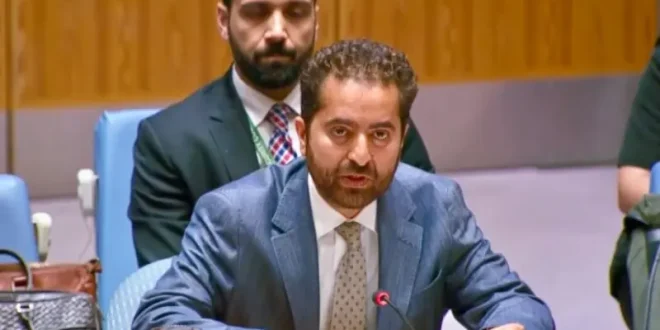
Pakistan’s Permanent Representative to the UN, Asim Iftikhar Ahmad, initiated the debate by highlighting India’s unilateral actions concerning the IWT, asserting that “no state should be permitted to abuse shared water resources as an instrument of coercion.” This direct challenge prompted a sharp response from India’s Permanent Representative, Harish Parvathaneni, who countered by accusing Pakistan of “state-sponsored cross-border terrorism” and claiming it had “eroded the basis for bilateral cooperation on the treaty.” He also reiterated India’s long-standing claim over Jammu and Kashmir.
In a swift rebuttal, Pakistan’s First Secretary Ansar Shah dismissed India’s narrative as a “futile attempt to distort facts,” emphatically stating that the IWT contains no provision for its abeyance, rendering India’s actions “simply illegal.” Shah further cited a reaffirmation by the Permanent Court of Arbitration (PCA) in August 2025 that the treaty “remains valid, binding and fully in force,” strengthening Pakistan’s legal position. The exchange quickly escalated, with Pakistan accusing India of “weaponization of a shared natural resource for political coercion” and counter-accusing India of sponsoring terrorism against Pakistan, citing groups like Tehreek-i-Taliban Pakistan (TTP) and Balochistan Liberation Army (BLA).
Background: The Indus Waters Treaty – A Pillar Under Pressure
The Indus Waters Treaty: A Testament to Cooperation
Signed in 1960 and brokered by the World Bank, the Indus Waters Treaty is often hailed as one of the most successful water-sharing agreements globally, particularly remarkable for its longevity between two historically adversarial nations. It meticulously divides the waters of the six rivers of the Indus basin: the eastern rivers (Ravi, Beas, Sutlej) are allocated to India, while the western rivers (Indus, Jhelum, Chenab) are largely reserved for Pakistan, with India permitted certain non-consumptive uses. The treaty also establishes a Permanent Indus Commission to resolve disputes. For over six decades, it has served as a crucial framework for cooperation, largely insulated from the numerous political and military conflicts that have plagued India-Pakistan relations.
The Pulwama Attack and India’s Retaliation
The current contention over the IWT is not isolated but deeply rooted in the aftermath of the 2019 Pulwama terror attack in occupied Kashmir, which claimed the lives of over 40 Indian paramilitary personnel. India squarely blamed Pakistan for the attack, leading to a severe escalation of tensions, including aerial skirmishes. In response, India, under Prime Minister Narendra Modi, publicly explored options to “stop” or “divert” water flowing to Pakistan under the IWT, threatening to revisit the treaty. While these threats did not immediately translate into direct curtailment of water flow, they introduced a dangerous precedent: using water as a potential instrument of diplomatic pressure or retribution. This context is crucial to understanding Pakistan’s accusation of “abeyance” and “weaponization.”
The Kashmir Dispute: An Unresolved Flashpoint
Underpinning almost every India-Pakistan dispute is the unresolved Kashmir conflict. Both nations claim the entirety of the erstwhile princely state of Jammu and Kashmir, administering parts of it. Pakistan consistently raises the issue at international forums, highlighting alleged human rights abuses and calling for the Kashmiri people’s right to self-determination, in line with UN Security Council resolutions. India, conversely, maintains Kashmir is an integral part of its territory and views Pakistan’s statements as interference in its internal affairs. The mutual accusations of state-sponsored terrorism are often intertwined with the Kashmir narrative, with each side using it to delegitimize the other’s claims and actions.
Analysis of a Dangerous Escalation
The Illegality of Unilateral Abeyance
Pakistan’s assertion that India’s attempt to hold the IWT in abeyance is “simply illegal” holds significant weight under international law. Treaties, once ratified, create binding obligations between signatory states. Unilateral suspension or termination is generally permissible only under very specific circumstances, such as a material breach by the other party or fundamental changes of circumstances, and typically requires formal notice and often dispute resolution mechanisms. The IWT itself has detailed dispute resolution mechanisms, including the Permanent Indus Commission and the Court of Arbitration, which the PCA has reaffirmed as “valid, binding and fully in force.” India’s alleged circumventing of these mechanisms, particularly in response to unrelated geopolitical events like the Pulwama attack, sets a perilous precedent that undermines the very foundation of international treaty law.
Weaponization of Water: A Threat to Regional Security
The concept of “weaponizing water” goes beyond mere diplomatic rhetoric. For Pakistan, a lower riparian state heavily reliant on the Indus River system for its agriculture, energy, and drinking water, any disruption of agreed-upon flows would have catastrophic economic, social, and humanitarian consequences. This makes the IWT not just a legal document but a matter of national security and survival. Using water as an instrument of political pressure, as Pakistan accuses India of doing, elevates an environmental resource into a tool of conflict, escalating an already tense relationship and threatening regional stability. Such actions are particularly alarming in a climate change-vulnerable region where water scarcity is an increasing concern.
The Nexus of Terrorism and Territorial Disputes
The UNSC debate quickly devolved into familiar accusations of state-sponsored terrorism. India’s linking of Pakistan’s alleged support for terrorism to its cooperation on the IWT is a consistent theme in its foreign policy. Conversely, Pakistan’s counter-accusations of Indian involvement in terror activities within its borders and alleged extra-territorial executions add another layer of complexity. These allegations, while often unproven to international satisfaction, serve to poison the atmosphere for any constructive dialogue or cooperation, including on shared resources like water. The Kashmir dispute, as highlighted by Pakistan, remains the core territorial grievance that fuels this cycle of blame, preventing any meaningful de-escalation.
The UN’s Role and International Norms
Pakistan’s bringing the matter to the UNSC, particularly within a debate on natural resource governance, underscores its effort to internationalize the issue and garner global support for adherence to the IWT. Ambassador Ahmad’s emphasis that natural resource governance must be anchored in the UN Charter and international law reflects a desire to hold India accountable to established global norms. The UNSC, with its mandate to maintain international peace and security, has a crucial role in preventing resource exploitation from fueling conflict. The challenge, however, lies in its often-divided nature, with permanent members often protecting their allies.
Impact on Pakistan and Regional Stability
For Pakistan, the integrity of the IWT is paramount. Any actual curtailment or deliberate obstruction of water flow would threaten its agricultural backbone, leading to food insecurity, economic instability, and potential internal displacement. Diplomatic efforts like the recent UNSC intervention are critical for Pakistan to maintain international pressure on India to adhere to the treaty’s provisions and dispute resolution mechanisms. The broader regional impact is one of heightened instability. Should a foundational treaty like the IWT crumble under political pressure, it would set a dangerous precedent for other transboundary water agreements globally, especially in regions already grappling with resource scarcity and geopolitical tensions.
Conclusion: Upholding Treaties for Peace
The recent exchange at the UNSC is a stark reminder of how deeply intertwined resource management, historical disputes, and national security are in South Asia. Pakistan’s strong rebuttal against India’s alleged “abeyance” of the Indus Waters Treaty highlights the critical importance of international law and treaty obligations, particularly concerning shared vital resources. The IWT, a decades-old symbol of pragmatic cooperation, now finds itself dangerously politicized. As both nations continue to trade accusations of terrorism and violations of international norms, the potential weaponization of water introduces a new, alarming dimension to their already complex relationship. For regional stability and the welfare of millions, it is imperative that both India and Pakistan uphold the sanctity of established international agreements and seek peaceful, legally sanctioned mechanisms to address their disputes, rather than resorting to unilateral actions that threaten the very basis of cooperation and peace.